The Difference Between Stainless Steel and Carbon Steel Materials for Industrial Hose Reels
December 11, 2025 | Industrial Hose Reels, Stainless Steel Hose Reels
Stainless Steel vs. Carbon Steel Industrial Hose Reels — Key Differences
The main differences lie in corrosion resistance, strength, weight, cost, and suitable applications. Below is a clear breakdown:
Quick Comparison Table
| Feature | Stainless Steel Reel | Carbon Steel Reel |
|---|---|---|
| Composition | Iron, chromium (≥10.5%), nickel, etc. | Iron, carbon (main element), minor alloys |
| Corrosion Resistance | Excellent. Natural passive layer resists rust, chemicals, moisture, saltwater. | Poor. Prone to oxidation; requires coating (powder coating, plating) for protection. |
| Strength & Durability | High strength, good toughness, wear-resistant. | Very high hardness, excellent wear and impact resistance. |
| Weight | Heavier (denser material). | Lighter (for comparable size). |
| Maintenance | Very low. Nearly maintenance-free, easy to clean. | Regular maintenance needed. Check coating for damage to prevent rust. |
| Cost | High. Material and manufacturing costs are higher (1.5–3× carbon steel). | Economical. Lower material cost, mature manufacturing process. |
| Appearance | Metallic finish (brushed or polished), modern look, permanent. | Coated colors (blue, yellow, gray, etc.); chips may expose rusty substrate. |
| Ideal Environments | Harsh/corrosive: Food & beverage, pharmaceuticals, chemical plants, marine, outdoor/wet areas, high-cleanliness zones. | General industrial: Indoor workshops, warehouses, automotive shops, construction sites, dry/controlled settings. |
Detailed Breakdown
1. Corrosion Resistance & Service Life
This is the most critical difference.
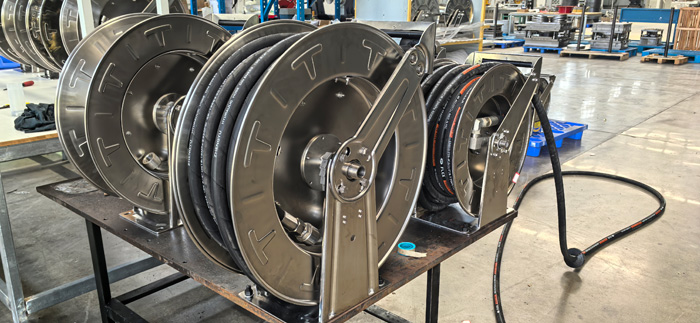
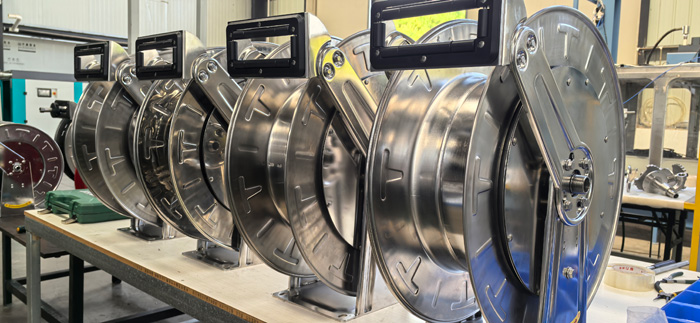
- Stainless Steel: Offers inherent corrosion resistance due to its chromium content, which forms a protective passive layer. It performs well in wet, chemical, or salty environments and typically outlasts carbon steel reels when exposed to corrosive elements.
- Carbon Steel: Has no inherent rust resistance and relies entirely on its surface coating (e.g., powder coating, electroplating) for protection. If the coating is scratched or damaged, the base metal will rust, potentially compromising structural integrity over time.
2. Mechanical Properties
- Strength: Both are strong enough for industrial use. Carbon steel often has higher tensile strength and hardness, making it slightly more resistant to heavy impact or deformation in extreme conditions.
- Wear Resistance: Carbon steel’s surface hardness can make it more resistant to abrasion and scratches. Stainless steel is also wear-resistant but may show wear marks more visibly.
3. Hygiene & Cleanability
- Stainless Steel: Non-porous, easy to sanitize, and resistant to bacterial growth. Mandatory or preferred in food, pharmaceutical, and sanitary industries.
- Carbon Steel: Even when coated, seams and potential rust spots can trap contaminants. Not suitable for high-hygiene areas.
4. Cost Consideration
- Upfront Cost: Stainless steel is significantly more expensive.
- Long-Term Cost: In corrosive environments, carbon steel may require more frequent replacement or refinishing, while stainless steel offers a “buy-once” solution. In dry, clean settings, carbon steel provides better value.
5. Important Notes
- Marine-Grade Stainless: For chloride-rich environments (seawater, coastal areas), 316/316L stainless steel is recommended over standard 304 for superior pitting resistance.
- Coating Quality Matters: The durability of carbon steel reels heavily depends on coating quality (e.g., electrostatic powder coating is far superior to standard paint).
How to Choose?
Choose Stainless Steel When:
- The environment is wet, corrosive, or chemical-laden (coastal, chemical processing, washdown areas).
- Hygiene and cleanability are critical (food, pharma, labs).
- You want minimal maintenance and maximum service life, and budget allows.
- The reel will be frequently washed down with high-pressure water or chemicals.
Choose Carbon Steel When:
- The environment is indoors, dry, and clean (most manufacturing floors, warehouses).
- Budget is a primary concern, and usage is not extreme.
- You need lighter weight or color matching to facility themes.
- The reel is protected from moisture and physical abuse.
Think of it this way:
- Stainless steel is an investment in environmental resistance and longevity.
- Carbon steel is a cost-effective choice for standard industrial duty in controlled conditions.
If your operating environment presents any risk of corrosion or has hygienic regulations, investing in stainless steel hose reels is a wise long-term choice. If the environment is controlled, dry, and budget is a priority, high-quality carbon steel hose reels are a perfectly reliable and cost-effective solution.
Related Posts

Marine Hose Reel Selection Guide
July 10, 2026
Hose Reel Solutions for Manufacturing Plants
July 22, 2026
How to Choose the Right Grease Hose Reel
July 9, 2026