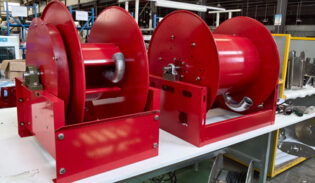
Why Large Industrial Hoses Often Require Electric Hose Reels
June 5, 2026 | Electric Hose Reels, Hose Reel Applications, Industrial Hose Reels
Introduction
Industrial hoses are becoming larger and heavier as industries demand higher flow rates, longer transfer distances, and greater durability. In sectors such as oil and gas, mining, marine, manufacturing, and heavy equipment maintenance, hoses may measure dozens of meters in length and weigh hundreds of kilograms when filled with fluid. Managing these hoses manually is not only labor-intensive but also increases the risk of hose damage, workplace accidents, and operational delays.
An Electric hose reels provides an efficient way to deploy, retrieve, and store large industrial hoses. By automating hose handling, it improves productivity, protects valuable hose assets, and helps maintain a safer and more organized work environment.
Why Large Industrial Hoses Become Difficult to Handle
As hose diameter and length increase, so does their overall weight. Even when empty, large industrial hoses require considerable effort to move. Once filled with water, fuel, hydraulic oil, chemicals, or other fluids, they become significantly heavier and much more difficult to manage.
Manual hose handling often requires multiple workers to pull, position, and rewind the hose after use. This process takes time and interrupts normal operations, especially when hoses are used repeatedly throughout the day. In busy industrial environments, the extra labor required for hose management can reduce overall productivity.
Dragging heavy hoses across concrete floors, steel platforms, or rough outdoor surfaces also accelerates hose wear. Abrasion, kinking, twisting, and excessive bending can shorten hose service life and increase replacement costs. In addition, hoses left lying across work areas create trip hazards and make equipment movement more difficult.
How Electric Hose Reels Improve Hose Management
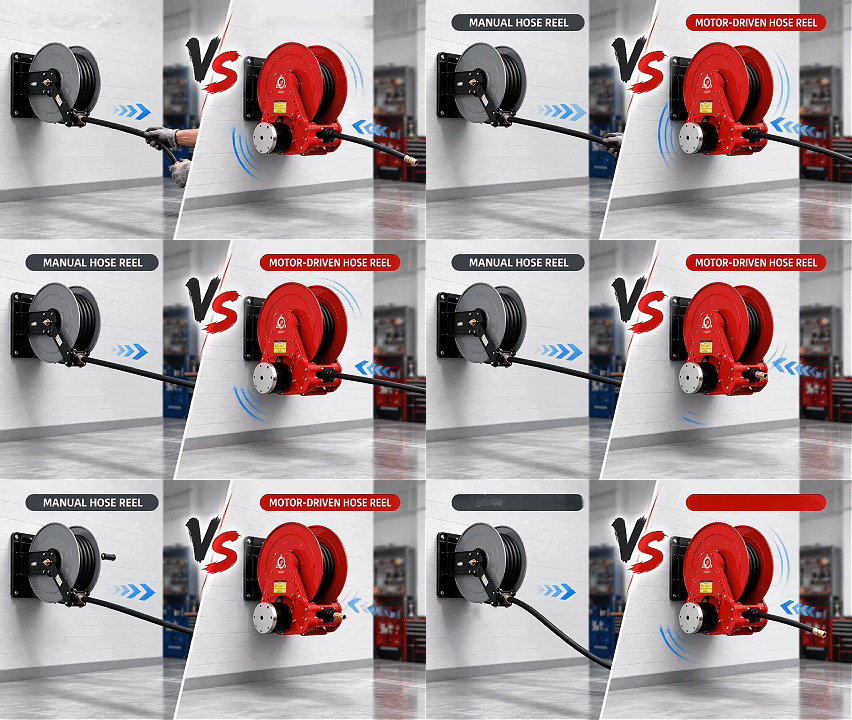
Electric hose reels eliminate many of the challenges associated with handling large industrial hoses. Instead of relying on manual force, operators can deploy or retract the hose using a simple control system, making hose handling faster and significantly less physically demanding.
Automatic winding also keeps the hose under controlled tension during retrieval. This helps prevent uneven winding, twisting, and excessive bending, allowing the hose to be stored neatly on the drum. For applications that require reliable hose management across different industries, choosing the right industrial hose reel can further improve equipment protection and overall operational efficiency. Proper hose storage reduces mechanical stress and helps extend the hose’s service life.
Keeping hoses neatly wound also improves workplace organization. Instead of leaving long hoses across the floor, operators can quickly retract them after use, reducing trip hazards and creating a safer working environment. Faster hose handling also minimizes downtime between tasks, allowing personnel to focus on productive work rather than hose management.
For facilities where hoses are used continuously throughout the day, the time savings can be substantial. Automated hose handling not only improves efficiency but also reduces worker fatigue, particularly when handling long, heavy hoses on a regular basis.
Common Applications for Electric Hose Reel
Electric hose reels are widely used wherever large hoses are required for continuous or frequent operation.
In the oil and gas industry, they simplify the handling of fuel transfer, hydraulic, and service hoses while improving operational safety. Mining operations rely on electric reels to manage heavy water, air, and slurry hoses that are frequently moved around large work sites.
Marine and offshore facilities use electric hose reels for fuel transfer, washdown systems, and fluid delivery, where corrosion resistance and reliable hose management are essential. Construction sites benefit from automated hose handling for water supply, compressed air, and equipment cleaning, particularly when long hoses must be deployed across large working areas.
Heavy manufacturing plants also use electric hose reels to support hydraulic systems, coolant transfer, compressed air distribution, and high-pressure cleaning operations. In all of these applications, efficient hose management helps improve productivity while protecting expensive hose assemblies.
What to Consider When Selecting an Electric Hose Reel
Choosing the right electric hose reel starts with matching the reel capacity to the hose diameter and required hose length. An undersized reel may not accommodate the hose properly, while an oversized reel increases equipment costs and installation space.
The drive system should also match the working environment. Electric motors are commonly used in manufacturing plants and workshops where stable power is available. Hydraulic motors are suitable for heavy industrial equipment and mobile machinery, while pneumatic motors are often selected for hazardous locations where electrical equipment may not be appropriate.
Structural durability is another important consideration. Heavy-duty frames provide the strength needed to support large hoses under continuous operation, while corrosion-resistant materials improve long-term reliability in outdoor, marine, or high-humidity environments. A high-quality full-flow swivel joint also helps maintain smooth fluid transfer during reel rotation while minimizing pressure loss.
Conclusion
As industrial hoses become larger and heavier, manual hose handling becomes increasingly inefficient and difficult. Electric hose reels provide a practical solution by simplifying hose deployment and retrieval, reducing labor requirements, protecting hoses from unnecessary wear, and improving workplace safety.
Whether used in oil and gas, mining, marine, construction, or manufacturing, a properly selected electric hose reel helps increase operational efficiency while extending hose service life. For facilities that rely on long and heavy industrial hoses every day, investing in an automated hose management system is a practical way to improve both productivity and long-term operating costs.
Related Posts
Best Air Hose Reels for Industrial and Home Use
May 20, 2026
Negative vs. Positive Pressure: Hose Reel Design
October 15, 2026
Static Discharge Reels for Fuel Transfer: Safety Basics
October 14, 2026