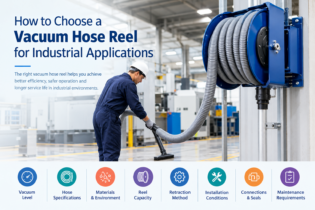
High Pressure Hose Reel vs Low Pressure Hose Reel: The Ultimate Selection Guide
June 18, 2026 | Industrial Hose Reels
Introduction
A hose reel is an essential hose management device used to store, organize, protect, and deploy hoses in a wide range of industrial, commercial, and maintenance applications. By keeping hoses neatly wound and readily accessible, hose reels help improve workplace safety, increase operational efficiency, and extend hose service life.
However, not all hose reels are designed for the same operating conditions. One of the most important factors to consider when selecting a hose reel is the system’s working pressure. The pressure level directly affects the reel’s structural strength, swivel joint design, hose compatibility, and overall safety performance. Choosing a reel that is not rated for the intended pressure can lead to premature wear, hose damage, leakage, equipment failure, and even serious safety hazards.
When comparing a high pressure hose reel and a low pressure hose reel, the differences extend far beyond pressure ratings alone. These reels are often designed with different materials, construction methods, hose capacities, and application requirements to meet specific operational needs. Understanding these differences is critical for ensuring reliable performance and long-term durability.
In this guide, we will explore the key differences between high pressure hose reels and low pressure hose reels, examine their typical applications, and discuss the most important factors to consider when selecting the right hose reel for your system. By understanding these fundamentals, you can make a more informed decision that improves safety, protects equipment, and maximizes operational efficiency.
High Pressure Hose Reel vs Low Pressure Hose Reel: Definition
A high pressure hose reel is a hose management device specifically designed for handling hoses used in high-pressure fluid transfer applications. Unlike standard reels, it is built with stronger structural components and pressure-resistant swivel joints to safely withstand high-load operating conditions.
For applications requiring higher pressure capacity and longer hoses, a Heavy Duty Hose Reel provides greater structural strength and durability.A typical example of a heavy-duty solution is the Heavy Duty Hose Reel CY-FF96 Series, which is designed for industrial environments requiring high strength and stable performance in continuous use.
A low pressure hose reel is a hose management device designed for applications where the operating pressure is relatively low. Unlike high pressure hose reels, these reels are typically optimized for flexibility, ease of use, and cost-effective hose storage rather than extreme pressure resistance. Their lightweight construction makes hose deployment and retrieval easier, while still providing effective hose organization and protection.
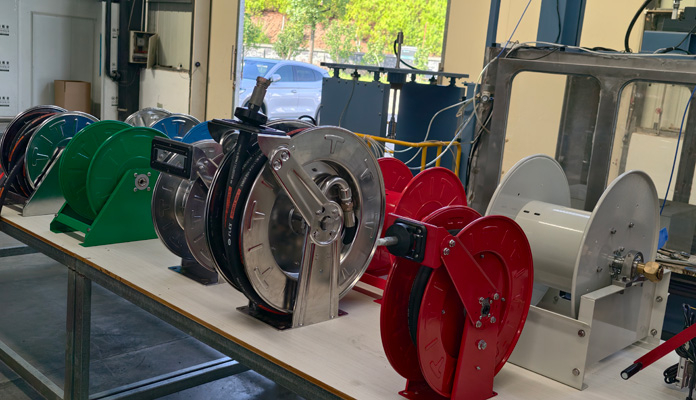
High Pressure Hose Reel vs Low Pressure Hose Reel: Key Differences
Although both high pressure hose reels and low pressure hose reels are designed to store, protect, and manage hoses, they are built to handle very different operating conditions. Understanding the key differences between these two types of hose reels is essential for selecting the right solution and ensuring long-term system reliability.
1. Pressure Capacity and Common Applications
The most significant difference between a high pressure hose reel and a low pressure hose reel is the amount of pressure the reel can safely withstand.
A high pressure hose reel is engineered for applications that may operate at 1,000 PSI, 3,000 PSI, 5,000 PSI, or even higher. These reels are commonly used in pressure washing systems, industrial cleaning equipment, hydraulic systems, and heavy-duty machinery.
In contrast, a low pressure hose reel is typically designed for operating pressures below 300 PSI and is commonly used for compressed air distribution, water transfer, and general workshop applications. Because of the lower pressure requirements, these reels can be manufactured with lighter-duty components and more compact designs.
2. Hose Construction
For high-pressure systems, the hose must be built with a rugged, multi-layer reinforced construction. These hoses typically feature a synthetic rubber inner tube reinforced with multiple layers of fiber or steel wire braiding, providing excellent pressure resistance, abrasion tolerance, and burst protection, enabling reliable performance in industrial environments. Because these reinforced hoses are heavier and experience higher mechanical stress during operation, their accompanying reels must be equally robust. High-pressure reels are therefore designed with heavy-duty frames, reinforced drums, large-sized bearings, and high-strength mounting brackets to ensure long-term stability and safety under continuous heavy loads.
For low-pressure systems, the hose is typically made from more flexible materials such as PVC, polyurethane (PU), or standard rubber. These hoses are lightweight and easy to handle, making them suitable for general-purpose use. Given the lighter weight and lower operating stresses, the corresponding reels are designed to be more compact and lightweight, facilitating easy operation, installation, and flexible daily use. As a result, these reels are very common in maintenance workshops, auto service centers, and general industrial settings.
A typical low-pressure solution is the Mini Plastic Air Hose Reel CY-1Q, designed for air and light-duty applications where flexibility and easy operation are the main requirements.
3. Swivel Joint Performance
The swivel joint is one of the most critical components of any hose reel system. It allows fluid or air to flow through the reel while the drum rotates.
In a high pressure hose reel, the swivel assembly must withstand higher internal pressure while maintaining a reliable seal. High-quality seals, precision machining, and durable materials are essential to prevent leakage and ensure safe operation.
For a low pressure hose reel, the swivel joint operates under less intensive conditions and typically requires a simpler sealing system. While reliability remains important, the performance requirements are generally less strict than those of high-pressure applications.
4. Safety Considerations
Safety should always be a primary consideration when selecting a hose reel. Using a low pressure hose reel in a high-pressure application can lead to serious consequences, including hose rupture, swivel failure, equipment damage, and potential injury to operators.
High-pressure systems require components that are specifically rated for the operating conditions and should always include an adequate safety margin. The reel pressure rating should exceed the maximum system pressure, and all hoses, fittings, and swivel joints must be compatible with the application.
Selecting the correct hose reel not only improves system performance but also reduces maintenance costs, minimizes downtime, and helps create a safer working environment.
How to Make the Right Choice Between a High Pressure Hose Reel and a Low Pressure Hose Reel
In practical selection, the key to choosing between a high pressure hose reel and a low pressure hose reel is not simply the name or price, but a comprehensive evaluation based on system operating conditions.
First, the maximum operating pressure of the system should be the primary criterion. If the application involves pressure fluctuations, pressure spikes, or long-term heavy load operation, a high pressure hose reel with a higher pressure rating must be selected to ensure safe operation under extreme conditions. In contrast, if the working pressure is stable and relatively low, a low pressure hose reel is usually sufficient and offers better advantages in terms of cost and operational flexibility.
Second, it is important to consider the working intensity and frequency of the application scenario. For high-frequency use, high-impact conditions, or continuous operation environments—such as high-pressure cleaning, industrial washing, or heavy equipment maintenance—a high pressure hose reel provides better structural stability and a longer service life. In daily water supply, compressed air delivery, or light maintenance tasks, a low pressure hose reel is generally more economical and easier to operate.
Third, the compatibility between the system medium and hose type should also be taken into account. If the medium is highly viscous, corrosive, or requires high-pressure delivery, a high-pressure system with appropriate sealing performance and structural strength is necessary. For general media such as water or air, a low pressure hose reel can reduce overall system cost while still meeting operational requirements.
Finally, a fundamental principle should always be followed: the rated pressure of the hose reel should be higher than the system’s maximum operating pressure, with an adequate safety margin reserved. This approach not only extends equipment lifespan but also significantly reduces the risk of failures caused by overpressure.
By considering pressure rating, usage frequency, application environment, and media characteristics together, you can more accurately select the appropriate type of hose reel and achieve an optimal balance between safety, reliability, and cost.
Conclusion
Selecting the right hose reel requires more than just comparing pressure ratings—it involves evaluating hose construction, reel strength, swivel joint performance, and safety considerations. Each factor directly impacts system reliability, efficiency, and operator safety.
A mismatched reel can lead to premature failure, costly downtime, and serious safety hazards. Conversely, a properly selected reel enhances performance, reduces maintenance costs, and extends equipment life.
When choosing, always prioritize maximum system pressure, leave an adequate safety margin, and consider usage frequency, working conditions, and media compatibility. By carefully evaluating these factors, you can achieve the optimal balance between safety, reliability, and cost—ensuring long-term, stable operation for your specific application.
Related Posts
Hose Reels for Paper Mills: Applications in Paper Production
September 17, 2026
Negative vs. Positive Pressure: Hose Reel Design
October 15, 2026