5 Signs Your Workshop’s Hose Reel System Needs an Upgrade
May 21, 2026 | Industrial Hose Reels
Introduction
In many industrial workshops, automotive repair facilities, maintenance stations, and manufacturing plants, hose reel systems have already become a standard part of daily operations. They are widely used for managing compressed air hoses, hydraulic hoses, water hoses, oil transfer lines, and chemical delivery hoses.
However, as production lines expand, equipment layouts change, and workloads increase, many older hose reel systems gradually become unable to meet current operational requirements. A hose reel system that once worked well may now create hidden problems such as inefficient hose handling, increasing maintenance costs, hose damage, reduced workplace safety, and workflow interruptions.
In many cases, the issue is not whether a workshop has a hose reel system, but whether the existing system is still suitable for the current working environment.
So how do you know when it is time to upgrade your hose reel system? If your workshop is already experiencing the following problems, your current hose management setup may no longer be keeping up with daily operational demands.
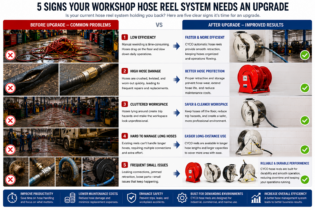
1. Your Current Hose Reel Can No Longer Keep Up With Daily Operations
One of the most common signs of an outdated hose reel system is that employees spend increasing amounts of time dealing with hose handling problems.
Even with an existing hose reel installed, workers may still need to manually guide hoses back onto the reel, untangle hose loops, reposition hoses during operation, or struggle with slow rewind performance. In busy workshops with frequent hose usage, these small inefficiencies gradually reduce overall productivity.
Older manual reels or worn retractable systems often become less efficient as hose lengths increase or usage frequency rises. If hose management is starting to interrupt workflow rather than support it, the current reel system may no longer match operational demands.
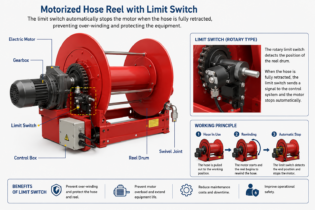
Upgrading to a higher-capacity retractable reel or motor driven hose reel can significantly improve hose handling speed and reduce unnecessary manual labor.
2. Hose Damage and Maintenance Costs Are Increasing
A properly functioning hose reel system should help protect hoses from excessive twisting, dragging, bending, and crushing. If hoses are still being damaged frequently, the existing reel system may no longer provide adequate hose protection.
In many older workshops, original hose reels were selected years ago based on lighter workloads or shorter hose lengths. As operations expand, the reel capacity, hose routing, or rewind performance may no longer suit current applications.
Common warning signs include:
- Frequent hose abrasion
- Damaged outer hose layers
- Leaking fittings
- Repeated hose replacement
- Air or fluid leakage
- Hoses dragging across the floor despite reel installation
When hose failures and maintenance costs continue increasing, upgrading the hose reel system may be more cost-effective than repeatedly replacing hoses and fittings.
3. The Existing Reel Layout No Longer Matches the Workshop
As workshops grow and production layouts change, the original hose reel installation locations may no longer provide efficient coverage.
Many facilities eventually encounter problems such as:
- Hoses no longer reaching new workstations
- Employees pulling hoses across walkways
- Multiple extension hoses being connected together
- Equipment movement being blocked by hose routing
- Hose reels positioned too far from operation areas
These issues often indicate that the original hose reel layout was designed for an older workflow and is no longer optimized for current operations.
Upgrading to overhead hose reels, wall-mounted reel systems, centralized hose management layouts, or longer-capacity reel systems can improve workspace organization while reducing unnecessary hose movement.
4. Your Reel System Struggles With Longer or Heavier Hoses
As industrial operations become larger and more demanding, many workshops begin using longer, heavier, or higher-pressure hoses than their original reel systems were designed for.
Older hose reels may struggle with:
- Slow hose rewind
- Uneven hose spooling
- Hose jamming during retraction
- Excessive manual force during operation
- Incomplete hose retraction
This problem is especially common in heavy industrial plants, hydraulic systems, mining equipment maintenance areas, and large vehicle service facilities where hose weight and hose length increase significantly over time.
In these situations, upgrading to a heavy duty hose reel, spring-assisted reel, or motorized hose reel system can greatly improve operational efficiency and reduce strain on workers.
5. Small Reel System Problems Are Becoming Daily Frustrations
In many workshops, outdated hose reel systems create constant “small problems” that employees gradually become accustomed to.
For example:
- Hose reels retract inconsistently
- Locking mechanisms fail occasionally
- Reel rotation becomes stiff
- Swivel joints begin leaking
- Hose rewind becomes noisy or unstable
- Reel components loosen due to vibration
Individually, these problems may not seem serious. However, over time they reduce operational efficiency, increase maintenance workload, and negatively affect workplace safety and employee experience.
When minor reel-related issues become part of daily operations, it is often a sign that the existing system is reaching the end of its practical service life.
Why Choosing the Right Hose Reel System Matters
Many people underestimate how much hose reel performance affects daily operations. A hose reel is not simply a storage device — it directly affects hose protection, workflow efficiency, safety, maintenance frequency, and overall workplace organization.
Different industries often require completely different hose reel systems:
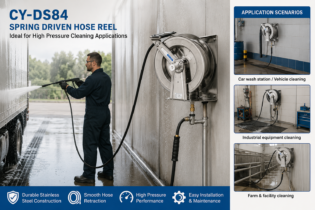
- Automotive workshops often prefer spring retractable air hose reels for fast daily operation
- Heavy industrial plants commonly use motor driven hose reels for long-distance hose management
- Marine and corrosive environments often require stainless steel hose reels
- Hydraulic applications require high-pressure hydraulic hose reels with stronger structural support
As operational requirements change, upgrading to a hose reel system that better matches current working conditions can improve long-term reliability, safety, and efficiency across the entire workshop.
Conclusion
An outdated hose reel system does not always fail suddenly. In many cases, the warning signs appear gradually through increasing maintenance, slower operations, hose damage, and everyday workflow frustrations.
Upgrading a hose reel system is not simply about replacing old equipment — it is about improving workplace efficiency, hose protection, operational safety, and long-term reliability. If your workshop is already experiencing several of these signs, it may be time to evaluate whether your current hose reel system is still supporting your operations effectively.
Related Posts
How Does a Motorized Hose Reel Work
June 25, 2026