Chemical Hose Reels: Safety & Material Guide
July 20, 2026 | Industrial Hose Reels
In modern chemical processing, pharmaceutical manufacturing, and industrial fluid handling, safety and operational efficiency are paramount. Transferring aggressive fluids—such as strong acids, alkalis, toxic solvents, and flammable liquids—presents unique hazards. Equipment failure in these environments can lead to catastrophic chemical spills, severe workplace injuries, environmental contamination, and costly facility downtime.
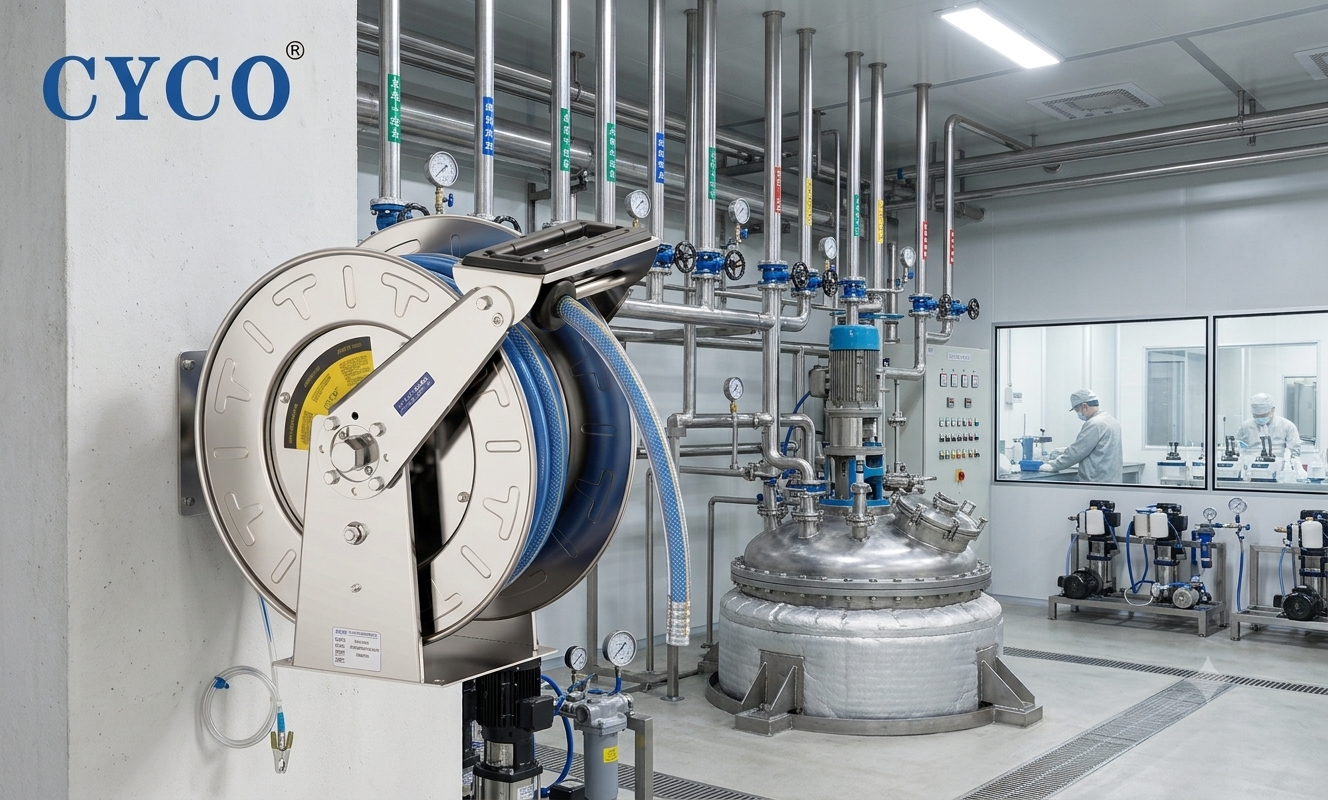
While the hose itself is often carefully specified for chemical compatibility, the reel system managing it is equally critical. Stainless steel hose reels are widely used in chemical processing because they provide excellent corrosion resistance and long-term reliability when handling aggressive fluids. Off-the-shelf industrial reels frequently fail prematurely when exposed to harsh chemical atmospheres or internal fluid corrosion.
This guide outlines the essential safety standards, material engineering choices, and functional features required when selecting heavy-duty chemical hose reels.
1. Vital Safety Standards & Regulatory Compliance
Handling hazardous media requires strict adherence to international safety codes. Industrial chemical hose reels must do more than just store a hose—they must function as compliant safety devices.
Hazardous Locations & ATEX Compliance
In environments where volatile organic compounds (VOCs) or flammable solvent vapors are present, equipment must be rated for explosive atmospheres (e.g., ATEX Zone 1 or Zone 2).
-
Static Grounding: Rapid fluid flow through a hose generates static electricity. Without proper grounding, electrostatic discharge can create a spark, igniting ambient fumes. Specialized chemical hose reels used in hazardous areas must feature non-sparking materials and dedicated static grounding pathways.
-
Explosion-Proof Drives: If the reel is powered by a motor, the drive mechanism must be housed in an explosion-proof enclosure to prevent internal electrical arcs from igniting external gases.
Environmental & Workplace Safety (OSHA / EPA)
Tripping over loose hoses remains one of the top causes of industrial workplace injuries. Retractable chemical hose reels keep floors clear, significantly reducing slip-and-trip hazards. Furthermore, automated retrieval protects expensive chemical hoses from being crushed by forklifts or dragged over abrasive surfaces, preventing premature outer-jacket failure and catastrophic leaks.
Pressure Ratings & Safety Margins
Chemical systems often experience pressure surges or thermal expansion when valves close rapidly. Chemical hose reels must be rated for the maximum operating pressure (PSI/Bar) with an adequate safety factor—typically 4:1 between burst pressure and working pressure—to handle fluid spikes safely.
2. Material Selection: Ensuring Complete Chemical Compatibility
The key to long-service life in chemical applications lies in metallurgy and elastomer selection. Both the external frame and the internal wetted path (the parts touching the chemical) must withstand the specific media being transferred.
| Chemical Type | Recommended Metal | Recommended Swivel | Recommended Seals |
|---|---|---|---|
| Mild Acids/Alkalis | 304 Stainless Steel | 316 Stainless Steel | EPDM / Viton (FKM) |
| Strong Acids/Salts | 316 Stainless Steel | Hastelloy / 316SS | PTFE / FFKM |
| Solvents & Fuels | 304 / 316 SS | 316 Stainless Steel | Viton (FKM) / PTFE |
| Deionized Water | 316 Stainless Steel | 316 Stainless Steel | EPDM |
Frame & Structural Materials
-
316 Stainless Steel: The standard choice for highly corrosive environments, marine exposure, and heavy washdown areas. The addition of molybdenum provides superior resistance to pitting and crevice corrosion caused by chlorides and industrial acids. For aggressive chemical washdowns, explore our full range of heavy-duty stainless steel hose reels.
-
304 Stainless Steel: A cost-effective alternative for mild chemical handling, cleanrooms, and food-grade washdown applications where extreme acid exposure is not present.
Swivel Joint Metallurgy (The Core Component)
The swivel joint is the rotating heart of the reel and the primary point of chemical contact. Standard carbon steel or brass swivels will degrade rapidly when exposed to aggressive chemicals, leading to immediate leaks. High-performance chemical hose reels feature full 316 Stainless Steel or specialized Hastelloy swivel architectures designed specifically for corrosive fluid transport.
Seal & O-Ring Selection (Leak Prevention)
Even the highest-grade metal will fail if the internal elastomer seals dissolve. Selecting the correct seal material is critical:
-
Viton (FKM): Excellent resistance to oils, fuels, solvents, and moderate acid concentrations.
-
EPDM: Ideal for ketones, alcohols, hot water, and steam cleaning operations, though unsuitable for petroleum products.
-
PTFE (Teflon) / FFKM (Kalrez): The ultimate solution for highly aggressive solvents, concentrated acids (such as sulfuric or nitric acid), and extreme operating temperatures. PTFE offers near-universal chemical inertness.
3. Drive Systems & Functional Hardware
Selecting the right reel drive mechanism depends on the operating environment, hose length, and duty cycle.
-
Spring-Driven (Automatic Retraction): Ideal for standard hose lengths (up to 15–20 meters) and frequent manual use. Ensure the reel features a multi-position latch mechanism and an adjustable hose stop ball to lock the hose at the desired working length safely.
-
Pneumatic & Electric Motorized Drives: Highly recommended for hazardous ATEX environments, long-distance transfers, or heavy hose handling. Powered drive mechanisms eliminate operator fatigue while effortlessly retracting heavy, large-diameter hoses. Learn more about selecting the right powered system in our detailed guide on motor-driven hose reels for industrial applications.
Hardware features like non-sparking roller fairleads and smooth drum flanges are also essential to guide the hose smoothly onto the spool without causing outer-jacket abrasion.
4. B2B Selection Checklist
Before issuing a purchase order for chemical hose reels, confirm the following technical parameters with your engineering team:
-
Fluid Medium Details: Chemical name, concentration percentage (%), viscosity, and maximum working temperature.
-
Pressure Requirements: Max system operating PSI/Bar, including potential surge pressures.
-
Hazardous Classification: ATEX Zone 1/2 or Class I, Div 1/2 explosion-proof requirements.
-
Hose Specifications: Inner Diameter (I.D.), Outer Diameter (O.D.), total length, and minimum bend radius.
-
Mounting Configuration: Wall, floor, ceiling, or mobile skid/trailer mount.
Conclusion
Investing in purpose-built chemical hose reels is an investment in facility safety, regulatory compliance, and operational continuity. By carefully matching the metal alloy, swivel architecture, and sealing materials to your specific chemical media, you eliminate preventable leak hazards and extend equipment lifespan significantly.
Related Posts
Why Do Workshops Need Hose Reels?
March 18, 2026
Marine Hose Reel Selection Guide
July 10, 2026