Water transfer hose reels

Route water from a fixed utility point, mobile supply tank or irrigation outlet to where it is needed. Compare CYCO hose reels by delivery flow, working reach, hose size and mounting layout.

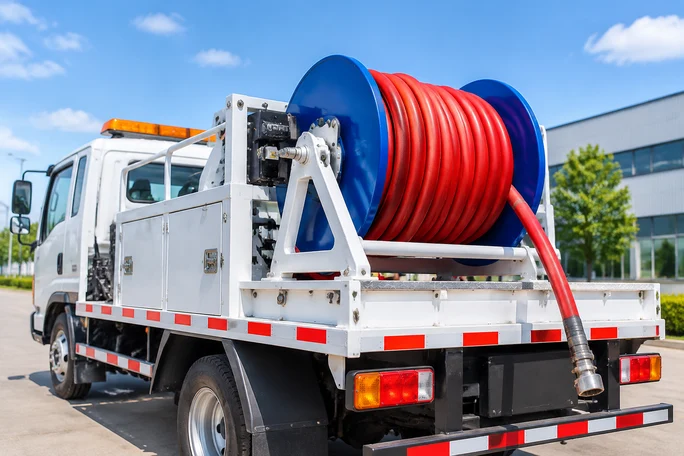
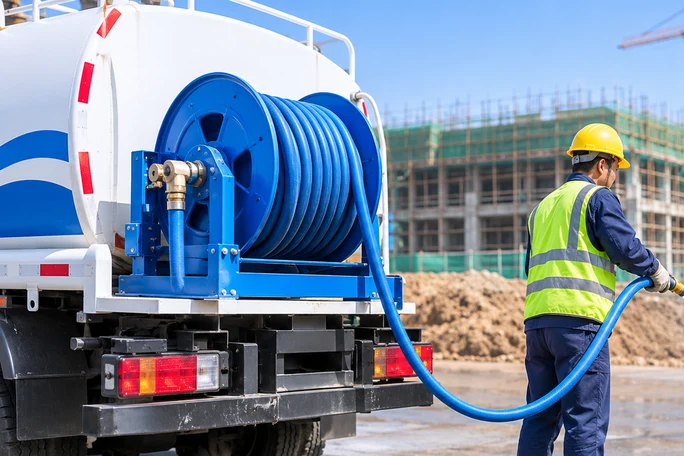
Application illustration of a large hose reel mounted on a water truck

How a reel fits into a water transfer line

A water transfer hose reel stores a delivery hose near the source. With a live swivel, the supply line stays connected while the hose pays out. The hose can reach a receiving tank, piece of equipment or irrigation connection and return to the drum after use.

Size the reel as part of the supply line, from the pump or utility outlet through the swivel and hose to the receiving connection. A longer run or smaller hose bore can reduce pressure at the outlet. For mobile installations, see CYCO’s truck-mounted hose reel guide.

Three water transfer setups

Choose the reel location and hose route around the water source and the points you need to supply.

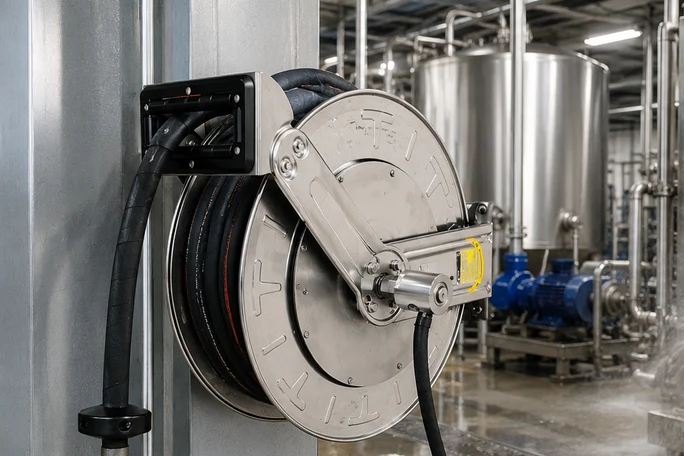
A wall-mounted hose reel beside industrial process piping

Fixed utility water points

Mount a live-swivel reel near a dedicated outlet for filling totes or supplying portable equipment. Check that the hose can reach the receiving connection and the swivel remains accessible.

Specify Required flow at the receiving connection, hose reach, fitting sizes and mounting layout.

A large hose reel mounted on a utility truck

Mobile water delivery

Plan the pump, reel and delivery hose together for a water truck or service trailer. The weight and diameter of the filled hose help determine drum size and rewind requirements.

Specify Pump flow and pressure, hose weight, deck space and payout direction.

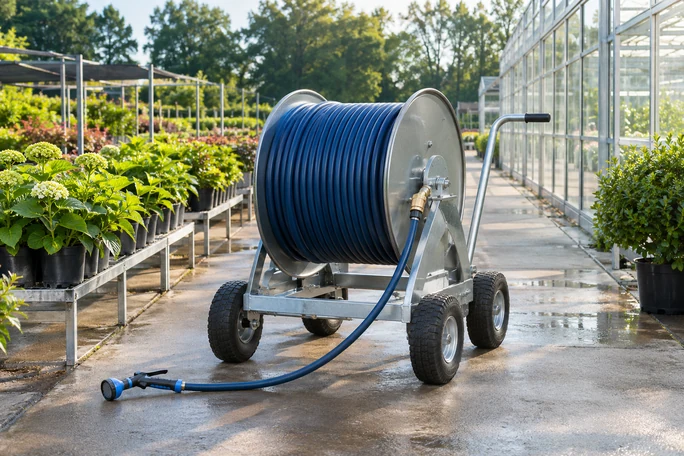
Application illustration of a hose reel beside nursery planting benches

Nursery and grounds irrigation

Store the supply hose at a fixed outlet and deploy it to a watering point or irrigation connection. Check pressure with water flowing at the farthest zone.

Specify Watering distance, hose diameter, outlet pressure and connection type.

What to check before selecting a reel

Start with the flow you need at the outlet. Then check that the hose, reel and fittings can deliver it under the expected operating conditions.

Flow and pressure at the outlet

Start with the required flow and pressure at the receiving equipment. Allow for losses through the hose, swivel and fittings, and account for any elevation change.

Hose size and reel capacity

Use the hose inside diameter to assess flow. Use the outside diameter, working length, bend radius and loaded weight to check drum capacity and rewind suitability.

Water source and materials

Identify the water source, temperature and any treatment chemicals. Confirm that the hose, swivel, seals and fittings are suitable for the water being transferred.

Mounting and rewind

Share the mounting layout, hose pull direction and clearance around the swivel. Compare rewind methods based on hose weight, frequency of use and available power.

Water transfer hose reel FAQs

Does a water transfer hose reel increase flow?

The reel stores and guides the hose. Flow at the outlet depends on the supply or pump, hose bore and length, restrictions through the swivel and fittings, and any elevation change.

How do I choose the hose inside diameter?

Start with the target outlet flow and pressure, working length and elevation change. Check the hose maker’s pressure-loss data and account for losses through the swivel and fittings.

Can I use a water transfer reel for drinking water?

Request documentation for the exact assembly and intended drinking water use. Confirm each wetted component, including the hose, swivel, seals and fittings, against the project requirements.

What should I send for a water transfer reel quote?

Include the water source, temperature, required outlet flow and pressure, supply conditions, hose length and diameter, fittings, mounting layout and quantity.
CYCO exhibition photo 1
CYCO exhibition photo 2
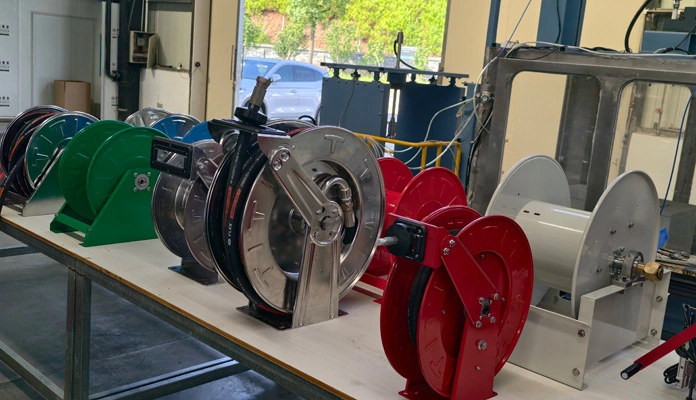
CYCO hose reel display photo 1
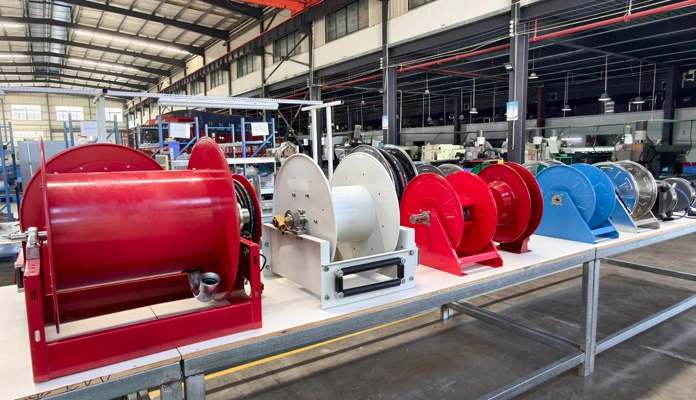
CYCO hose reel display photo 2
CYCO hose reel display photo 3

Send inquiry