Truck-Mounted Hose Reel: Type, Application and Selection Guide
November 6, 2026 | Industrial Hose Reels
Introduction
Trucks used for industrial maintenance, water supply, fire fighting, equipment maintenance and other mobile operations usually need to carry hoses to different working places. These hoses are usually used to transport water, compressed air, lubricating oil, grease, hydraulic oil or other working media. If there is no reasonable storage and management, the hose will be easily entangled and worn, which will also increase the difficulty of field deployment and recycling, especially in the case of limited space or changing working environment.
Truck-mounted hose reel is a kind of hose storage and conveying equipment installed on trucks or other mobile working trucks, which can help operators to store hoses in an orderly manner and unfold or retract them according to the needs of operations. It can reduce the manual handling and sorting work of the hose, and keep the hose neat and easy to take when the truck moves between different job sites.
However, not all truck-mounted hose reels are suitable for every truck and operation scenario. Hose specifications, working pressure, driving mode, installation location and frequency of use will all affect the selection of equipment. Understanding these factors is helpful to choose the reel that not only conforms to the truck layout, but also meets the actual operation requirements.
1. What Is a Truck-Mounted Hose Reel?
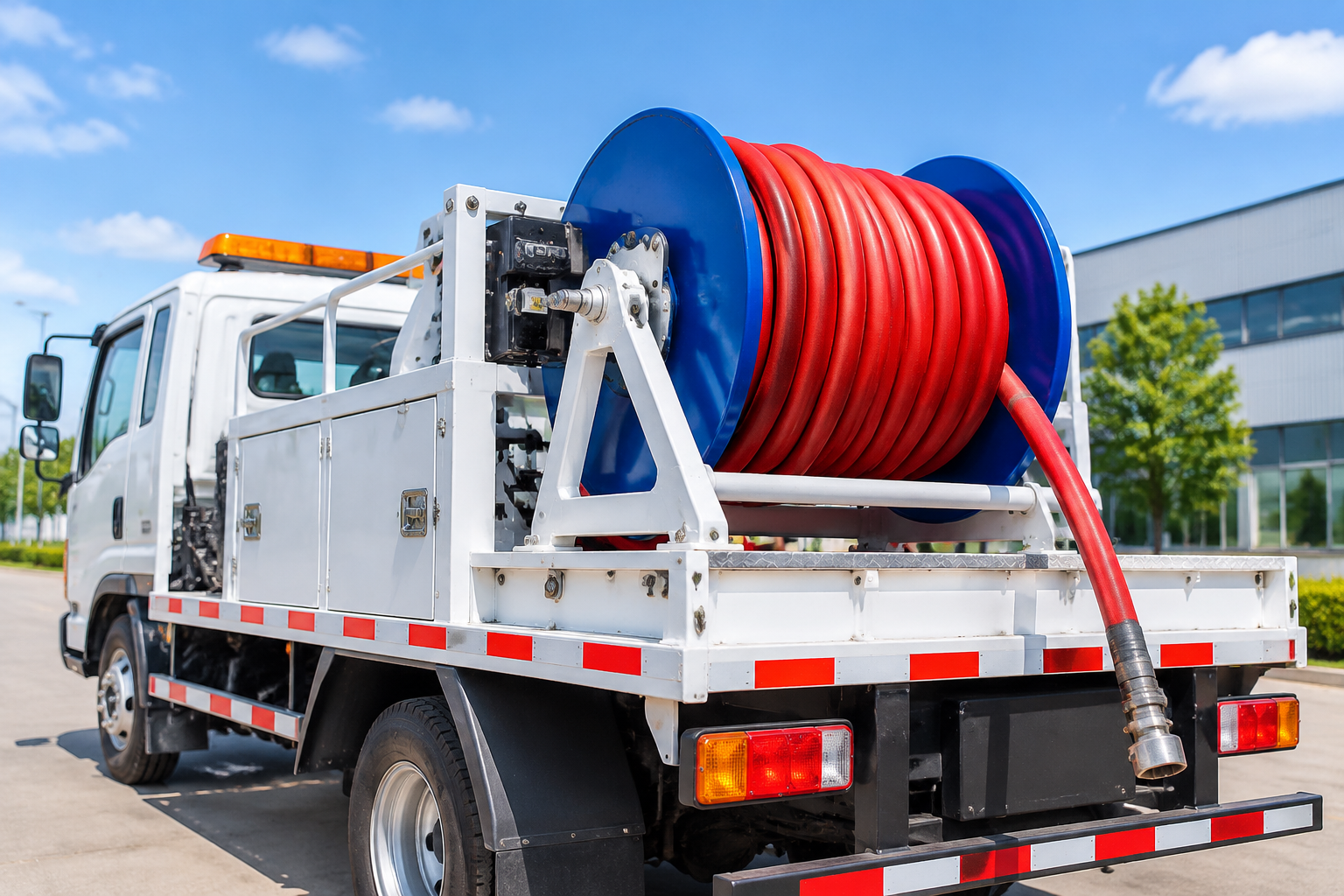
Truck-mounted hose reel is a kind of hose storage and unwinding equipment installed on trucks or other mobile working trucks. It usually consists of a drum, a supporting frame, a central shaft, a hose connecting part and a retracting mechanism. Depending on the specific model, it may also be equipped with a rotary joint, a guide arm, a protective shell or a drive motor.
When working, the operator can pull the hose out of the drum and extend it to the required working area; After use, take the hose back to the drum. For trucks that need to work in multiple locations, this way can avoid the need to manually sort out and store long hoses after each job.
Compared with the fixed hose reel, the truck-mounted reel needs to consider more additional factors. Vibration, road bumps, weather changes and limited installation space during truck driving will all affect the equipment. Therefore, its supporting structure and fixing method should not only meet the requirements of normal hose retraction, but also adapt to the use conditions during truck transportation.
Truck-mounted hose reel can be configured in many ways. Some use spring-driven mechanism to realize automatic recovery, some operate by hand, and some use motor or other power system to drive. The specific choice depends on the weight, length, frequency of use and the power source that the truck can provide.
2. The Common Types of Truck-Mounted Hose Reels
The type of hose reel should be mainly determined according to the conveying medium and actual working requirements. Different types of hoses have differences in working pressure, material compatibility and operation mode, so it is necessary to choose the corresponding reel configuration.
2.1 Water Hose Reel
Water hose reels are often used in waterwheels, cleaning trucks, irrigation trucks and mobile cleaning equipment to help operators transport water to areas inconvenient to be covered by fixed hoses.
For this kind of application, the reel needs to be able to accommodate the hose with the required length and diameter, and at the same time, it has enough bearing capacity to adapt to the weight and size of the hose. Because the water hose reel is often in contact with moisture, corrosion resistance is also an important consideration, especially when it is used outdoors or in humid environment.
According to the specific operation requirements, the water hose reel can be used for road cleaning, dust suppression on the construction site, equipment cleaning, garden irrigation and other water supply operations.
2.2 Hydraulic Hose Reel
Hydraulic hose reels are often installed on mobile maintenance trucks and service trucks for maintenance of construction machinery, agricultural machinery and other hydraulic equipment.
This kind of reel must match the specifications of hydraulic hose and the requirements of hydraulic system. Working pressure, flow rate, compatibility of hydraulic oil, and rated performance of rotary joints and connecting parts should be considered when selecting the type.
Because hydraulic hoses usually have large weight and high working pressure, the reel structure and retraction mechanism must meet the corresponding hose configuration requirements. The installation method also needs to consider the vibration of the truck and the load caused by the repeated deployment and recovery of the hose.
2.3 Air Hose Reel
Air hose reels are often used in mobile maintenance trucks, maintenance workstations and service trucks equipped with compressed air systems. It can provide compressed air for pneumatic tools, tire inflation, equipment cleaning and mechanical maintenance.
When selecting the type, it should be confirmed that the diameter, length and working pressure of the reel and the air hose match. The installation location should also be planned reasonably to ensure that the operator does not need to let the hose bypass the edge of the truck or other equipment when connecting the pneumatic tools.
Spring-driven and manual are common choices. If the hose is long or used frequently, the electric hose reel can also be considered.
2.4 Tubing and Grease Hose Reel
Tubing and grease hose reels are mainly used to lubricate service trucks, fleet maintenance trucks and mobile lubricating equipment, helping operators to transport lubricating media to mechanical equipment, trucks, bearings and other parts that need lubrication.
Hoses, seals, joints and rotary joints must be compatible with the oil or grease being transported. The viscosity of medium, working pressure, temperature and hose size should also be considered when selecting the type.
If the truck needs to transport a variety of lubricating media, it can be equipped with different reels respectively, and the hose lines are clearly marked, so as to reduce the risk of media mixing and facilitate daily management.
2.5 Cable Reel
Some service trucks also need to carry power cables or signal cables for on-board lighting, testing equipment, power tools and other on-board systems. Cable reels can help organize and store these cables, and control the deployment and recycling of cables.
Different from the hose reel for conveying fluid, the cable reel needs to be selected according to electrical parameters, including voltage, current, cable type and conductor cross-sectional area. At the same time, the electrical connection mode and winding structure of the reel must also meet the actual use requirements.
3. The Application Scenarios of Truck-Mounted Hose Reel
Truck-mounted hose reel can be applied to a variety of mobile operation scenarios. What kind of reel configuration is needed depends on the truck type and actual work task.
3.1 Waterwheel
Water trucks use hose reels to transport water to work areas such as road cleaning, dust suppression on construction sites, agricultural irrigation and industrial cleaning.
A suitable reel can help the operator to unwind the hose from the truck to the work area and take it back after the operation. The hose length, water supply flow, truck layout and actual working environment should be considered comprehensively when selecting.
3.2 Mobile Maintenance Trucks and Service Trucks
Mobile maintenance trucks are usually equipped with tools, spare parts and maintenance equipment, which are used to carry out equipment maintenance outside the fixed maintenance workshop. Depending on the type of service provided by the truck, hydraulic, air, oil
or grease hose reels can be installed.
For example, trucks that are mainly responsible for the maintenance of hydraulic equipment may need high-pressure hydraulic hose reels, while lubrication service trucks may need to be equipped with lubricating oil and grease delivery systems respectively.
3.3 Fire Engines and Emergency Rescue Trucks
Fire engines and other emergency rescue trucks may use hose reels to store and deploy fire hoses for fire fighting, water supply or auxiliary operations.
In this kind of application, quick access, reliable deployment and safe storage are very important. The reel must match the specifications and working pressure of the hose used in the fire fighting system. At the same time, the installation location should be convenient for firefighters to operate quickly and should not affect the normal use of other equipment and truck storage compartments.
3.4 Industrial and Utility Service Trucks
Industrial and utility service trucks may need to carry hoses for equipment cleaning, fluid transportation, on-site maintenance and other mobile operations. This kind of truck is common in manufacturing plants, power plants, construction projects and infrastructure maintenance projects.
What kind of reel is needed depends on the conveying medium and working environment. For trucks that often run in dust, wet or corrosive environment, it is also necessary to focus on the reel material, protective structure and the convenience of later maintenance.
4. How to Choose the Appropriate Truck-Mounted Hose Reel?
Choosing a suitable truck-mounted hose reel should not only look at whether the reel can accommodate the hose, but also consider the hose specification, working system, truck structure and expected service conditions.
4.1 Hose Length, Truck Operating Range and Storage Space
When selecting a truck-mounted hose reel, it is not only necessary to determine the capacity of the reel based on the length and diameter of the hose, but also to consider the working range that the truck can cover after parking and the actual laying distance of the hose from the reel to the working point.
First of all, the required hose length should be determined according to the common working position of the truck. For example, a waterwheel needs to consider the distance between the parking position of the truck and the road cleaning area, while a mobile maintenance truck needs to consider whether the truck can park near the equipment and whether the hose can extend to the mechanical parts that need maintenance.
Secondly, it is necessary to confirm whether there is enough space to accommodate the fully retracted hose after the reel is installed. The available space of truck cargo platform, side equipment cabin and rear area is usually limited, so the reel should be selected according to the outer diameter, length and overall size of the hose after winding, so as to avoid the installation and use of other truck-mounted equipment being affected by the oversized reel.
In addition, the path of the hose from the reel outlet to the working area outside the truck should be checked to ensure that it will not be blocked by cars, wheels or other equipment when it is deployed and retracted.
4.2 Truck Carrying Capacity and Reel Fixing Structure
Truck-mounted hose reel needs to bear the vibration and impact load generated by itself, fully loaded hose and truck running. When selecting the model, it should be confirmed that the truck cargo platform, installation platform or bracket can bear the total weight of the reel and hose.
For the reel installed on the side or rear of the truck, attention should also be paid to the stress of the mounting fulcrum. The reel frame, base and fixing parts need to have sufficient strength and be reliably connected to the load-bearing structure of the truck to avoid looseness, displacement or damage during driving.
4.3 Reel Capacity and Frame Strength
Truck-mounted hose reel should not only bear the weight of hose itself, but also deal with the load generated during truck transportation and actual operation.
Check the drum size, frame structure, central shaft support mode and rated hose capacity when selecting the type. The supporting frame needs to be stable enough to bear the weight of the hose when it is fully retracted and the load generated during the deployment and recovery of the hose.
For heavy-duty operations, a reinforced frame can be considered instead of a small reel with limited bearing capacity. At the same time, it should also be confirmed that the truck installation structure can bear the total weight of reels, hoses and related components.
4.4 Driving Mode and Frequency of Use
Different driving modes are different in terms of operation convenience and applicable scenarios.
-
Manual reel: suitable for scenes with light hose or low frequency of use. The operation is simple, and no additional pow source is needed.
-
Spring-driven reel: the hose can be automatically recovered after use, which is suitable for operations that need to expand and recover the hose frequently. The spring mechanism needs to match the weight and length of the hose.
-
Motor-driven reel: suitable for scenes with long hose, heavy weight or frequent unwinding. The drive system should match the power source that the truck can provide and the actual work requirements.
The specific selection should be determined in combination with hose load, operating frequency, operator demand and truck configuration.
4.5 Installation Location and Available Space
The installation position of the reel will affect the coverage of the hose, the convenience of access and the overall equipment layout of the truck.
Common installation locations include truck cargo platform, side equipment cabin, rear area and special equipment platform. Different locations have different space and operation requirements.
Before type selection, the available installation area should be measured, and the drum size, hose outlet direction, operator’s activity space and the layout of surrounding equipment should be considered. When the hose is deployed, it should be able to extend to the target operation area smoothly to avoid excessive pulling, sharp bending or interference with truck parts.
5. Suggestions on Operation and Maintenance of Truck-Mounted Hose Reel
Regular inspection is helpful to keep the truck-mounted hose reel in normal condition, especially for trucks that need frequent field operations.
Before use, check whether the reel is firmly fixed and whether the hose, joint and visible connection parts are obviously damaged. When unfolding the hose, you should follow the normal pulling direction to avoid sudden and hard pulling, and don’t let the hose drag on a sharp surface.
After use, the hose should be taken back to the drum evenly to avoid winding confusion or uneven load on the drum. For spring-driven reels, the hose recovery process should be controlled according to the manufacturer’s instructions, and the hose should not suddenly bounce back.
The following components should also be checked regularly:
-
Hose surface: check for cuts, cracks, bulges, wear and kinks.
-
Frames and fasteners: Check for looseness, deformation, corrosion or cracking.
-
Rotating joints and connecting parts: Check for visible leakage, wear or damaged joints.
-
Drive and recovery mechanism: check whether there is abnormal noise, uneven operation or incomplete recovery.
-
Drum and guide parts: remove accumulated dirt and check whether there are obstacles affecting operation.
If hoses or other parts are found to be damaged, they should be repaired or replaced in time according to the manufacturer’s requirements. For the pressurized fluid system, the medium supply must be cut off and the residual pressure released according to the specified safety procedures before maintenance. Do not directly search for the location of suspected high-pressure fluid leakage by hand.
Conclusion
Truck-mounted hose reel can provide orderly hose storage and convenient access for waterwheels, maintenance service trucks, fire engines and industrial service trucks. However, the suitable reel configuration depends on the conveying medium, hose specification, working pressure, driving mode, truck layout and actual working environment.
Before purchasing, we should focus on evaluating hose capacity, frame strength, component compatibility and available installation space. During installation, attention should be paid to structural support, hose direction, outlet direction and spatial relationship with other truck-mounted equipment. Daily inspection and correct hose operation are also helpful to reduce unnecessary wear and running failures.
Only by selecting the appropriate hose reel according to the actual task of the truck can a more reasonable and practical mobile hose management system be established.
Related Posts
Best Air Hose Reels for Industrial and Home Use
May 20, 2026
Fuel Hose Reel Selection Guide for Safe Fueling Systems
June 22, 2026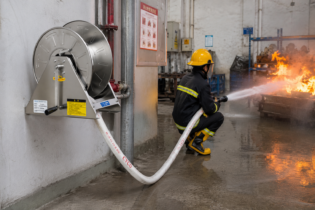
How to Operate a Fire Hose Reel System: A Best…
June 16, 2026