Main Applications of Heavy-Duty Hose Reels
April 7, 2026 | Heavy Duty Hose Reels
Heavy-duty hose reels are widely used in industrial, engineering, and specialized applications that require the long-distance, efficient, and safe transport of gases, liquids, or cable management. By automatically winding and unwinding the hose and keeping it organized, they address the common issues associated with traditional hoses, such as tangling, rapid wear, and safety hazards.
Compared to standard hose reels, the key difference lies in their intended applications: heavy-duty hose reels are designed for industrial-grade, high-load, continuous operation, or hazardous environments, whereas standard hose reels are primarily intended for light, intermittent use in homes or workshops.
Standard Hose Reels: The housing is typically made of plastic or thin steel plate, and the spring strength is relatively low. They are primarily designed for low-pressure (<10 bar) air, water, or low-voltage cables. The reel and swivel joints are often made of plastic or standard brass, with standard rubber seals. Hose lengths generally range from 10 to 20 meters, with smaller inner diameters (e.g., 6–8 mm). These units have a short duty cycle and are not suitable for continuous deployment or frequent, round-the-clock operation. They lack explosion-proof features and static grounding, and must not be used in flammable or explosive environments.
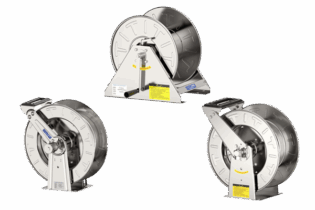
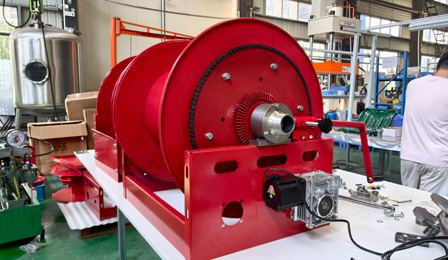
Heavy-duty hose reels: Constructed from heavy-gauge steel plate or all-stainless steel, with stronger, more resilient springs, they have a service life of up to tens of thousands of cycles. They can withstand high-pressure (100–400 bar) hydraulic oil, steam, highly corrosive chemicals, and high-current cables. Key components are made of steel or chrome-plated steel, with precision rotary joints and seals made of corrosion-resistant materials such as Teflon and fluororubber. Hoses can be up to 30–50 meters long, with an inner diameter of 1 inch (25 mm) or more. Designed for continuous operation (e.g., assembly lines or mining operations). With a high safety rating, they can be equipped with explosion-proof motors and conductive rings for static grounding, ensuring safe operation in environments with flammable dust or gases (ATEX).
The primary applications and scenarios for heavy-duty hose reels are as follows:
Industrial Production and Manufacturing
- – Automotive and Machinery Maintenance: Used in dealerships and repair shops to deliver compressed air (to power pneumatic tools), dispense engine oil, grease, and antifreeze, and keep workstations tidy.
- – Heavy-duty and assembly workshops: Used on production lines to deliver air, coolant, or power cables over long distances, providing flexible power connections for tools such as pneumatic wrenches and grinders.
- – Welding and cutting: Specifically designed to manage and deliver welding gases such as oxygen and acetylene, eliminating safety hazards caused by tangled hoses.
Engineering and Special-Purpose Vehicles
- – Vehicle Integration: Installed on construction vehicles, trucks, or mobile service stations for refueling and dispensing hydraulic oil, gear oil, and other fluids, facilitating field operations.
- – Vehicle Repair Shops: For the maintenance of large vehicles such as trucks and buses, electric heavy-duty hose reels are used to deploy and retract heavy exhaust extraction hoses, effectively ensuring workshop air quality.
Chemical and Special Environments
- – Corrosion-Resistant Applications: In food processing, pharmaceuticals, seawater operations, and chemical transfer, 304 stainless steel hose reels are selected to withstand corrosive media.
- – Explosion-Proof Environments: In hazardous areas with flammable dust or gases (ATEX-certified zones), specialized explosion-proof hose reels are required.
Agriculture and Municipal Engineering
- – Agricultural Irrigation: Used in greenhouses, farms, or landscaping for long-distance water delivery for sprinkler irrigation.
- – Municipal and Sanitation: Used for road sweeping, landscaping maintenance, or in conjunction with high-pressure washers for pipe cleaning and surface washing.
- – Construction: Used on construction sites to transport water, air, or lubricants; features a robust structure to withstand harsh site conditions.
Other General Fluid Transfer
- – Utility Stations: In industrial or mining areas, these stations centrally manage the distribution points for various media such as steam, air, nitrogen, and water. Media are color-coded to prevent misconnections.
- – Mining and Offshore: In harsh environments such as mines and offshore platforms, these hoses are used to transport high-pressure water or hydraulic oil. The equipment must possess exceptional durability and corrosion resistance.
Related Posts
How to Choose the Right Agricultural Hose Reel
July 7, 2026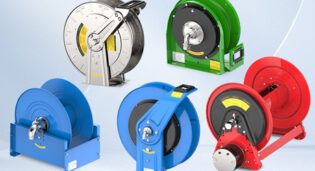
Hose Reels: How to Avoid Safety Hazards
June 15, 2026