Can a Heavy-Duty Water Hose Reel be used as a Garden Hose Reel?
August 20, 2026 | Garden Hose Reels, Water Hose Reel
A lush, green lawn and a vibrant garden require consistent care, but handling an unruly watering system can quickly turn a peaceful outdoor routine into a daily frustration. Most gardeners have struggled with kinked hoses, messy tangles, trips over scattered lines, and cheap plastic storage solutions that crack under intense sunlight. Investing in a reliable Garden Hose Reel is one of the most effective ways to protect your equipment, maintain garden safety, and streamline your outdoor watering tasks.
However, as residential yards grow larger, water pressure requirements increase, and homeowners demand longer-lasting equipment, traditional residential options often fall short. This raises a common question among property owners: Can you use a commercial heavy-duty water hose reel as a garden hose reel?
The short answer is yes. In fact, upgrading to an industrial-grade Water Hose Reel for home or agricultural gardening is one of the smartest long-term investments you can make. This guide explores standard garden storage options, the advantages of upgrading to heavy-duty water reels, and how to select the perfect system for your landscape.
1. Standard Garden Hose Reels: Everyday Solutions for Residential Lawns
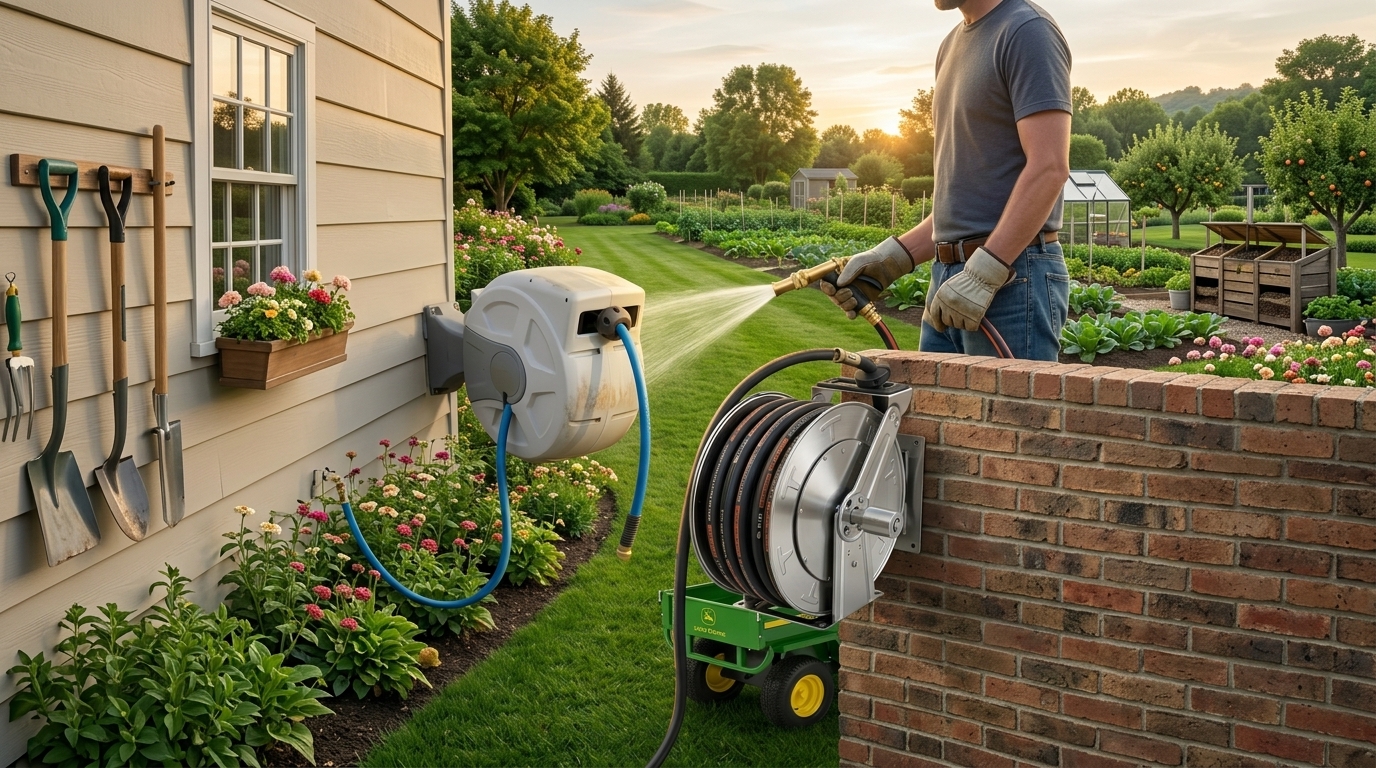
For typical suburban homes, small flowerbeds, and modest lawn spaces, standard residential hose storage units offer an accessible, user-friendly entry point. These systems keep hoses neatly off the ground, prevent UV-induced deterioration, and eliminate dangerous tripping hazards along walkways.
Depending on your landscape layout and physical space, traditional residential models generally fall into three main categories:
1.1 Manual Garden Hose Reels
Featuring lightweight frames made of reinforced engineering plastics or lightweight aluminum, these units rely on a simple hand crank to wind and unwind the line. They are ideal for compact gardens, patios, and budget-conscious homeowners who want a portable solution.
1.2 Garden Hose Reel Carts
Equipped with sturdy wheels and ergonomic handles, cart-style reels offer mobile convenience across large properties. They allow gardeners to transport heavy, water-filled hoses effortlessly between front yards, back gardens, fruit orchards, and driveway washing stations without heavy lifting.
1.3 Wall-Mounted & Auto-Retractable Hose Reels
Mounted directly to exterior brick, timber, or concrete walls, these space-saving units feature 180-degree swivel brackets for flexible directional reach. Auto-retractable models utilize an internal latching mechanism—allowing you to pull out the exact length needed, lock it in place, and retract it smoothly with a gentle tug.
While standard residential options perform well under normal domestic water pressure and light weekly use, high-frequency watering, harsh weather exposures, and heavy-duty washdown tasks can accelerate wear and tear on plastic components.
2. Upgrading to a Water Hose Reel for Garden Use: Why Make the Change?
Many homeowners may wonder: with dedicated garden hose reels readily available, why consider using an industrial-grade water hose reel in a garden setting? The answer lies in fundamental differences in performance, longevity, and overall user experience. Here are five key reasons to make the upgrade.
2.1 Superior Materials and Construction
Standard garden hose reels are typically made from plastic or lightweight metal with limited lifespans. They fade and become brittle under direct sunlight and may crack during winter freezes. Water hose reels, by contrast, feature heavy-duty steel construction with powder-coated or galvanized rust-proof finishes, capable of withstanding years of sun exposure and harsh weather without deterioration. Critical components such as full-flow swivel joints and reinforced spring mechanisms are engineered for high-frequency use and higher pressures, delivering reliable performance through countless retraction cycles.
2.2 Extended Service Life and Lower Long-Term Costs
The average garden reel lasts only two to three seasons before showing signs of fading, cracking, or mechanical failure. A water hose reel used in a garden setting offers a service life of ten years or more. While the initial investment is higher, the elimination of frequent replacements translates into significant savings in both equipment costs and the time spent on purchases and reinstallation.
2.3 Greater Capacity and Load-Bearing Capability
Garden reels typically accommodate only 100 to 150 feet of hose with limited weight capacity. Water hose reels are designed for longer hoses and heavier total loads, handling up to 200 feet or more, even with 3/4-inch diameter hoses. This capability is essential for large gardens or long-distance watering applications.
2.4 Superior Operational Experience
The retraction mechanisms of water hose reels are more robust—spring-driven models feature industrial-grade torque for smooth, controlled rewinding, while manual models incorporate stronger transmission components for easier, jam-free cranking. Full-flow swivel designs minimize pressure loss, delivering better watering and cleaning performance compared to the leaks and pressure drops common in garden reels.
2.5 Resilience in Harsh Environments
Garden reels are unsuitable for winter storage or prolonged outdoor exposure due to freeze damage risks. Water hose reels offer wider operating temperature ranges and corrosion-resistant protection, maintaining stable performance across freezing winters, scorching summers, and high-humidity coastal conditions. Sealed housings also prevent dust, insects, and moisture from penetrating internal components, further extending service life.
3. Comparing Your Options: Standard Garden vs. Heavy-Duty Water Reels
To determine whether a standard residential reel or a heavy-duty industrial water reel best fits your needs, evaluate your property size, watering habits, and operational demands against the technical comparison below:
| Feature / Criteria | Standard Residential Reel | Heavy-Duty Industrial Water Reel |
| Primary Material | UV-Stabilized Plastics (PP/ABS), Thin Aluminum | 304 / 316 Stainless Steel, Powder-Coated Steel |
| Hose Capacity & Size | 15m – 30m (Typically 1/2″ Diameter) | 30m – 60m+ (1/2″, 3/4″, and 1″ Diameters) |
| Pressure Rating | Low to Medium (100 – 300 PSI) | High to Ultra-High (1,000 – 5,000+ PSI) |
| Drive Mechanism | Manual Hand Crank or Light Duty Spring | Heavy-Duty Spring Retractable or Direct Gear Crank |
| Environmental Resistance | Moderate (Requires Winter Storage) | Extreme (Corrosion, UV, and Impact Resistant) |
| Ideal Application | Small Yards, Patios, Basic Flowerbed Watering | Large Estates, Farms, Nurseries, Heavy Washdowns |
4. Key Factors to Consider Before Purchasing
Selecting the right hose storage setup requires balancing technical specifications with your outdoor layout:
4.1 Hose Length and Internal Diameter
Ensure the reel drum capacity matches your hose specifications. Using a 3/4-inch high-flow garden hose requires a wider drum and sturdy spindle support compared to a standard 1/2-inch lightweight garden hose.
4.2 Mounting Requirements and Weight
Heavy-duty stainless steel water reels are significantly heavier than plastic alternatives. Ensure wall mounts are secured into structural studs, masonry, or solid concrete posts. For mobile requirements, select heavy-duty wheeled cart frames.
4.3 Working Water Pressure
Check your water supply pressure and equipment attachments. If you plan to connect high-pressure spray nozzles or power washers to your line, select a reel equipped with a brass or stainless steel full-flow swivel joint rated for elevated PSI levels.
4.4 Internal Swivel & Seal Quality
The swivel joint is the heart of any reel system. Look for high-grade Viton or NBR seals that resist continuous water flow, temperature fluctuations, and chemical additives without developing slow drips.
5. Essential Maintenance Tips for Maximum Longevity
A heavy-duty water hose reel generally requires less maintenance than a basic garden hose reel because it uses stronger materials and more durable components. However, regular care is still important, especially when the reel is installed outdoors and exposed to sunlight, rain, dirt, and seasonal temperature changes.
Simple maintenance can help prevent hose damage, leaking connections, difficult retraction, and premature wear of the reel mechanism.
5.1 Drain the Hose Before Freezing Weather
If the hose reel is installed in an area where temperatures can fall below freezing, drain the hose before winter or extended periods of cold weather. Water trapped inside the hose, swivel, or fittings can expand when frozen and place unnecessary stress on internal components.
After draining the hose, retract it completely or store it according to the manufacturer’s recommendations. If the reel will not be used for an extended period, disconnecting the water supply provides additional protection against pressure buildup and freezing-related damage.
For regions with mild winters, complete winterization may not be necessary, but draining the hose after prolonged periods of non-use is still a useful preventive measure.
5.2 Inspect the Hose Regularly
The hose itself should be inspected regularly, even when the reel mechanism is working properly. Look for cracks, cuts, abrasion marks, flattened sections, bulges, or signs of deterioration caused by UV exposure.
Pay particular attention to the areas near the hose connection and the section that passes through the hose guide. These areas experience repeated bending and movement during extension and retraction.
If the hose becomes damaged, replace it with a compatible hose that matches the reel’s recommended diameter, length, pressure rating, and connection specifications. Using an unsuitable replacement hose can affect both water flow and reel performance.
5.3 Keep the Hose Clean Before Retraction
Dirt, sand, mud, and plant debris can accumulate on a garden hose during outdoor watering. If the hose is repeatedly retracted while covered with abrasive particles, these contaminants can increase wear on both the hose surface and the reel’s guide components.
Removing excessive dirt and debris before retracting the hose, when the reel is used around soil, gravel, mulch, or construction areas. Keeping the hose reasonably clean also helps prevent dirt from entering fittings and swivel connections.
5.4 Check the Swivel Joint and Connections
The swivel joint is a critical part of a water hose reel because it allows the reel to rotate while maintaining continuous water flow. Periodically inspect the swivel, hose connection, fittings, and seals for signs of leakage.
A small amount of moisture around a connection may indicate a worn seal, loose fitting, or damaged hose connection. Addressing minor leaks early can prevent water damage and avoid more serious component failures.
When replacing seals or fittings, use components that are compatible with the reel and the water system. Do not overtighten connections, as excessive force can damage threads or sealing components.
5.5 Check the Retraction and Locking Mechanism
For spring-driven or auto-retractable water hose reels, periodically check whether the hose extends and retracts smoothly. The hose should move without excessive resistance, sudden jerking, or unusual noise.
If retraction becomes noticeably weaker, first check whether the hose is winding unevenly or whether dirt or debris is interfering with the guide. A hose that is not aligned correctly can place additional resistance on the reel mechanism.
5.6 Protect the Reel From Unnecessary Environmental Exposure
Heavy-duty water hose reels are generally more resistant to outdoor conditions than lightweight residential reels, but installation location still affects service life.
Whenever possible, install the reel in a position that minimizes prolonged exposure to standing water, excessive dirt, and direct impact. A suitable mounting location can reduce corrosion and protect the reel from accidental damage caused by vehicles, gardening equipment, or other outdoor tools.
For stainless steel reels, regular cleaning with fresh water can also help remove accumulated dirt, salt, and other contaminants, particularly in coastal or high-humidity environments.
6. Conclusion
Choosing the right watering setup comes down to understanding your property’s scale and your performance expectations. Standard plastic garden reels remain a practical, cost-effective choice for small urban lawns and routine flowerbed watering. However, for property owners who demand lifetime durability, handle extended hose lengths, or require high-pressure washdown performance, converting to an industrial-grade reel is the ultimate solution.
By investing in quality storage equipment—whether a versatile standard unit or a heavy-duty stainless steel system—you protect your hose from damage, eliminate frustrating tangles, and transform your daily lawn and garden maintenance into an efficient, enjoyable routine.
Related Posts
Hose Reels for Paper Mills: Applications in Paper Production
September 17, 2026
How to Choose the Right Automotive Hose Reel for Your…
August 14, 2026