Wall-Mounted Hose Reels vs. Ceiling-Mounted Hose Reels: Which Is Better?
June 23, 2026 | Industrial Hose Reels
In industrial facilities, automotive workshops, manufacturing plants, and maintenance centers, an Industrial Hose Reel plays an important role in keeping hoses organized, accessible, and protected. However, selecting the right hose reel is only part of the solution. Choosing the correct installation location can have a significant impact on productivity, safety, and workspace efficiency.
The two most common installation methods are wall-mounted hose reels and ceiling-mounted hose reels. While both help improve hose management, each offers unique advantages depending on the workspace layout and operational requirements. Understanding the differences between these mounting options will help you choose the most effective solution for your facility.
Understanding Wall-Mounted Hose Reels
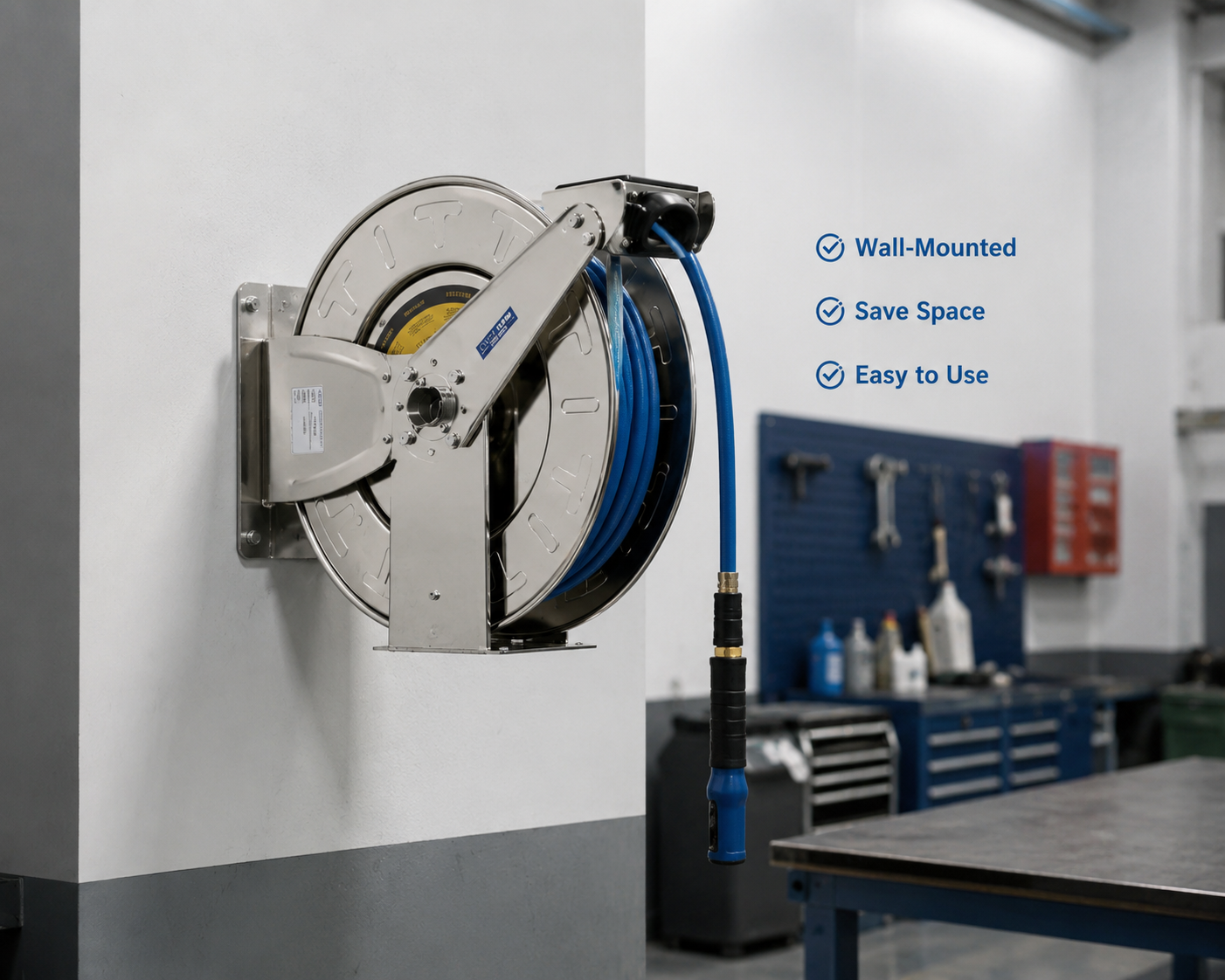
Wall-mounted hose reels are installed on walls, columns, or other vertical structures. They are one of the most widely used hose management solutions because they are simple to install, easy to access, and suitable for a wide range of industrial applications.
By utilizing vertical wall space, these reels keep hoses organized without occupying valuable floor areas. Operators can quickly pull out and retract hoses while remaining close to their workstations. In facilities where workflow is centered around fixed work areas, wall-mounted hose reels provide a practical balance between accessibility, space efficiency, and cost-effectiveness.
Benefits of Wall-Mounted Hose Reels
Wall-mounted hose reels offer several advantages, including simple installation, convenient operation, easy maintenance, and efficient use of available wall space. Because the reel is positioned within easy reach, operators can quickly deploy and retract hoses without disrupting workflow. Routine inspections, hose replacements, and maintenance tasks can also be completed more efficiently since the reel remains accessible at ground level.
In addition, wall-mounted systems require relatively little structural modification and can often be integrated into existing facilities without significant changes to the workspace layout. This makes them a popular choice for businesses seeking reliable hose management with minimal installation complexity.
Common Applications
Wall-mounted hose reels are commonly used in automotive repair shops, equipment maintenance facilities, service bays, and small to medium-sized manufacturing workshops. These environments typically involve fixed workstations where operators perform repetitive tasks within a limited area.
Because the hose remains close to the point of use, employees can work more efficiently while keeping floors free from unnecessary clutter. For facilities with adequate wall space and localized operations, wall-mounted hose reels often provide the most practical and economical solution.
When Ceiling-Mounted Hose Reels Make More Sense
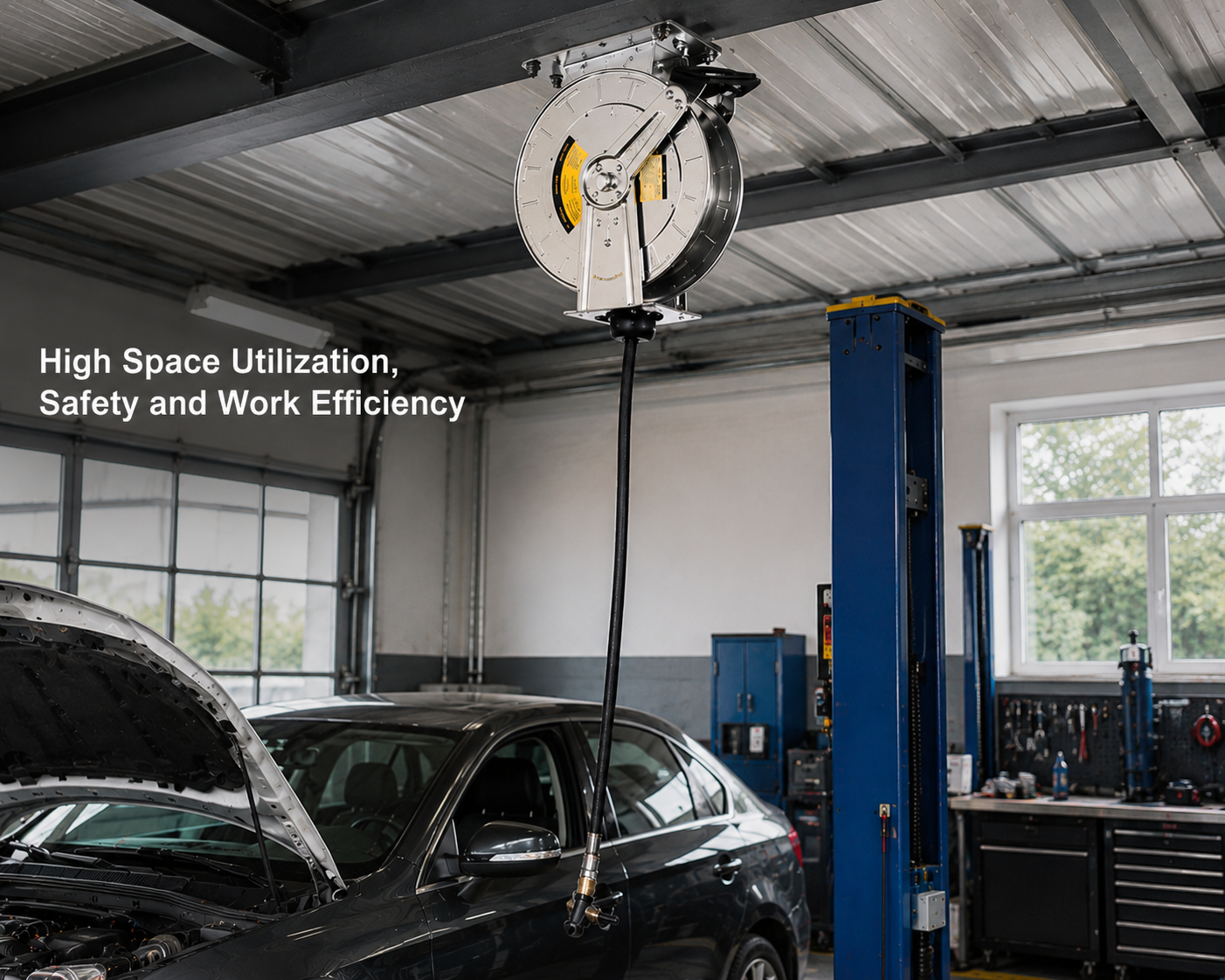
Ceiling-mounted hose reels are installed on ceilings or overhead support structures. Instead of using wall space, they take advantage of unused overhead areas, helping create a more open and organized workspace.
This installation method is particularly beneficial in large facilities where multiple workstations require access to hoses. By positioning the reel above the work area, businesses can maximize floor space, improve equipment mobility, and maintain cleaner operating environments.
Advantages of Overhead Installation
One of the biggest advantages of ceiling-mounted hose reels is their ability to keep hoses off the floor when not in use. Hoses can be pulled down as needed and automatically retracted overhead after operation, reducing clutter and improving workplace organization.
This overhead configuration not only increases available workspace but also helps protect hoses from abrasion, vehicle traffic, and accidental damage. In busy industrial environments where forklifts, carts, and heavy equipment operate regularly, keeping hoses elevated can significantly extend hose service life while reducing maintenance costs.
Ideal Industries and Workspaces
Ceiling-mounted hose reels are often preferred in large manufacturing plants, warehouses, aircraft maintenance facilities, assembly lines, and other multi-station work environments. These facilities typically require extensive hose coverage while maintaining clear pathways for personnel and equipment movement.
Because a single overhead reel can often serve a larger working area, ceiling-mounted systems help improve operational flexibility and reduce the need for multiple hose installations. As a result, they are frequently selected for facilities that prioritize space optimization, safety, and workflow efficiency.
Key Differences Between Wall-Mounted and Ceiling-Mounted Hose Reels
Although both installation methods help organize hoses and improve workplace efficiency, they differ significantly in how they utilize space, support daily operations, enhance safety, and affect installation requirements. Understanding these differences can help facility managers choose a hose reel solution that aligns with their operational goals, workspace constraints, and long-term maintenance expectations.
Space Efficiency
Space utilization is often one of the first factors considered when selecting a hose reel installation method. Wall-mounted hose reels make effective use of available wall space while keeping floors clear and work areas organized. They are particularly beneficial in workshops where operations are concentrated around fixed stations and where adequate wall surfaces are available for installation. By positioning hoses along walls or support columns, facilities can maintain efficient hose access without significantly affecting the existing layout.
Ceiling-mounted hose reels take space optimization a step further by utilizing overhead areas that would otherwise remain unused. Because the entire hose management system is suspended above the workspace, valuable wall and floor space can be reserved for machinery, storage systems, and production activities. This makes ceiling-mounted installations especially attractive in large industrial facilities, warehouses, and production lines where maximizing usable workspace is a priority.
Accessibility and Workflow
The installation position of a hose reel directly affects how efficiently employees can perform daily tasks. Wall-mounted hose reels provide quick and convenient hose access for operators working near fixed stations. Since the reel is typically installed close to the point of use, workers can easily pull out and retract hoses without unnecessary movement, helping reduce downtime and improve productivity. This configuration is particularly effective for repetitive operations performed within a limited working area.
Ceiling-mounted hose reels offer greater flexibility and mobility. A single overhead reel can often serve multiple workstations, allowing operators to move freely throughout a larger workspace without frequently repositioning equipment. Because hoses are delivered from above, movement paths remain less restricted and work areas remain more organized. In facilities where operations cover a wide area or involve multiple teams, ceiling-mounted systems can contribute to a smoother and more efficient workflow.
Workplace Safety
Workplace safety is another important consideration when comparing wall-mounted and ceiling-mounted hose reels. Both options improve safety by reducing hose clutter and encouraging proper hose storage after use. Organized hose management helps prevent accidents, reduces equipment damage, and creates a cleaner, more professional work environment.
However, ceiling-mounted hose reels generally provide a greater level of protection in busy industrial settings. Since hoses remain suspended above the work area, they are less likely to create tripping hazards or become damaged by forklifts, carts, and other moving equipment. Keeping hoses off the floor can also reduce the accumulation of dirt, oil, and other contaminants on walking surfaces. Wall-mounted hose reels still offer excellent safety benefits, especially in smaller facilities where hose routes are predictable and operational traffic is relatively controlled.
Installation and Maintenance
Installation complexity and long-term maintenance requirements can significantly influence the overall cost of a hose reel system. Wall-mounted hose reels are generally easier and more economical to install because they require only a structurally sound wall or column. The installation process is straightforward, and future maintenance is usually simple since the reel remains easily accessible for inspections, hose replacement, and component servicing.
Ceiling-mounted hose reels typically require more planning before installation. The building structure must be evaluated to ensure it can safely support the combined weight of the reel and hose assembly, and additional mounting hardware or support brackets may be necessary. Maintenance can also be more challenging because technicians often need ladders, lifts, or elevated access equipment to reach the reel. While these factors may increase initial and ongoing costs, many facilities consider the improved space utilization and operational efficiency well worth the investment.
How to Choose the Right Hose Reel for Your Facility
Choosing between a wall-mounted hose reel and a ceiling-mounted hose reel ultimately depends on the specific requirements of your workplace. There is no universally correct solution, as each installation method is designed to address different operational challenges.
If your facility has sufficient wall space, fixed workstations, and relatively localized operations, a wall-mounted hose reel is often the most practical and cost-effective option. It provides easy access, straightforward installation, and convenient maintenance while delivering reliable hose management for daily operations.
On the other hand, if maximizing workspace utilization, improving safety, and supporting multiple workstations are top priorities, a ceiling-mounted hose reel may offer greater long-term value. By utilizing overhead space, these systems help create a cleaner and more efficient working environment while reducing floor obstructions and extending hose service life.
Before making a final decision, businesses should evaluate factors such as available installation space, hose coverage requirements, frequency of use, maintenance accessibility, safety objectives, and future expansion plans. A comprehensive assessment will help ensure that the selected hose reel installation method supports both current operations and future growth.
Conclusion
Both wall-mounted and ceiling-mounted hose reels can significantly improve hose management, workplace organization, and operational efficiency. The best choice ultimately depends on the specific layout, workflow requirements, and safety priorities of your facility.
Wall-mounted hose reels are generally ideal for fixed workstations, smaller facilities, and applications where easy installation and maintenance are important considerations. Ceiling-mounted hose reels, on the other hand, excel in large industrial environments where maximizing space utilization, improving safety, and extending hose coverage are top priorities.
Rather than focusing solely on installation cost, businesses should evaluate the long-term benefits each solution can provide. By selecting the hose reel installation method that best matches operational requirements, companies can improve productivity, optimize workspace utilization, reduce maintenance issues, and create a safer working environment for employees.
Frequently Asked Questions
1. Can a ceiling-mounted hose reel be installed in an existing workshop?
Yes. However, the building structure must be evaluated to ensure it can safely support the reel and hose assembly. Additional support brackets may also be required depending on the facility’s structural design and load-bearing capacity.
2. Are wall-mounted hose reels easier to maintain?
In most cases, yes. Because the reel is installed at an accessible height, inspections, repairs, lubrication, and hose replacement can usually be completed more quickly and with lower maintenance costs.
3. Which installation method is safer?
Both options improve workplace safety compared with unmanaged hoses. However, ceiling-mounted hose reels typically provide greater protection against tripping hazards and hose damage in high-traffic industrial environments where vehicles and personnel move frequently.
Related Posts
Hose Reel Solutions for Manufacturing Plants
July 22, 2026
How to Choose the Right Sewer Jetter Reel for Your…
July 14, 2026