Storing Garden Hose for Winter: A Practical Guide
November 4, 2026 | Garden Hose Reels
1. Introduction
It is very important to store garden water pipes properly before winter comes. The water remaining in the hose may freeze and expand, causing pressure on the hose wall, connecting joints and other parts, which will lead to cracking, water leakage or other damage of the hose. These problems may not appear until the hose is reused in spring. If the hose is always connected to the outdoor faucet, it may also affect the normal drainage of the faucet and water supply pipeline, increasing the risk of pipeline freezing.
Storing garden hose in winter is more than just putting them away. Before winter comes, it is necessary to disconnect the water source, drain the internal water, clean and check the hose. At the same time, the storage environment and the type of garden hose reel will also affect the preservation of hoses in cold seasons. Doing these preparations will help protect the hose and make it easier to return to normal use after the weather gets warmer.
2. How to Prepare a Garden Hose for Winter Storage
Before storing the garden hose, make sure that there is no residual moisture inside the hose and in the connecting fittings. Even a small amount of water may freeze in cold weather, so it is necessary to check all parts of the whole watering system.
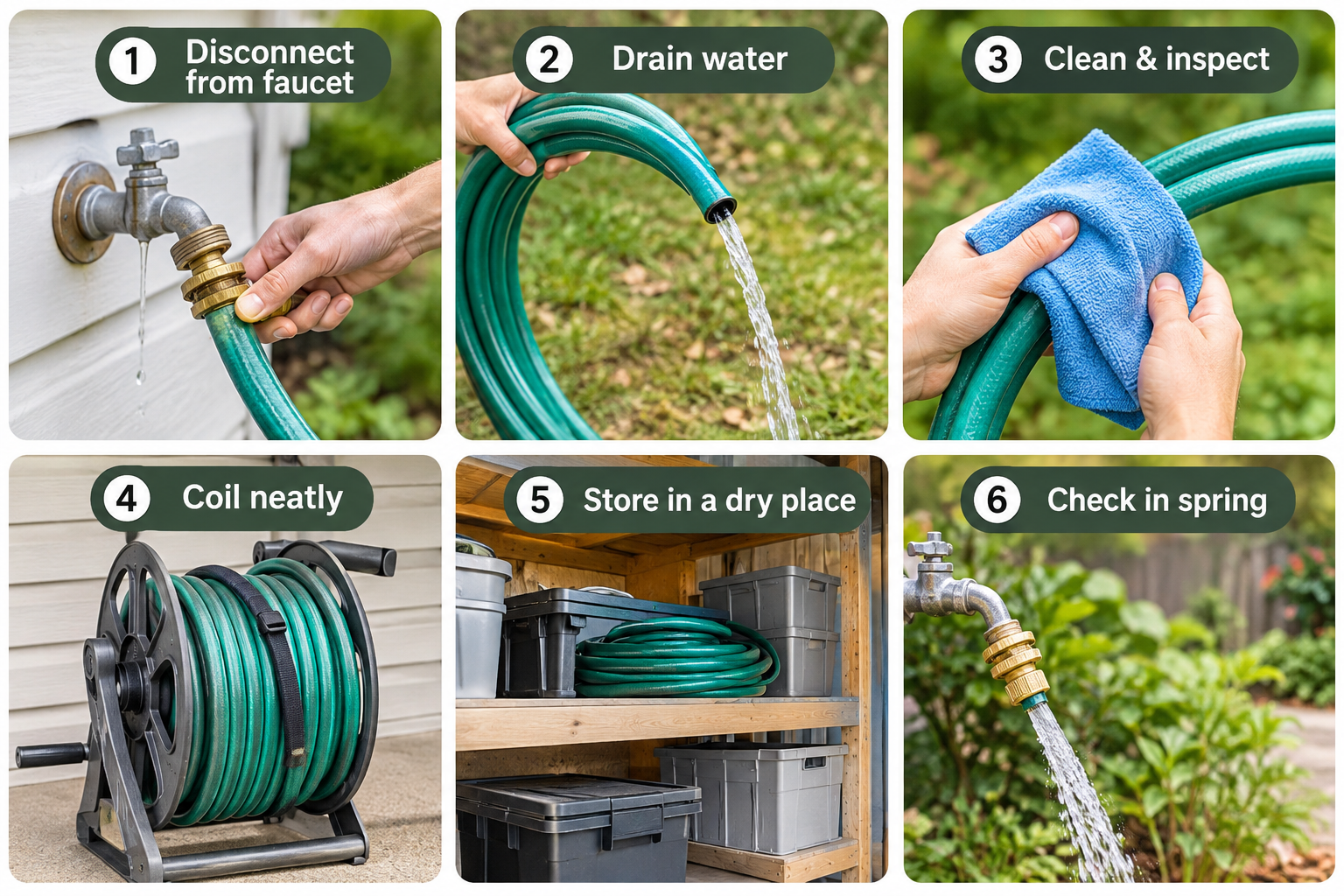
2.1 Disconnect the Hose From the Water Source
First, turn off the water supply and remove the garden hose from the outdoor faucet. Don’t let the hose be connected to the faucet all winter, even if the faucet is marked as antifreeze. The connected hose may accumulate water at the faucet outlet, which may affect the normal drainage.
If the outdoor faucet is equipped with an indoor stop valve, it should be operated according to the winter protection requirements of the house. In areas where the temperature may drop below freezing point, it may be necessary to close the water supply pipeline and drain the accumulated water in the empty pipe. After disconnecting the hose, check whether the faucet joint is leaking and whether the sealing washer is damaged.
2.2 Drain the Residual Water Inside the Hose
If the hose is installed on the reel, the hose should be completely pulled out first, and the water outlet end should be lower than the reel position. Then slowly recover the hose, so that the water can be discharged during the rewinding of the hose on the reel. If there is still water in some low-lying areas, you can gently shake the hose to help the water flow out. After confirming that both ends of the hose have been emptied, carry out subsequent storage.
For some hose systems, compressed air can also be used to discharge residual moisture, but the air pressure must meet the recommendations of hose and accessories manufacturers. Excessive air pressure may damage hoses or connecting parts.
2.3 Remove the Spray Gun, Nozzle and Other Accessories
Before storage, the spray gun, adjustable nozzle, quick connector, faucet water separator and other accessories should be removed. These parts usually have small water flow channels inside, which are easy to retain water. If moisture freezes in it, it may lead to cracking of the plastic shell or damage of the seal.
The accumulated water in each fitting should be drained separately and allowed to dry sufficiently. Small accessories can be concentrated in labeled storage boxes, which is convenient for reuse in spring. Also check whether the rubber gasket and sealing ring are worn, and replace the damaged parts before the next watering season.
2.4 Check the Hose for Cracks, Water Leakage and Wear
It is also a good time to check the condition of hoses before storage in winter. The hose should be thoroughly inspected for cracks, cuts, flat deformation, bulging, and areas where the outer material is obviously hardened or worn.
Pay special attention to both ends of the hose. The connector is often pulled, twisted and repeatedly disassembled, so it is easy to be loose or damaged. Check whether the joint is firm and the sealing washer is in good condition.
If the damaged parts can be repaired by suitable connectors or repair joints, the repair should be completed before storage. If the hose is damaged in a large area, it should be replaced, instead of leaving it for use in the next season without inspection.
2.5 Clean and Dry the Hose Before Storage
If the hose has been used for garden watering, outdoor floor cleaning or other jobs that are easy to be contaminated with dirt, the dirt and sundries on the surface should be removed before storage. For ordinary garden hoses, soft cloth and clean water are usually used to clean them. Avoid using irritating chemicals or cleaning agents unless explicitly permitted by the hose manufacturer.
After cleaning, the hose should be fully dried before storage. Special attention should be paid to the parts that are easy to accumulate water, such as connectors and fittings. Keeping the hose clean and dry can also make the subsequent inspection more convenient and reduce the possibility of dirt entering the storage area.
2.6 Correctly Winding the Hose
After the hose is completely drained, cleaned and dried, it should be neatly wound for storage in winter. Proper bending radius should be maintained during winding to avoid too small bending, kinking or local extrusion, otherwise the hose structure may be affected and the flexibility in subsequent use may be reduced.
You can choose to manually wind or use the garden hose reel according to the hose length and storage conditions. When winding manually, try to keep the size of each circle even, so as to avoid the hoses from crossing each other or winding too tightly. If a reel is used, the handle or the recovery mechanism should be rotated slowly so that the hoses are evenly arranged on the reel to avoid concentrated accumulation on one side.
After winding is completed, the hose can be gently fixed with a hose fixing belt to prevent the hose from loosening. Be careful not to tie it too tightly to avoid squeezing the hose for a long time. Finally, put the rolled hose in a dry and stable position to avoid heavy objects pressing on it.
3. Where Should the Garden Hose Be Stored in Winter?
After completion of drainage and cleaning, appropriate storage locations should be selected to avoid long-term exposure of hoses to freezing temperatures, direct sunlight and environments that are prone to physical damage. The specific storage location depends on the local climate, available space and hose manufacturer’s storage recommendations.
3.1 Store in Indoor Space Such as Garage or Storage Shed
Garage, equipment room or garden shed can be used as suitable storage places in winter, provided that the space is kept dry and drastic temperature changes can be avoided. Being able to keep the indoor environment above freezing point is more conducive to protecting hoses, especially hoses with plastic parts and accessories, than being directly exposed to the outdoors.
Before storage, ensure that the floor or shelf is clean and free of sharp objects. If the hose is placed on a shelf, make sure it is properly supported. At the same time, keep the hose away from tools, chemicals, fuel containers and equipment that may squeeze or puncture the hose.
3.2 Avoid Prolonged Exposure to Freezing Environment
If there is no indoor storage space, in some climatic conditions, completely evacuated garden hoses can also be stored outdoors. However, this method cannot provide the same protection effect as indoor storage. Repeated freezing and thawing and frequent temperature changes may accelerate the aging of hose materials.
For areas with long winters or low temperatures, moving hoses into garages or storage sheds is usually a better choice. The low temperature resistance of different materials and product structures may be different, so always refer to the suggestions of hose manufacturers.
3.3 Stay Away From Direct Sunlight and Heat Sources
Long-term exposure to sunlight may gradually affect hose materials, especially plastic hoses. Ultraviolet radiation may lead to fading, surface aging and decreased flexibility of hoses. Choosing a sheltered storage location will help reduce this kind of influence.
At the same time, avoid placing hoses near heating equipment, boilers, hot water pipes or other strong heat sources. Excessive temperature may affect the hose material and nearby plastic joints. Generally speaking, a cool, dry and sheltered environment is more suitable for storing garden hoses.
3.4 Properly Protect Hose Joints and Fittings
The removed connectors, spray guns and other accessories should be placed in a dry container or shelf to avoid the loss of small accessories and reduce the possibility of them being wet or accidentally collided.
If the hose is equipped with a metal connector, make sure that the connector is dry before storage. Avoid contact with corrosive substances, and do not pile up heavy objects above the joint. Proper protection of these widgets will help to reduce the connection problems that occur in the next use.
4. How to Reactivate the Garden Hose in Spring?
After the weather gets warmer and the risk of severe frost has passed, check the hoses and reels before reconnecting the water source.
4.1 Check the Hose Surface and Connection Parts
Unfold the hose and check its full length for cracks, hardened areas, bulging or deformation. Check both ends for loose joints, worn washers or damaged threads.
If the hose is stored in a cold environment, it should be restored to a suitable temperature before operation or bending. The flexibility of some hose materials will decrease at low temperature, so forcibly bending the low-temperature hose into a smaller arc may cause damage.
4.2 Reconnect the Water Source and Check for Water Leakage
Reconnect the hose to the outdoor faucet and ensure that the connector is installed securely. When you turn on the faucet, you should gradually increase the water flow, instead of opening the valve completely at the beginning. Check the hose connection, joint position and the whole hose for water leakage.
If there is water leakage around the joint, check whether the sealing gasket and the joint are aligned first, and then decide whether further tightening is needed. Do not use excessive force to avoid damaging the plastic thread or sealing surface.
4.3 Check the Hose Reel and Recovery Mechanism
If the hose is stored with the reel, check the reel, frame, crank, mounting bracket and rotary joint. Pay attention to whether there is rust, loose bolts, damaged joints or other signs of wear.
For automatic retraction reels, the pull-out and recovery functions of hoses should be tested slowly. The hose should be able to move smoothly without jamming, uneven winding or abnormal noise. If the recovery mechanism is not operating normally, please refer to the manufacturer’s maintenance instructions before continuing to use it.
4.4 Confirm Whether the Water Flow Is Normal
After checking the connecting parts and reels, you can turn on the water source for a short time and let the water flow through the hose. Confirm whether the water flow is stable and whether there is water leakage, blockage or abnormal pressure change.
If the water flow is obviously weak, check the nozzle, connector and hose for blockage or damage. Completing these inspections before starting the daily gardening work will help to reduce the unexpected problems in the watering process.
5. Conclusion
Storing garden hose for winter should start with disconnecting the water source, removing the fittings and emptying the accumulated water inside. After that, clean and check the hose and store it in a sheltered environment to avoid long-term exposure to freezing temperature, direct sunlight and environments that are easy to cause physical damage.
Hose reels also need to be inspected, especially the water inlet, rotary joint and other connecting parts, because even if the hose has been emptied, there may still be moisture in these parts. Whether using manual reel, wall-mounted automatic retraction reel or cart-type garden hose reel, the manufacturer’s winter storage instructions should be followed, and the equipment should be inspected before reuse in spring.
Doing these preparations before winter will help to reduce hose damage, protect reel parts, and make the garden watering work more smooth in the next season.
Related Posts
How to Choose Garden Hose Reel Materials for Different Climates
October 19, 2026
Best Ways to Store a Garden Hose
October 23, 2026
Irrigation Hose Reel Selection Guide
November 3, 2026