Water Truck Hose Reel: Guide to Selection and Installation
November 4, 2026 | Water Hose Reel
Introduction
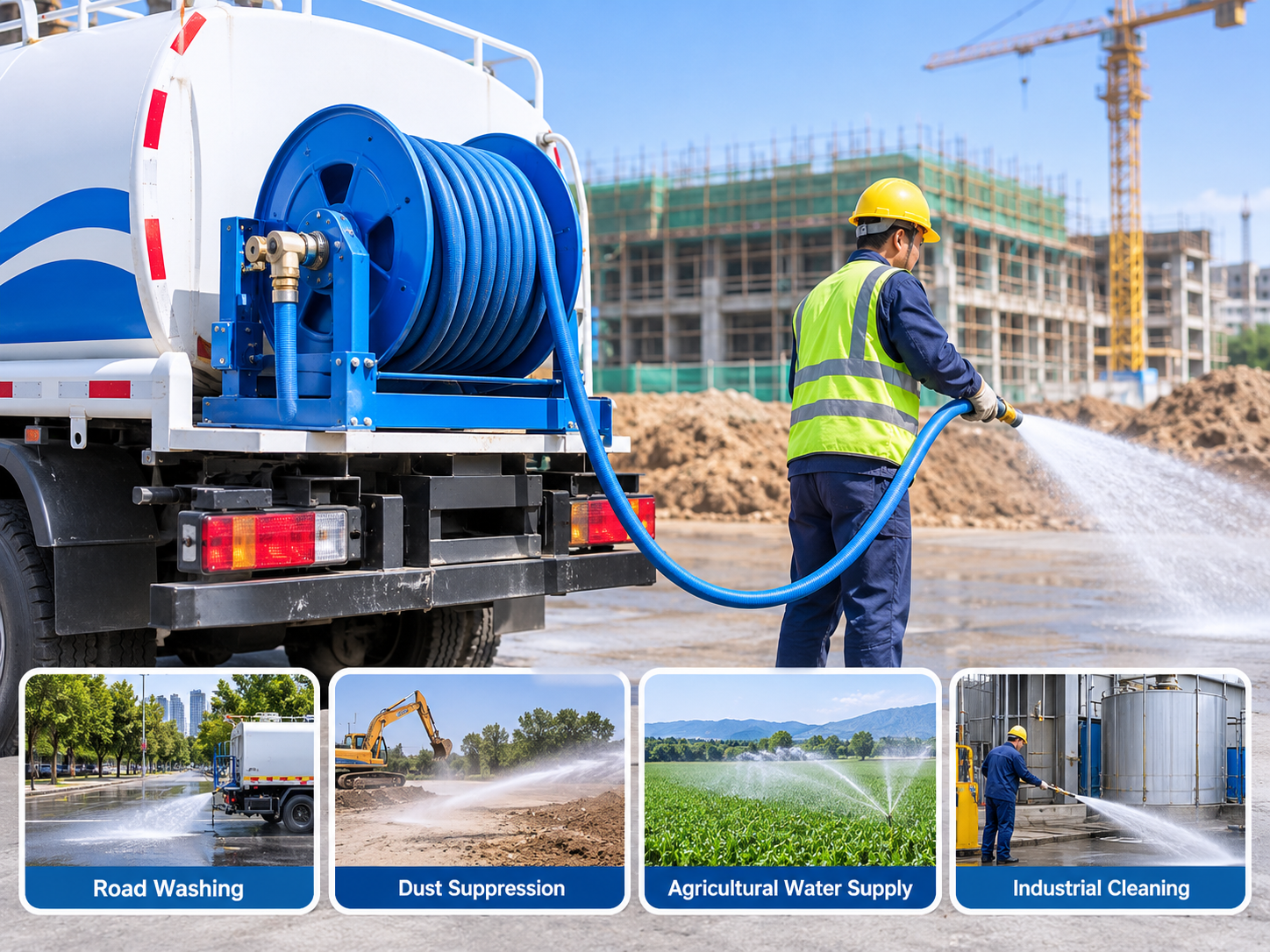
Water trucks are widely used in road washing, dust suppression in construction sites, agricultural water supply, industrial cleaning and other mobile water supply operations. In these jobs, the hose is responsible for transporting water from the vehicle water tank and water pump system to different working areas. However, if the hose is placed on the ground at will or is not properly managed, it will easily lead to problems such as winding, abrasion and difficulty in retracting, which will not only affect the working efficiency, but also bring potential safety hazards to the working environment around the vehicle.
The hose reel can help the water truck to store, unfold and recycle water supply hoses in an orderly manner, which is convenient for operators to manage hoses with different lengths, keep the working area clean and tidy, and improve the operation convenience of vehicles moving between different water supply locations. Choosing a suitable reel requires comprehensive consideration of hose specifications, water supply demand, reel capacity, driving mode and vehicle installation conditions.
This article will introduce the common application scenarios, main selection factors, installation location and daily maintenance methods of hose reel of water truck, so as to help operators choose and use the appropriate hose reel according to the actual operation requirements.
1. Why Do Water Trucks Need Hose Reels?
The water truck usually needs to work in a large or ever-changing working area. Depending on different tasks, the operator may need to extend the hose from the vehicle to the water supply point near the road cleaning area, construction site or equipment. If there is no suitable storage device, the management and use of hoses will become more troublesome.
Hose reels can help solve the following common problems.
Avoid Hose Winding and Ground Contact.
When the long water supply hose is directly placed on the ground, it is easy to be twisted, overlapped and entangled. Hoses may also come into contact with vehicle tires, sharp objects, dirt or construction waste. These conditions will accelerate hose wear and increase the risk of water leakage. The hose reel can keep the hose neatly wound when not in use, reducing unnecessary damage.
Convenient Management of Long-Distance Water Supply Hose
Some water truck operations need to extend the hose to areas outside the vicinity of the vehicle. For example, when the vehicle cannot directly approach the water supply location, the operator needs to transport the water to the designated location through the hose. A suitable hose reel can store the remaining hoses in an orderly way while unwinding the required length of hoses, which is convenient for long-distance water supply operation.
It Is More Convenient to Retract the Hose.
Manual handling of long hoses filled with water will be laborious. The use of reels can make the recycling and storage of hoses more orderly. According to the length, weight and frequency of use of the hose, the operator can choose manual, spring-driven or electric hose reel to meet different operating requirements.
2. The Common Application Scenarios of Water Truck Hose Reel
Water truck hose reel can be used for a variety of mobile water supply operations. Depending on the specific application, the required hose type, length and reel configuration will also be different.
Road Washing and Municipal Cleaning
Municipal water trucks are often used for road washing, public area cleaning and dirt cleaning on sidewalks and other floors. In these operations, the operator sometimes needs to extend the hose to the roadside, narrow area or the position that cannot be directly covered by the fixed water spraying system of the vehicle.
Hose reels can help manage the water supply hoses used in cleaning operations and keep them neatly stored when the vehicle moves to the next job site. For water trucks that need frequent road cleaning, reels with convenient retraction and capacity that can meet the actual hose length requirements should be selected.
Dust Suppression in Construction Site
Earthwork excavation, material handling, vehicle driving and other construction activities will all produce dust. Water tankers usually control dust in the air by spraying water on roads, ground and construction areas.
When the water supply position exceeds the coverage of the fixed water outlet of the vehicle, the hose reel can be used to extend the water supply distance. Considering that there is usually a lot of dust, uneven ground and frequent movement of vehicles in construction sites, the reel and its installation structure need to have sufficient stability to adapt to the actual working environment.
Agricultural Water Supply
In agricultural operations, water trucks can supply water to farmland, livestock activity areas and places lacking fixed irrigation systems. By connecting the hose, the water in the vehicle water tank can be transported to different irrigation or water supply locations.
The required length of the hose depends on the distance between the vehicle and the target water supply area. When selecting reels, it is also necessary to consider farmland topography and whether hoses need to bypass crops, agricultural equipment or other obstacles.
Industrial Equipment Cleaning
Water trucks can also be used to clean machinery and equipment, vehicles, storage areas and outdoor facilities in industrial sites. This kind of work may involve different hose lengths and water supply requirements.
Hose reel can help operators manage hoses in repeated cleaning operations, reduce scattered hoses around vehicles and work areas, and make the site cleaner.
3. How to Choose the Appropriate Hose Reel for the Water Truck?
The actual situation of the whole water supply system needs to be considered comprehensively when selecting hose reels for water trucks. The reel should not only be able to hold the hose, but also match the water pump system, adapt to the installation conditions of the vehicle, and withstand various environmental impacts in daily operations.
Hose Length and Diameter
The length of the hose should be determined according to the actual distance between the water truck and the farthest water supply position. For example, there may be a significant difference in hose length between a water truck used for road cleaning and a water truck that needs to supply water to different areas of a large construction site.
If the hose is too short, it cannot cover the required working range, and the operator may have to move the water truck frequently. Choosing a hose that is too long will not only increase the storage space requirement of the reel, but also increase the overall weight, especially when the hose is filled with water.
The diameter of the hose is equally important. At the same water flow speed, the larger diameter hose can usually transport more water, but it also takes up more reel space and weighs more when filled with water. Hoses with smaller diameter are easier to carry and store, but if the diameter is not enough to meet the needs of pumps and actual water supply, it may limit the water flow.
Before selecting the reel, confirm the actual outer diameter, length and structure of the hose. The drum width, baffle diameter and available storage capacity of the reel must be able to accommodate the selected hoses to avoid excessive squeezing of the hoses or irregular stacking during winding.
Water Pressure and Flow Rate
The water truck pump determines the pressure and flow that the water supply system can provide. These operating parameters will directly affect hoses, joints, rotary joints and other parts connected with reels.
First of all, we should know the rated pressure and flow of water pump under actual working conditions. Then confirm whether the hose, reel interface, rotary joint and connecting fittings can meet the working requirements of the whole system. The allowable working pressure of each component in the whole water supply assembly should not be lower than the pressure that may be borne in actual use.
Flow will also affect the choice of hose. If the water truck needs to transport a large amount of water within a certain distance, but the diameter of the hose is too small, it may produce a large water flow resistance, which may affect the actual flow at the outlet end. The longer the hose, the greater the pressure loss. Therefore, the hose diameter needs to be determined comprehensively according to the required flow and water supply distance.
Reel Capacity and Structural Strength
The reel must have sufficient storage capacity to accommodate the selected hose. The actual capacity of the reel depends on the length, outer diameter and winding mode of the hose. Even if the hose length is the same, the hose with larger outer diameter needs more reel space.
The weight of the hose should also be considered when installing the water truck. A hose filled with water will be much heavier than an empty hose. Therefore, the central shaft, drum, bracket, bearing and mounting support of the reel must be able to bear the load of the hose during storage and use.
The structural strength of the reel is particularly important for water trucks that often run on uneven roads or construction sites. Vibration and dynamic load generated when the vehicle moves may affect the reel and its installation position. The reel frame with stable structure and reliable installation mode are helpful to reduce the risk of looseness or deformation during long-term use.
Manual, Spring-Driven and Electric Reels
The driving mode of the reel should be selected according to the length and weight of the hose and the daily winding frequency.
- Manual hose reel: it is suitable for the operation with short hose, light weight and low winding frequency. Its structure is relatively simple and does not need additional power to drive.
- Spring-driven hose reel: Use the rewinding force of the spring to help retract the hose. It is suitable for the scene where the hose needs to be unfolded and recovered repeatedly, but the length and weight of the hose must be matched with the rewinding ability of the spring.
- Electric hose reel: the hose is recovered by electric, hydraulic or other power-driven methods. This type can be considered when the hose is long, heavy or used frequently. The driving system and control device need to match the power supply of the vehicle and the actual working environment.
Not all water trucks need to use power-driven reels. If only a short hose is used occasionally, a manual reel may be enough. The selection should be based on the actual operation requirements, not just on the driving mode.
Material and Corrosion Resistance
Water truck hose reel often comes into contact with water, dirt, dust and outdoor environment, and sometimes comes into contact with cleaning agent. If the reel material and surface treatment are not suitable, corrosion or surface damage may occur.
Properly protected carbon steel reels can meet the needs of many common water supply operations. If the use environment is humid, or the reel often needs to be washed, stainless steel with better corrosion resistance can be considered.
When selecting materials, we should also consider the nature of the transported water and the surrounding environment. Besides reel frame and drum, it is also necessary to check whether the materials of central shaft, rotary joint, connecting fittings and fasteners are suitable for actual use conditions. The components in the whole water supply channel have suitable corrosion resistance, which is helpful to reduce the later maintenance problems.
4. Where Should the Hose Reel of Water Truck Be Installed?
The installation position of the reel will affect the convenience of hose use, vehicle balance, operator safety and later maintenance. The specific installation location needs to be determined according to the structure of the water truck, the layout of the water tank, the position of the water pump and the actual operation mode.
Vehicle Side Mounting
The side-mounted hose reel is installed on the side of the vehicle, and the operator can directly deploy and recover the hose from the side of the vehicle. This installation method is suitable for road cleaning, site watering and other operations that need to extend the hose from the side of the vehicle.
When choosing the side installation position, you need to check the available space, vehicle width, access door and the layout of surrounding equipment. Reel shall not affect the normal use of vehicle pedals, ladders, water tank interfaces or other parts.
Vehicle Rear Installation
The reel installed at the rear can facilitate the operator to take the hose from the rear of the vehicle. This installation method is more suitable when the water truck is parked near the operation area and mainly supplies water from the rear of the vehicle.
Sufficient space should be reserved during installation to ensure that the hose can be unfolded and recovered smoothly. At the same time, it is also necessary to avoid the reel from blocking taillights, license plates, trailer devices and other necessary parts of the vehicle.
Installation Space and Hose Outlet Direction
The reel should have enough space so that the reel can rotate normally, and the hose will not be hindered when it is unfolded and recovered. The position of hose outlet should be arranged reasonably to avoid sharp bend, distortion or friction with nearby vehicle parts.
Operators should also have safe access to the reel control device and the connection interface. If the reel is installed in a narrow position, the space required for inspection, lubrication and replacement of parts should be reserved in advance.
Installation Bracket and Anti-Vibration Performance
The water truck will vibrate during driving, especially on uneven roads and construction sites. The reel should be installed in the vehicle structure that can bear its running load, rather than fixed on a thin plate that cannot provide sufficient support.
The mounting brackets and fasteners should be selected according to the weight of the reel itself, the hose load and the expected use environment. At the same time, it is also necessary to check whether the installation structure will cause excessive pressure on the body and whether it will affect the normal operation of the vehicle.
5. Installation and Maintenance of Hose Reel of Water Truck
Proper installation and regular maintenance will help to keep the reel running normally and reduce unnecessary damage to hoses and related components.
Fixed Installation and Pipeline Connection
Before installation, make sure that the installation position can bear the overall weight of the reel and hose. Secure the reel with suitable brackets and fasteners, and check whether the reel can rotate freely.
When connecting the hose and the water supply pipeline, the connector matching the hose size and working pressure should be selected. After the installation is completed, the water supply system should be started under controllable pressure, and all connection positions should be checked for water leakage, and then put into normal use after confirming that there is no problem.
Direction and Bending Radius of Hose
The hose should keep a reasonable direction from the reel to the actual operation position. Avoid sharp bends, twists, and contact with hot surfaces or sharp edges. The bending radius of the hose should meet the manufacturer’s requirements to prevent the hose from bending or internal damage.
When recycling the hose, try to guide the hose to be evenly wound on the drum. If the hoses are concentrated on one side of the drum, it will not only reduce the effective storage capacity, but also increase the difficulty of the next deployment.
Inspection of Rotary Joints and Connecting Fittings
The rotary joint is responsible for conveying water between the fixed water supply pipeline and the reel, so it is an important part of the hose reel system of the water truck.
Rotating joints, seals, joints and connection positions should be inspected regularly for water leakage, wear or corrosion. If necessary, replace damaged seals and worn parts in time. At the same time, check whether there is abnormal noise, looseness or excessive rotational resistance on the reel central shaft and bearing.
Cleaning and Regular Maintenance
After working in muddy or dusty environment, the dirt and sundries on the surface of reels and hoses should be removed in time. Check the drum, frame and installation location for damage or corrosion, and tighten loose bolts if necessary.
For spring-driven and electric hose reels, check the drive mechanism according to the maintenance instructions provided by the manufacturer. The spring mechanism should not be adjusted by itself without correct operation flow and safety measures.
Conclusion
Hose reel can help water truck to better manage long-distance hoses in road washing, dust suppression in construction site, agricultural water supply and industrial cleaning. Choosing a suitable reel needs to consider the length and diameter of the hose, the storage capacity of the reel, the installation space of the vehicle and the actual working environment. At the same time, the driving mode and material of the reel should also match the weight, frequency of use and working environment of the hose.
Correct installation of reels and regular inspection of hoses, rotary joints, connecting fittings and installation structures are helpful to maintain normal operation of equipment and reduce hose wear and unnecessary maintenance. Considering these factors comprehensively, we can choose a hose reel that is more in line with the daily water supply needs of the water truck, and make the hose collection and field operation more convenient and orderly.
Related Posts
Hose Reels for Paper Mills: Applications in Paper Production
September 17, 2026
Can a Heavy-Duty Water Hose Reel be used as a…
August 20, 2026