Grease Hose Reel: Guide to Selection and Application
November 5, 2026 | Industrial Hose Reels
Introduction
Grease is widely used to lubricate bearings, gears, joints and other moving parts in vehicles and industrial machinery. In maintenance workshops and manufacturing plants, grease is usually delivered to different lubrication points through grease pumps and hoses. However, if the hose is not properly stored, it is easy to be entangled, damaged or inconvenient to operate.
Grease hose reel can store, pull out and recycle the conveying hose neatly, which is convenient for operators to take and reduce unnecessary contact between the hose and the ground. According to different application requirements, the reel can be connected with manual or power-driven grease pump, and equipped with hoses and recovery mechanisms with different lengths.
Choosing a suitable reel can’t just consider the storage capacity. Working pressure, hose size, grease compatibility, pump specifications and installation conditions will all affect the system performance. This paper will introduce the common application, selection factors, installation precautions and maintenance methods of grease hose reel to help users choose the right product.
1. What Is a Grease Hose Reel?
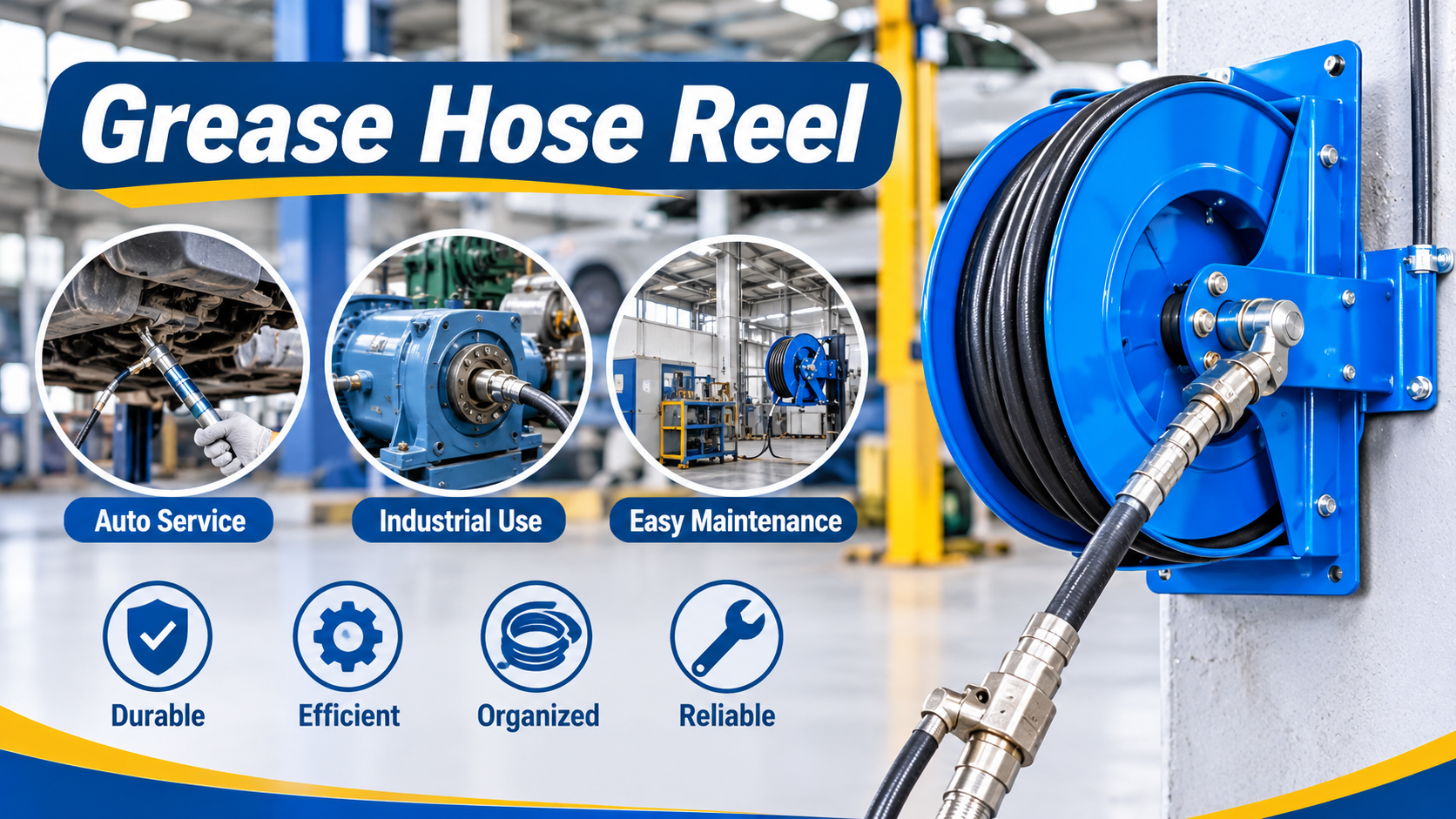
As one type of industrial hose reels, a grease hose reel helps keep the hose organized, reduces tangling, and allows operators to access the grease supply more conveniently during daily maintenance.
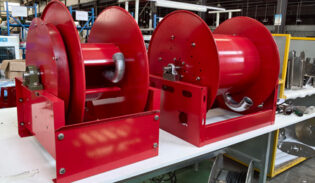
A typical grease hose reel usually includes a drum, a bracket, a central shaft, a hose, a rotary joint and a guide device. According to different models, manual, spring-driven or power-driven recovery mechanisms may also be adopted.
The reel is usually installed between the grease supply system and the working area. Grease flows out of the pump, passes through the reel assembly and the delivery hose, and finally reaches the grease gun or other grease filling tools.
Different from ordinary water pipe reel or air hose reel, grease hose reel must adapt to the pressure and flow characteristics of grease conveying system. The reel itself will not increase the output pressure of the grease pump, therefore, its pressure resistance grade, hose, connecting parts and grease filling equipment must meet the working requirements of the system.
2. Common Application of Grease Hose Reel
Grease hose reels may be used whenever equipment needs to be lubricated regularly and operators need to contact different lubrication points conveniently.
2.1 Automobile Chassis Lubrication
Vehicle maintenance usually involves the lubrication of chassis components, suspension joints and other grease filling points. Using the grease hose reel, maintenance personnel can pull the delivery hose to different positions around the vehicle without having to carry or manually organize the whole hose.
The required hose length depends on the vehicle size and the layout of the maintenance area. A suitable reel can keep the hose in a convenient position and reduce the risk of the hose winding around tools or vehicle parts.
2.2 Team Maintenance Workshop
Fleet maintenance facilities usually need to maintain a variety of vehicles, including trucks, buses and commercial vehicles. Regular lubrication is very important for maintaining the normal operation of moving parts and reducing premature wear.
The grease hose reel can be installed in an independent maintenance station or connected to a centralized grease supply system. This arrangement is convenient for operators to take grease delivery hoses from different working positions, and at the same time, the workshop floor is kept cleaner.
2.3 Lubrication of Industrial Equipment
Industrial machinery usually includes bearings, shafts, gears and other parts that need regular lubrication. Some of these lubrication points may be located inside the equipment or in inaccessible locations.
Grease hose reels can extend the operational range of hoses, making it easier to transport grease to these positions. When selecting the reel, it should be determined according to the output capacity of the grease pump, the required hose length and the pressure requirements of the lubrication system.
2.4 Manufacturing and Mechanical Equipment Maintenance
Manufacturing plants use all kinds of machinery and equipment that need to be lubricated as planned. During routine inspection and maintenance, maintenance personnel may need to work back and forth between multiple devices.
Installing the reel near the maintenance workshop is helpful to tidy the grease hose and reduce the time spent sorting the hose before and after each operation. At the same time, the installation position of the reel should also ensure that the equipment inspection and daily maintenance will not be hindered.
2.5 Mobile Lubrication Service
Mobile lubricating equipment can provide grease conveying service in construction sites, industrial facilities and other places lacking fixed lubricating equipment.
In this kind of application, the reel can safely store the hose when the vehicle is running, and it is convenient for the operator to pull out the hose when the equipment is maintained. The installation structure of the reel must be able to withstand the vibration generated when the vehicle is running, and the reel capacity and hose specifications should match the actual service scope.
3. How to Choose the Appropriate Grease Hose Reel?
When selecting the grease hose reel, it is necessary to evaluate the whole grease delivery system. The following factors are helpful to judge whether the reel can meet the actual operation requirements.
3.1 Compatibility of Working Pressure and Grease Pump
Working pressure is one of the most important considerations when selecting grease hose reel. Grease pump can generate high pressure, especially in centralized lubrication system or high-pressure grease filling operation.
Before selecting the reel, confirm the maximum working pressure of the grease pump and the actual pressure during normal lubrication operation. Then, check the pressure rating of reels, delivery hoses, rotary joints, pipe fittings and grease filling equipment. All pressure-bearing parts must be able to withstand the maximum pressure they may encounter. In the whole assembly, the component with the lowest pressure rating will limit the safe working pressure of the whole system.
In addition, it is necessary to distinguish the maximum output pressure of the grease pump from the actual pressure required at the lubrication point. The actual working conditions may be affected by the consistency of grease, the length of hose, the inner diameter of hose and the internal resistance of conveying system.
3.2 Hose Length and Inner Diameter
The length of the hose determines how far the operator can extend from the reel position to contact different lubrication points. Too short hose may limit the operation range, while too long hose will increase the storage space requirement and make the operation more difficult.
First of all, we should consider the distance between the reel installation position and the farthest lubrication point, and also consider the actual path required when the hose bypasses mechanical equipment, vehicles or other obstacles.
The inner diameter of the hose is equally important, because it will affect the resistance when the grease flows. Especially when conveying high-viscosity grease through a long hose, the smaller inner diameter may increase the flow resistance. The larger inner diameter can reduce the flow resistance, but it may also require more storage space and increase the weight of the hose.
In addition, it is necessary to check the outer diameter of the hose, because it determines the space occupied by the hose on the reel. When calculating the required capacity of the reel, both the hose length and the outer diameter should be considered.
3.3 Hose Structure and Pressure Resistance
The grease delivery hose must be able to withstand the pressure generated by the grease pump, and at the same time, it must be flexible enough for daily pulling and recycling.
According to different working pressures and application scenarios, the hose may adopt textile fiber reinforced layer or steel wire braided reinforced layer. Which structure should be selected depends on the rated parameters provided by the hose manufacturer.
In addition to the pressure resistance, the following properties should also be considered:
-
Flexibility: the hose should be able to bend within the specified minimum bending radius to avoid folding or affecting the flow of grease.
-
Wear resistance: the outer layer of the hose should be able to withstand normal contact with the surface of the equipment and wear caused by the environment of the maintenance workshop.
-
Grease compatibility: the inner material of the hose must be suitable for the type of grease conveyed.
-
Temperature resistance: the hose shall be able to be used normally within the temperature range specified by the manufacturer.
3.4 Reel Capacity, Bearing Capacity and Rotary Joint
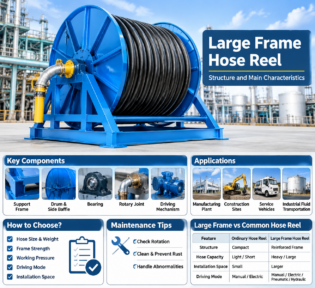
Grease hose usually needs to have high pressure resistance, so its structure may include textile fiber or steel wire reinforcement layer. Compared with ordinary hoses, such hoses tend to be heavier and thicker, and need to occupy more space on the reel. When selecting reels, the capacity of reels should be confirmed according to the actual outer diameter, length and weight of hoses, so as to prevent hoses from being arranged too closely, squeezing each other or exceeding the storage range of reels.
In addition to the storage space, it is also necessary to consider the bearing capacity of the reel. The drum, the central shaft, the bearing and the bracket must be able to bear the weight of the whole grease hose and the force generated in the process of pulling and recycling the hose. If the hose is long or heavy, the reel structure should have sufficient strength to avoid problems such as drum deformation, shaft wear or unsmooth rotation after long-term use.
The rotary joint is also the key component of the grease hose reel. It is responsible for conveying grease between the fixed grease supply pipeline and the rotating drum, so it must meet the working pressure requirements and grease compatibility requirements of the system at the same time. When selecting, the rated pressure, interface specification and sealing performance of the rotary joint should be confirmed to ensure that the hose can still maintain stable grease delivery during the drum rotation.
For high-frequency use or vehicle-mounted lubrication system, the stability of the reel under continuous operation and vibration environment should also be considered. Appropriate bearings, supporting structures and installation methods are helpful to reduce the rotation resistance of the reel and maintain the reliability in long-term use.
3.5 Select the Reel Drive Mode According to the Lubrication Operation
The driving mode of grease hose reel will affect the hose drawing and recovery efficiency and the workload of operators. When selecting, it should be judged according to the length and weight of the hose, the daily filling times, the size of the operation area and the layout of the grease supply system.
Manual Grease Hose Reel
The manual reel retracts the hose through the hand crank, which is relatively simple in structure and does not need additional power source. It is suitable for maintenance workshops with few lubrication points, moderate hose length and low frequency of use.
For example, in a small workshop or an independent equipment maintenance area, if the operator only needs to occasionally pull the hose near the equipment for lubrication, the manual reel can usually meet the storage and recycling requirements.
Spring-Driven Grease Hose Reel
Spring-driven reel uses spring mechanism to automatically recover hose, and some models are equipped with locking device, which can fix hose at required length. This method is suitable for maintenance stations that need to pull out and retract hoses frequently, and can reduce the manual winding of hoses.
However, grease hoses usually have a certain weight, especially long hoses or hoses with steel wire reinforcement. Therefore, we should not only consider the automatic recovery function, but also confirm whether the spring recovery force is enough to drive the hose, and ensure the smooth recovery process to avoid the hose not being fully recovered or rebounding too fast.
Motor-Driven Grease Hose Reel
Motor-driven reel completes hose recovery through electric, hydraulic or other power systems, which is suitable for lubrication operations with long hoses, heavy weights or frequent operations.
In centralized lubrication facilities, large equipment maintenance areas or mobile lubrication vehicles, if it is laborious to manually recover hoses, power-driven reels can be considered. When selecting the type, it is necessary to confirm whether the output capacity of the drive system matches the hose load, and at the same time, consider the power source, control mode and installation space.
Generally speaking, the driving mode should be determined according to the actual intensity of lubrication operation and operating requirements. For low frequency and short distance lubrication operation, manual reel may be more economical and practical; Spring-driven reel is more convenient for maintenance stations that need frequent operation; However, in long hoses, heavy hoses or high-frequency use scenarios, motor-driven reels may be more suitable.
3.6 Compatibility of Materials with Lubricating Grease
The reel material should be selected according to the installation environment and actual contact conditions.
Carbon steel reels with proper surface treatment can be used in many indoor industrial environments and maintenance workshops. If the installation environment is humid, frequent cleaning is needed, or corrosive factors exist, stainless steel reels may be more suitable.
Material compatibility can not only consider the reel bracket. The inner layer of hose, seal, rotary joint and pipe fittings will also come into contact with grease, so lubricants suitable for practical use are also needed.
Different greases may contain different base oils and additives. Confirming material compatibility with relevant component manufacturers in advance will help reduce the risk of aging, leakage and premature damage of seals.
4. Precautions for Installation of Grease Hose Reel
Correct installation helps to keep the hose moving smoothly, the grease conveying is stable, and the equipment runs safely. The position and connection mode of the reel shall be determined according to the layout of the lubrication system.
4.1 Installation Location and Operation Convenience
When selecting the installation location, ensure that the operator can pull out and recover the hose smoothly and avoid unnecessary obstacles. The reel should be accessible to operators, but it should not block the passage, equipment maintenance entrance or emergency exit.
For wall-mounted or ceiling-mounted installation, it should be confirmed that the support structure can bear the weight of the reel and hose assembly. For the vehicle-mounted system, appropriate structural mounting points should be selected to withstand the vibration generated during vehicle transportation.
Sufficient space should also be reserved around the drum and at the outlet of the hose to ensure the normal rotation of the drum and facilitate subsequent maintenance.
4.2 Connect with Grease Pump and Delivery Pipeline
The reel must be connected to the grease supply pipeline matching its interface size and pressure resistance grade.
Before installation, check the import and export specifications, thread types, sealing methods and pipe fitting materials. Incorrect connection may lead to leakage or affect the normal operation of the whole system.
After the assembly is completed, all connection positions shall be checked and inspected according to the test procedures recommended by the manufacturer. Only suitable equipment can be used for pressure test, and it shall be carried out according to approved operation procedures.
4.3 Hose Direction and Bending Radius
The hose should connect the reel and the lubricating point along a reasonable path. Avoid hoses touching sharp edges, excessively bending, or passing through positions that may be caught by moving equipment.
It is very important to keep the bending radius of the hose not less than the minimum value specified by the manufacturer. Too tight bending may damage the reinforced layer structure of the hose or restrict the flow of grease.
The hose should also be evenly wound on the drum. Irregular winding will reduce the storage capacity and increase the resistance when pulling out the hose next time.
4.4 Connecting Pipe Fittings and Pressure Safety
All fittings, joints, rotating connecting parts and grease filling accessories must be suitable for the working pressure of the grease system.
The working pressure of the grease injection system may be very high, and once the hose or connecting part fails, it may cause serious injury. The operator must never check whether there is leakage by hand, nor try to remove the connecting parts when the system is under pressure.
Before repairing the reel or its connecting parts, cut off the supply of grease according to the instructions of the equipment manufacturer and release the system pressure safely.
5. Common Problems and Maintenance of Grease Hose Reel
Regular inspection helps to find mechanical failures and transportation problems in time and avoid equipment downtime or safety risks.
5.1 Grease Leakage at the Joint
Leakage at the joint may be caused by loose pipe fittings, worn seals, damaged threads or incompatible connecting parts.
Check the inlet and outlet, rotary joint and hose joint for obvious grease leakage. Before tightening or replacing any parts, cut off the grease supply system and release the system pressure safely.
Damaged seals and pipe fittings should be replaced with parts that meet the original system specifications.
5.2 Grease Delivery Is Slow or Blocked
The slow delivery of grease may be caused by blockage or folding of hose, improper inner diameter of hose, too long hose length, or problems with grease pump.
Check the direction of the hose for sharp bends or obvious deformation. At the same time, it should also be confirmed whether the grease type and working temperature are suitable for the current conveying system.
If there is no blockage inside the hose, but the conveying speed is still slow, it may be necessary to further check the grease pump and other components in the system.
5.3 Wear and Damage of Hose
Repeated pulling and recycling of the hose, and continuous contact between the hose and the surrounding surface may gradually wear the outer layer of the hose. Should focus on the inspection of hose outlet, often bending parts and connection areas. If cracks, exposed reinforcing layer, bulging or other structural damage are found, the hose may not be suitable for safe use.
The damaged pressure hose should be stopped and replaced according to the manufacturer’s requirements. The damaged high-pressure grease hose shall not be restored by temporary repair.
5.4 Abnormal Hose Recovery
For the spring-driven reel, if the recovery strength is weakened, the hose cannot be fully recovered or abnormal noise is generated during operation, it may mean that there is a problem with the spring mechanism, locking device or hose guide device.
First, check whether the hose is twisted, twisted or blocked at the exit position. If the problem persists, it may be necessary for professionals to check the internal mechanism.
Do not open the reel housing with spring without following the corresponding maintenance procedures, because the spring energy stored inside may cause personal injury.
5.5 Regular Inspection and Cleaning
Clean up the grease, dust and sundries accumulated in the reel bracket, drum and hose guide area in time. Check whether the mounting bolts, brackets and visible connecting parts are loose or damaged.
According to the frequency of equipment use and the manufacturer’s maintenance suggestions, check the hose condition and the recovery function of the reel regularly.
If the internal spring assembly, rotary joint and other pressure-bearing parts need maintenance, they should be handled by qualified personnel.
Conclusion
Grease hose reel provides a neat and convenient way to store and use hoses in industrial lubrication, vehicle maintenance and mobile lubrication. Whether the reel is suitable or not depends on many factors, including grease pump pressure, hose size, reinforced layer structure, reel capacity, driving mode and material compatibility.
When selecting the grease hose reel, the user should evaluate the whole grease conveying system, not just the storage function of the hose. Correct installation, use of connecting parts with matching withstand voltage grades and regular inspection are also important links to ensure the stable operation of the equipment.
By selecting the appropriate reel according to the actual lubrication demand and working environment, the maintenance team can manage the grease hose more conveniently, reduce unnecessary hose wear and make the daily maintenance work safer and more orderly.
Related Posts
Hose Reel Solutions for Manufacturing Plants
July 22, 2026
Welding Hose Reel Safety for Farms and Mobile Welding
October 12, 2026