How Booster Hose Structure Affects Reel Performance
October 21, 2026 | Industrial Hose Reels
Introduction
The booster hose reel is a kind of fire-fighting equipment component, which stores the booster hose by rotating the reel for rapid deployment and recovery when needed. It is usually used in fire fighting systems that require compact and convenient hose water supply equipment, and is suitable for initial fire fighting operations. The reel can keep the hoses neatly stored, which helps the user to unfold the hoses smoothly without dealing with the scattered hoses.
The performance of a booster hose reel depends not only on the reel mechanism, but also on the structure and size of the hose used. Like other industrial hose reels, it must accommodate the hose’s physical characteristics to ensure reliable winding and deployment. The reinforcement layer, outer diameter, flexibility, weight and minimum bending radius will all affect the winding mode and deployment difficulty of the hose on the drum. Understanding these factors is helpful to ensure that the hose and reel match each other and realize reliable operation.
1. What Is a Booster Hose Reel?
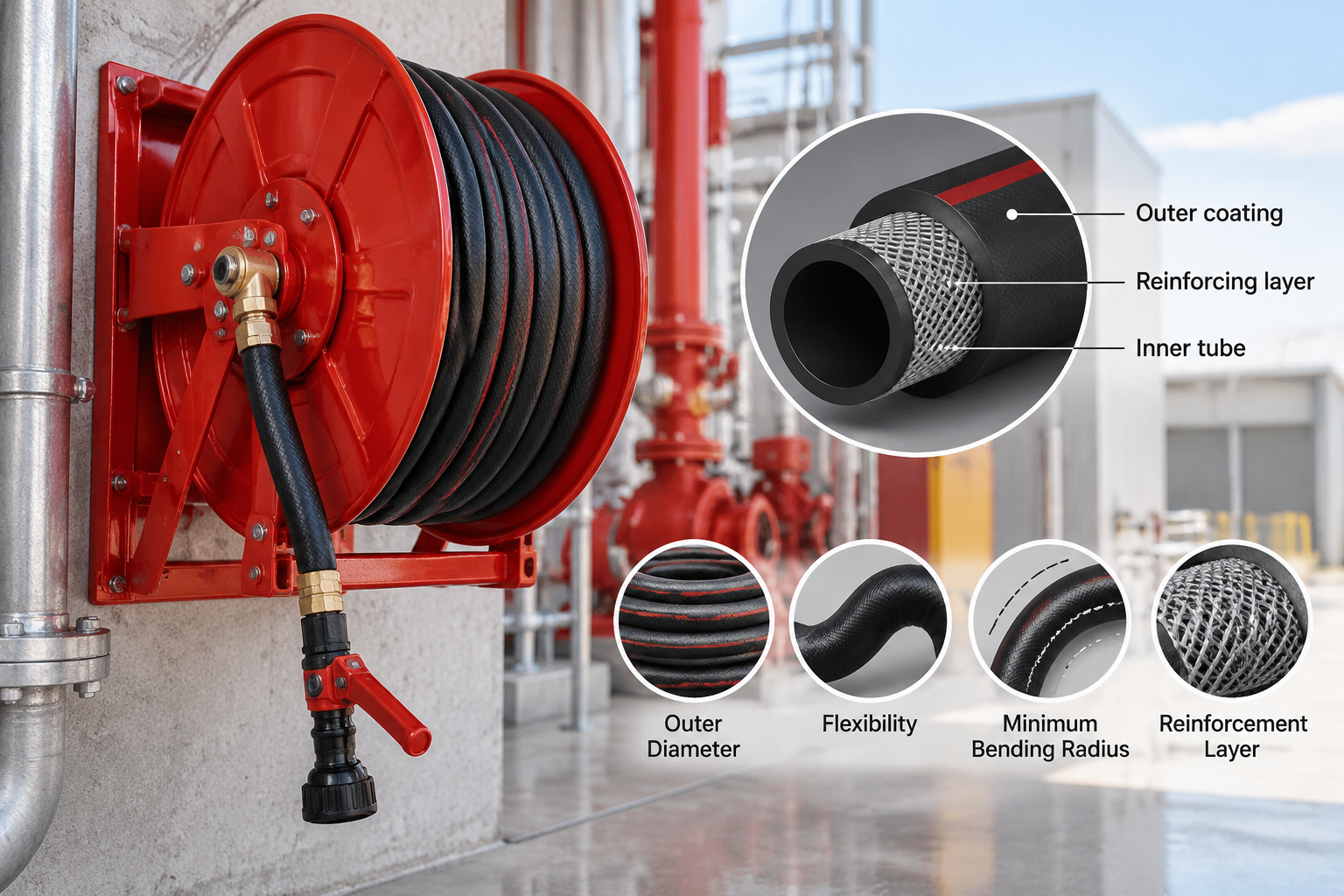
The booster hose reel usually consists of drum, support frame, hose guide device, rotary joint and manual or power-driven winding mechanism, so that water can be transported through the hose. According to the specific design, the reel can be operated manually or equipped with power-driven or spring-assisted recovery mechanism. Its main function is to store the hoses in an orderly manner and ensure that they can be quickly unfolded when needed.
The booster hose usually needs to bear a certain amount of water pressure, while maintaining enough flexibility for practical operation. The hose structure used by different manufacturers and application scenarios may be different, but it usually includes rubber inner tube, reinforcing layer and rubber outer coating. These structures help the hose to withstand internal pressure, resist wear and adapt to repeated use.
The booster hose reel must be able to adapt to the actual size and physical characteristics of the hose. If the diameter of the hose is too large or the stiffness is too high, it may be difficult to wind it neatly on the drum; If the winding bending radius is not suitable, it may also make the hose bear unnecessary stress.
2. How Does the Structure of the Booster Hose Affect the Winding and Unfolding?
Reinforcing structure is one of the important factors that determine the performance of pressurized hose during pressure bearing and operation. The reinforcing layer can help the hose bear the internal water pressure, but its material and arrangement will also affect the flexibility of the hose. Hoses with higher stiffness may not be tightly wound, while hoses with better flexibility are usually more likely to fit the drum. How to balance these characteristics depends on the pressure grade and expected service conditions of the hose.
The outer diameter will also affect the storage capacity of the reel. Even if the diameter of the hose is only slightly increased, the space occupied by each winding will also increase, thus reducing the length of the hose that the drum can accommodate. The wall thickness and reinforcement layer of the hose will affect its overall outer diameter and weight, so when determining the capacity of the hose reel, we should refer to the specific parameters and specifications of the hose.
The minimum bending radius can not be ignored. If the hose is wound on a drum with an excessively small diameter, its bending degree may exceed the limit specified by the manufacturer. This will increase the stress on the hose and may affect the long-term service life. Choosing the drum diameter that meets the bending radius requirements of the hose manufacturer is helpful to the natural winding of the hose and reduce unnecessary stress in the process of repeated use.
The outer coating will also affect the daily performance of the hose. The outer coating with wear resistance helps the hose to bear the contact friction with the drum and the surrounding surface. However, surface friction characteristics, environmental exposure conditions and hose stiffness may affect the smoothness of hose deployment and recovery. When evaluating hoses, these factors should be considered in combination with pressure resistance.
3. How to Match the Appropriate Reel for the Booster Hose
When selecting a matching reel for the booster hose, the technical parameters of the hose should be confirmed first, including inner diameter, outer diameter, length, working pressure and minimum bending radius. These data determine the drum size and the basic requirements that the hose connection system needs to meet. The reel should have enough storage capacity to accommodate the hose with a specified length, and at the same time avoid the hose from being wound in an inappropriate way.
Next, the weight and flexibility of the hose should be considered. The longer and heavier the hose, the greater the load that the drum and supporting structure usually bear. If the reel adopts spring-assisted or power-driven mechanism, the mechanism must also adapt to the weight and operation requirements of the whole hose assembly. Even if the length of the hose does not exceed the nominal capacity of the reel, if the rigidity or weight of the hose leads to unsmooth operation, it may still be unsuitable for the reel.
Finally, you need to check the use environment and connection requirements. The booster hose reel used in the fire fighting system may need to meet the specific water supply conditions, installation methods and frequency requirements. Hoses, reels, rotary joints or internal waterways, as well as various connectors, should be compatible with the expected working pressure and service conditions. Before installation, the matching between components shall be confirmed according to the technical specifications provided by the manufacturer.
Conclusion
The booster hose reel can store booster hoses in an orderly manner, and provide a convenient hose deployment mode in fire fighting operations. Its performance depends not only on the drum size or hose length, but also on the reinforcement structure, outer diameter, bending radius, weight and outer coating characteristics. Matching the reel capacity, structure and driving mechanism according to these factors is helpful to build a reliable hose reel assembly and make it better meet the expected use requirements.
Related Posts

Marine Hose Reel Selection Guide
July 10, 2026
Hose Reel Solutions for Manufacturing Plants
July 22, 2026
How to Choose the Right Aviation Hose Reel
July 8, 2026