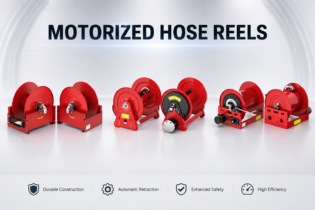
How to Choose a Large Capacity Hose Reel for Heavy-Duty Applications
July 13, 2026 | Hose Reel Applications, Industrial Hose Reels
Introduction
Managing long and heavy industrial hoses can quickly become a challenge without the right equipment. Industries such as oil and gas, mining, agriculture, marine, and heavy manufacturing often rely on hoses that extend hundreds of feet to transfer water, fuel, hydraulic fluid, chemicals, or compressed air. When these hoses are left on the ground or stored improperly, they become more susceptible to abrasion, kinks, and premature wear while also creating trip hazards that affect workplace safety.
A large capacity hose reel provides an efficient way to organize, deploy, and retrieve long hoses. By keeping the hose neatly wound and protected, it reduces manual handling, extends hose service life, and improves operational efficiency. Whether operated manually or powered by an electric, hydraulic, or pneumatic system, these reels have become an essential piece of equipment for demanding industrial applications. This guide explains what a large capacity hose reel is, its key features, typical applications, and the factors to consider when choosing the right model.
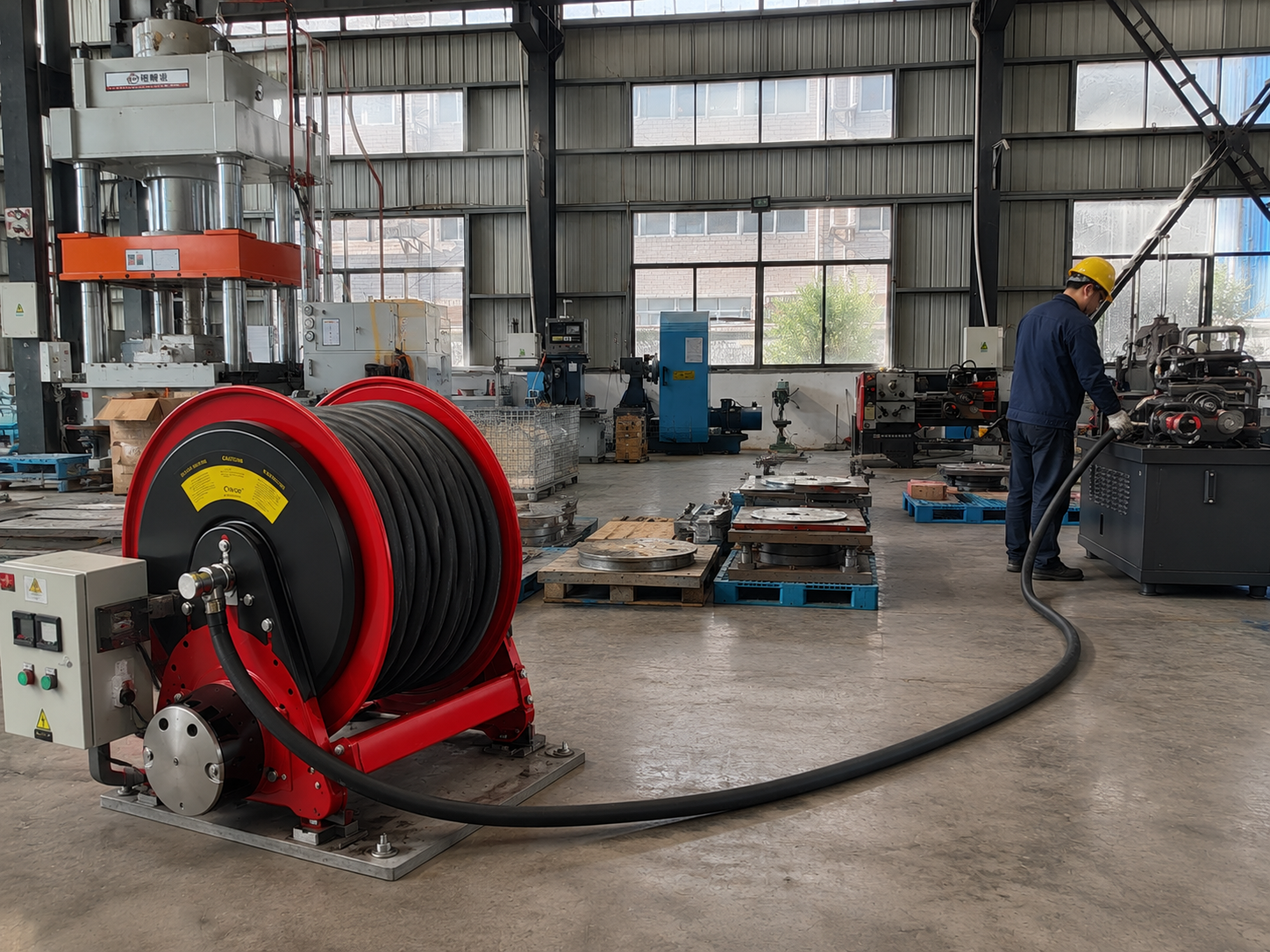
What Is a Large Capacity Hose Reel?
A large capacity hose reel is specifically built to accommodate hoses that are too long or too large in diameter for standard reels. Compared with conventional models, it features a larger drum and a wider spool, allowing it to store longer hose lengths while maintaining an appropriate bend radius. This helps reduce stress on the hose during winding and unwinding, ultimately extending its service life.
These reels are commonly used with hydraulic hoses, water hoses, fuel hoses, chemical transfer hoses, and high-pressure cleaning hoses. Depending on the application, they are available in manual and powered configurations. While manual reels remain suitable for occasional use, powered reels are generally preferred when handling long, heavy hoses or when frequent hose deployment is required. For operations that demand higher productivity, a Motor Driven Hose Reel can significantly reduce operator effort and improve efficiency.
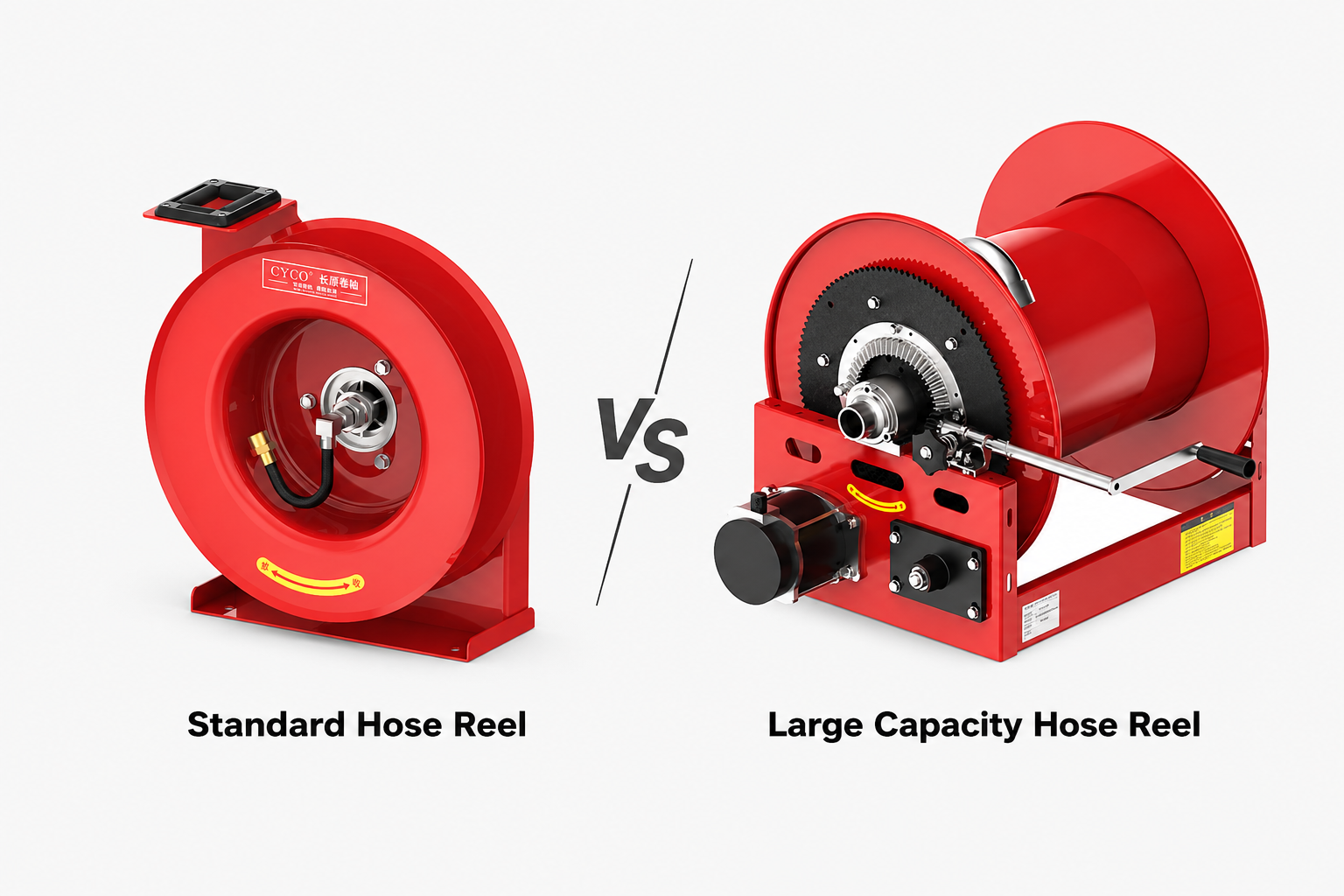
Key Features of a Large Capacity Hose Reel
A large capacity hose reel is designed not only to hold more hose but also to withstand the demanding conditions found in industrial environments. A reinforced steel frame provides the structural strength needed to support the weight of both the hose and the fluid being conveyed. Depending on the installation environment, corrosion-resistant coatings or stainless steel construction can further improve durability, making the reel suitable for outdoor, marine, or high-humidity applications.
Another important feature is an efficient hose guiding system. Even hose distribution across the drum helps prevent overlapping, uneven winding, and excessive abrasion, allowing the reel to utilize its full storage capacity. Powered models often incorporate a level-wind mechanism that automatically guides the hose during retraction, ensuring smooth and consistent operation.
The drive system should also match the intended workload. Manual reels offer a simple and economical solution for lighter applications, while electric, hydraulic, and pneumatic drive systems make handling large or heavy hoses much easier. For continuous industrial service, a Heavy Duty Hose Reel provides the durability and reliability needed for long-term operation.
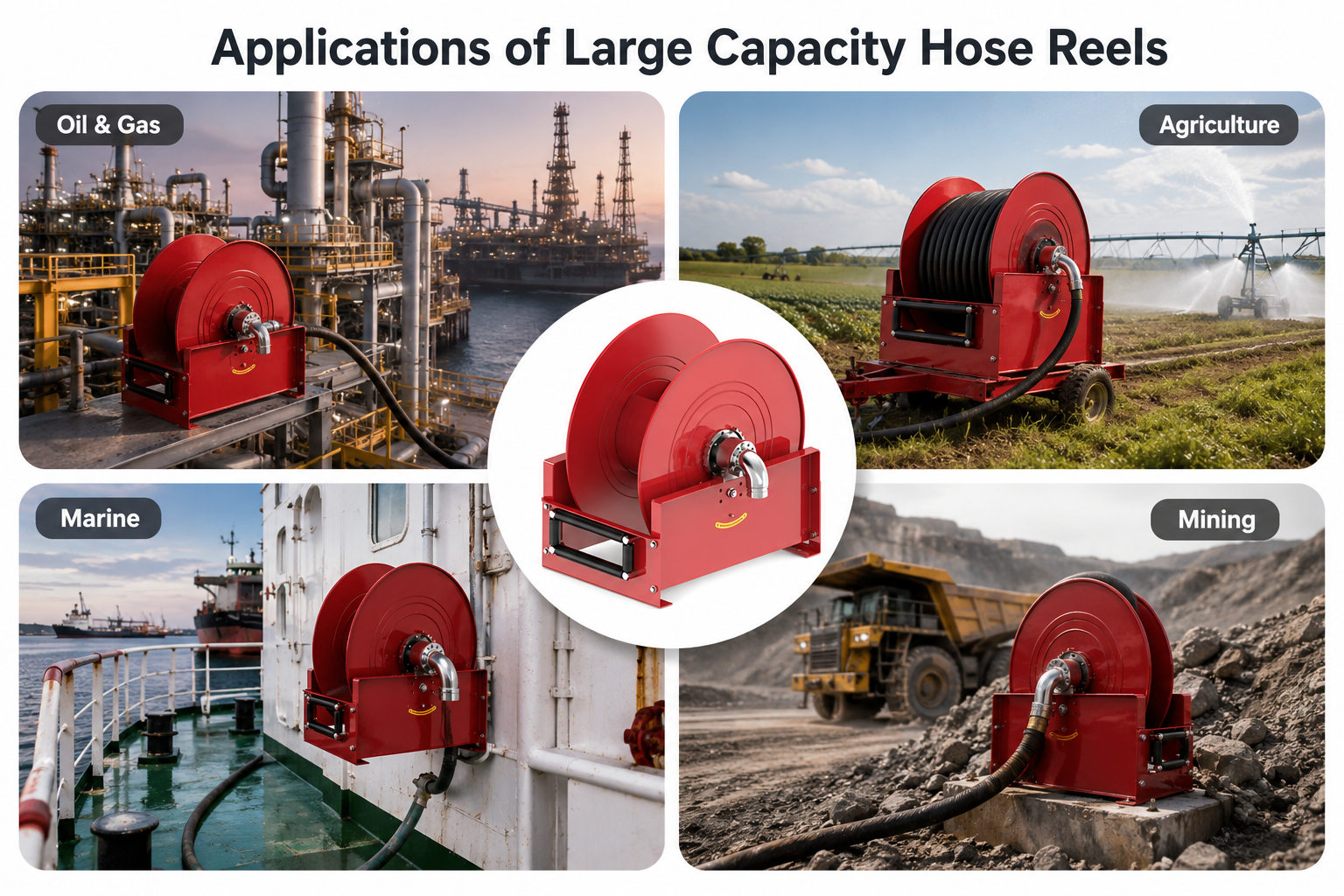
Common Applications
Large capacity hose reels are widely used across industries where long hoses must be stored safely and deployed efficiently. In the oil and gas sector, they manage fuel transfer, lubrication, and hydraulic hoses on drilling equipment, service trucks, and production facilities. Their ability to keep hoses organized helps reduce downtime while protecting valuable hose assemblies from unnecessary wear.
Agricultural operations use large hose reels for irrigation and water distribution systems, especially where long hose lengths are needed to cover large fields. Mining sites rely on them to manage water supply, compressed air, and hydraulic hoses under harsh operating conditions where equipment reliability is critical.
Marine environments also benefit from large capacity hose reels. Corrosion-resistant models are commonly used for washdown systems, fuel transfer, and dock maintenance, where exposure to saltwater demands durable materials. In manufacturing facilities, these reels help organize hoses used for compressed air, pressure washing, coolant circulation, and other industrial fluid systems, creating a cleaner and safer workspace. For hydraulic applications, selecting a dedicated Hydraulic Hose Reel ensures the reel is built to withstand the high pressures associated with hydraulic systems.
How to Choose the Right Large Capacity Hose Reel
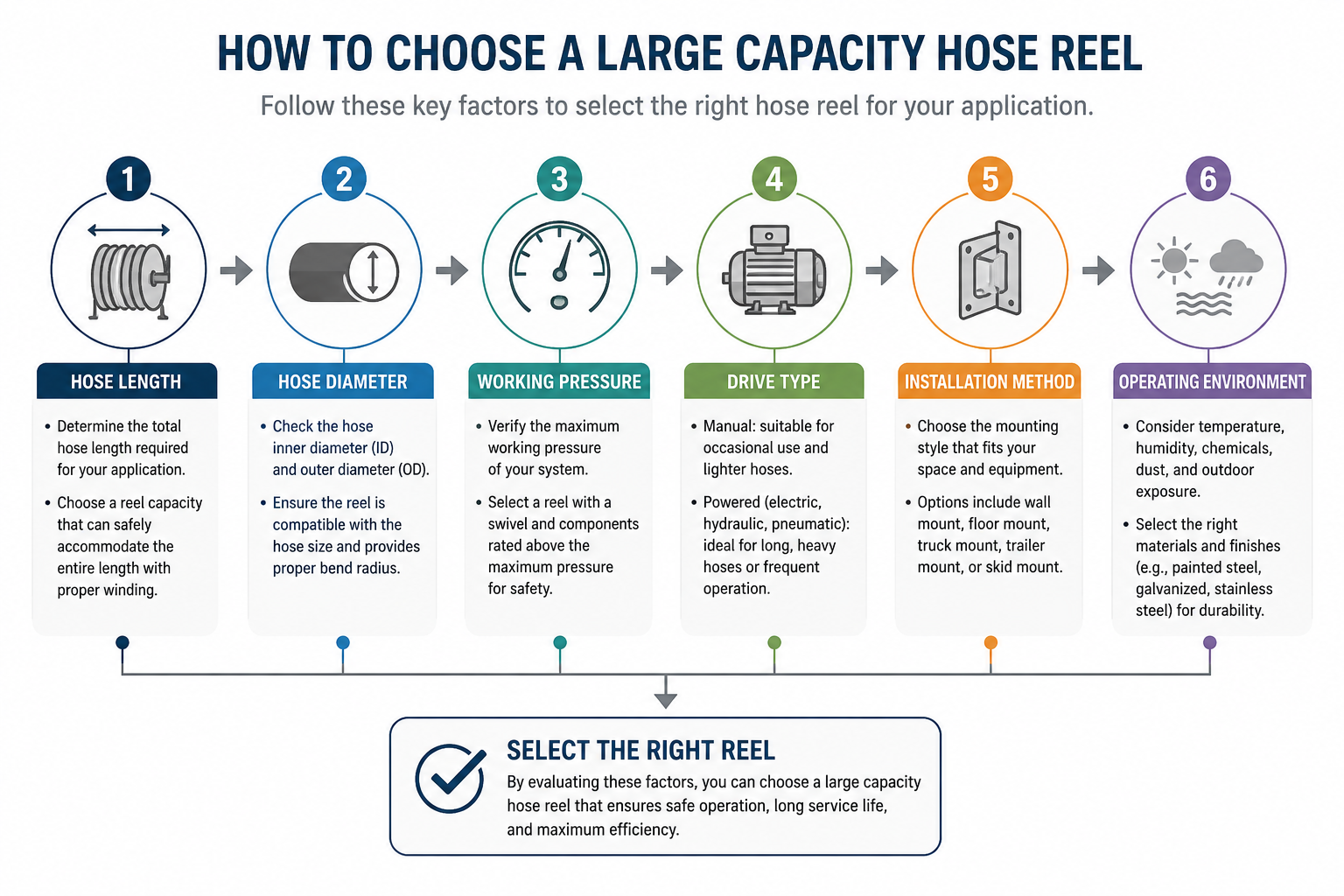
Selecting the right hose reel starts with understanding the hose itself. Hose diameter, total length, and minimum bend radius determine the drum size required. Choosing a reel with insufficient capacity can make winding difficult, increase hose stress, and shorten service life. It is always advisable to select a reel that provides adequate capacity while allowing room for smooth hose operation.
Working pressure is another critical consideration. The reel’s swivel joint and fluid path should be rated above the maximum operating pressure of the hose system to ensure safe and reliable performance. This is particularly important for hydraulic, chemical transfer, and high-pressure cleaning applications.
Installation requirements should also be evaluated before purchasing. Depending on the available space and application, reels may be mounted on walls, floors, trucks, trailers, or skid units. In addition, the operating environment will influence material selection. Outdoor installations often benefit from galvanized or stainless steel construction, while enclosed drive mechanisms provide additional protection in dusty or dirty workplaces.
Finally, consider how frequently the reel will be used. If the hose is deployed several times each day, investing in a powered reel can significantly improve productivity and reduce operator fatigue. For applications with lower usage frequency, a Manual Hose Reel remains a practical and cost-effective option.
Conclusion
A large capacity hose reel is much more than a storage device. It protects valuable hoses, improves workplace safety, reduces manual labor, and helps maintain efficient operations across a wide range of industrial applications. Choosing the right reel requires careful consideration of hose dimensions, working pressure, installation requirements, operating conditions, and the most appropriate drive system.
By selecting a hose reel that matches both current and future operational needs, businesses can maximize equipment reliability, extend hose service life, and reduce maintenance costs over the long term. A well-designed large capacity hose reel is an investment that continues to deliver value through improved efficiency, better hose protection, and safer day-to-day operations.
Related Posts
Hose/wire Reel Drive Types and Characteristics
December 18, 2025
Oil Hose Reel Solutions for Lubrication Systems
July 23, 2026