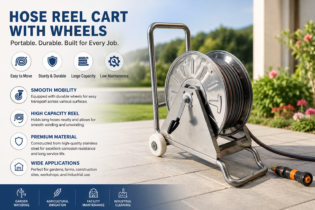
How Long Does a Hose Reel Last?
June 12, 2026 | Industrial Hose Reels
1.Introduction
In industrial production and maintenance environments, industrial hose reels are among the most frequently used basic pieces of equipment. Whether for compressed air, water, lubricating oil, or other industrial fluid transport systems, the stability of the hose reel directly impacts the efficiency and safety of the entire workflow.
For business, the lifespan of a industrial hose reel not merely a product parameter issue, but also relats to long-term operation cost. If the equipment malfunctions or experiences performance degradation within a short period, it not only incurs additional replacement costs but can also lead to a chain reaction of problems such as production line downtime, maintenance delays, and decreased labor efficiency.
Especially in high-frequency industrial environments, heavy-duty hose reels typically withstand continuous stretching, retraction, and complex environmental influences, such as dust, humidity, and temperature variations. These factors gradually affect their structural stability and performance.
Therefore, knowing about key factors affecting hose reel lifespan is crucial for hose reel selection, reasonable usage and maintenance strategies, it also helps extend overall service life of device and reduce long-term operation cost.
2.How Long Does a Hose Reel Last?
There is no fixed, uniform standard for the lifespan of hose reels; it typically depends on operating environment, frequency of use and structural grade of itself.
Light-duty reels used occasionally may last for several years, while industrial hose reels are designed for long-term operation. Proper model selection and regular maintenance can significantly extend the life of hose reel.
3. Key Factors Affecting the Lifespan of Hose Reels
The lifespan of a hose reel is not determined by a single factor, but rather by a combination of factors, including frequency of use, load matching, environmental conditions, and product quality construction.
3.1 Usage Frequency
Usage frequency is one of the most direct factors affecting hose reel lifespan.
Low-Frequency Use vs. High-Frequency Use
Low-frequency use typically refers to occasional maintenance or light-duty operations, such as weekly or irregular use. In such cases, mechanical wear is slower, and the overall service life is relatively longer.
In industrial production environments, however, industrial hose reels are often required for frequent daily use, and may even be cycled through multiple workstations, representing a typical high-frequency application scenario. In such cases, the reel may need to be extended and retracted dozens or even hundreds of times a day.
3.2 Hose Weight and Load Matching
The lifespan of a hose reel is closely related to whether the hose specifications are properly matched to the reel’s design capacity.
The Importance of Proper Hose-Reel Matching
Every hose reel is engineered for a specific hose length, diameter, and weight range. When the hose and reel are correctly matched, the spring system and rotating components operate within their intended load limits, ensuring smooth and reliable performance.
Selecting the correct industrial hose reel for the application is essential for maximizing equipment lifespan and maintaining consistent operation.
Consequences of Overloading
Using a hose that exceeds the reel’s rated capacity can place excessive stress on the system and significantly reduce its lifespan. Common consequences include:
- Accelerated spring fatigue
- Slower or incomplete hose retraction
- Increased wear on bearings and drum assemblies
- Premature component failure
Overloading remains one of the leading causes of early failure in heavy-duty hose reel systems.
3.3 Environmental Conditions
Environmental factors can significantly affect the durability and performance of a hose reel.
Indoor vs. Outdoor Installations
Indoor installations generally provide a more stable operating environment with fewer temperature fluctuations and less exposure to contaminants. As a result, hose reels installed indoors often experience slower aging and reduced wear.
Outdoor installations, however, are exposed to sunlight, rain, wind, and temperature changes, all of which can accelerate material degradation over time.
Humidity, Dust, Chemicals, and Extreme Temperatures
Industrial environments frequently expose hose reels to challenging conditions, including:
- High humidity, which increases the risk of corrosion and oxidation
- Dust and debris, which create additional friction and mechanical wear
- Chemical exposure, which may damage seals, coatings, and metal components
- Extreme temperatures, which affect metal elasticity and rubber performance
These environmental factors can significantly impact the long-term reliability and service life of an industrial hose reel.
3.4 Product Quality and Structural Design
In addition to operating conditions, the manufacturing quality of the hose reel itself is a key factor determining its service life.
Frame Material
The frame structure determines the overall strength. A heavy-duty design using thick steel plates or reinforced steel structures provides better resistance to deformation and impact, thereby enhancing overall stability and service life.
Spring Mechanism
The spring system is the core component of a spring-driven hose reel. High-quality springs typically have a longer cycle life and maintain consistent retraction force even during long-term use. In contrast, low-quality springs are more prone to issues such as fatigue and weak retraction.
Bearings and Swivel Joints
Bearings determine the smoothness of rotation, while swivel joints facilitate fluid transfer. In industrial applications, these components are subjected to constant motion and pressure over extended periods. If they are of poor quality, the following issues may arise:
- Increased friction
- Air or fluid leaks
- Rough operation
High-quality industrial hose reels typically feature reinforced designs for these critical components to ensure long-term, stable operation.
3.5 Type of Conveyed Medium (Critical)
The type of medium conveyed by the hose reel directly impacts the equipment’s overall service life.
Different media (such as compressed air, water, lubricating oil, grease, or chemical liquids) have significantly varying effects on internal components, particularly seals, rotating joints, and hose materials.
Air-based media have the least impact on the system, while water-based media may pose a certain risk of oxidation; grease-based media increase flow resistance and affect spring retraction performance; chemical media may accelerate the aging of sealing materials or even corrode internal structures.
Therefore, in the selection of industrial hose reels, media compatibility is one of the key factors determining long-term stable operation.
4. How to Extend the Service Life of Industrial Hose Reels
Although industrial hose reels are designed for long-term use, their actual service life is still closely related to daily operation and maintenance. Proper selection, standardized use, and regular maintenance can not only reduce the failure rate but also effectively extend the overall service life of the equipment and hoses, reducing long-term operating costs.
4.1 Selecting the Appropriate Reel Based on Application Needs
The first step in extending the life of a hose reel is correct selection.
Different application scenarios have different requirements for hose length, diameter, working pressure, and conveyed media. If the reel size is too small, long-term overload operation will accelerate the wear of springs, bearings, and the reel structure; while too large a size may increase unnecessary procurement costs and installation space requirements.
When selecting an industrial hose reel, the following factors should be considered:
- Hose length and inner diameter
- Working pressure range
- Conveyed media type (air, water, oil, or chemical media)
- Usage frequency
- Installation environment
Ensuring that the reel matches the actual working conditions is fundamental to improving equipment life and operational reliability.
4.2 Avoid Overstretching the Hose
Many hose reel failures are related to prolonged overstretching.
Most spring-driven hose reels have a designed extension range. When the hose is frequently stretched to its limit, the internal spring is subjected to continuous high stress, accelerating fatigue and performance degradation.
To reduce unnecessary wear, it is recommended to:
- Leave a small margin of safety; do not always stretch to the maximum length.
- Avoid sudden, forceful pulling of the hose.
- Use the hose according to the equipment’s rated capacity.
- Proper operation effectively reduces the risk of spring fatigue and mechanical wear.
4.3 Conduct Regular Inspections
Regular inspections are crucial for preventing failures and extending service life.
Daily inspections allow for the timely detection of abnormalities before problems develop into serious malfunctions, thereby reducing maintenance costs and downtime risks.
The following areas should be carefully inspected:
- Is the spring retraction force normal?
- Is the locking mechanism flexible and reliable?
- Is the hose worn, cracked, or leaking?
- Is the frame and mounting bracket loose?
- Is there any air or fluid leakage at the rotary joint?
For frequently used industrial hose reels, establishing a regular inspection system is often more economical and effective than post-failure repair.
4.4 Keep Components Clean and Properly Lubricated
Dust, metal shavings, and oil will gradually accumulate inside the reel, increasing friction between moving parts and affecting equipment performance.
Therefore, regular cleaning and necessary lubrication are crucial.
Maintenance recommendations include:
- Removing dust and debris from the reel, guides, and frame surfaces.
- Keeping the hose surface clean to prevent particles from being introduced into the reel.
- Lubricating bearings, shafts, and other moving parts according to the manufacturer’s recommendations.
- Avoiding the use of unsuitable lubricants to prevent damage to seals.
Good cleaning and lubrication practices help reduce wear and maintain smooth reel operation.
4.5 Avoiding the Long-Term Effects of Harsh Environments
The operating environment of industrial hose reels directly affects their service life.
Prolonged exposure to humid, high-temperature, highly corrosive, or dusty environments can lead to corrosion of metal components, aging of seals, and accelerated wear of internal mechanisms.
To mitigate the impact of environmental factors, the following measures can be taken:
- Install in sheltered areas whenever possible.
- Select reels with protective housings for outdoor use.
- Select anti-corrosion coatings or stainless steel models for high-humidity environments.
- Regularly remove accumulated water, dust, and corrosive residues.
- Avoid prolonged exposure of equipment to extreme temperature conditions.
For specialized industries such as marine engineering, food processing, and chemicals, selecting industrial hose reels specifically designed for harsh environments can significantly improve the long-term reliability of the equipment.
With proper selection, standardized use, regular inspection, and reasonable maintenance, most industrial hose reels can maintain stable operation for many years. Compared to frequent repairs or premature equipment replacement, establishing a scientific maintenance management system is often a more effective way to extend reel life and reduce total cost of ownership (TCO).
5.Conclusion
In summary, a durable hose reel relies on excellent product design, proper usage, and regular maintenance. Understanding the various factors that affect the equipment’s lifespan and adopting scientific maintenance methods not only maximizes the equipment’s value but also creates a safer and more efficient working environment. Performing routine maintenance is always the wise choice for the long-term management of hose equipment.
Related Posts
Best Hose Reel Solution for Landscape Maintenance
August 25, 2026
Hose Reel Solutions for Manufacturing Plants
July 22, 2026