Electric Hose Reels for Oil & Gas Industry
July 6, 2026 | Electric Hose Reels, Hose Reel Applications
Introduction
The oil and gas industry depends on the transfer of fuel, lubricants, hydraulic fluids, chemicals, and compressed air through long and heavy hoses. As hose lengths and weights increase, manually deploying and rewinding them becomes more labor-intensive and can lead to hose wear and disorganized work areas, especially in demanding oil and gas industry operations.
An electric hose reel for oil & gas industry applications provides an effective solution by automatically handling heavy hoses while keeping them neatly organized. Compared with manual systems, an electric hose reel ensures more controlled hose management and better workplace organization in industrial environments.
As a result, electric hose reels in the oil and gas industry are becoming increasingly common in refineries, fuel terminals, offshore platforms, and oilfield operations. In this article, we’ll explore the common applications of electric hose reels in the oil and gas industry and discuss the key factors to consider when selecting the right solution for your operation.
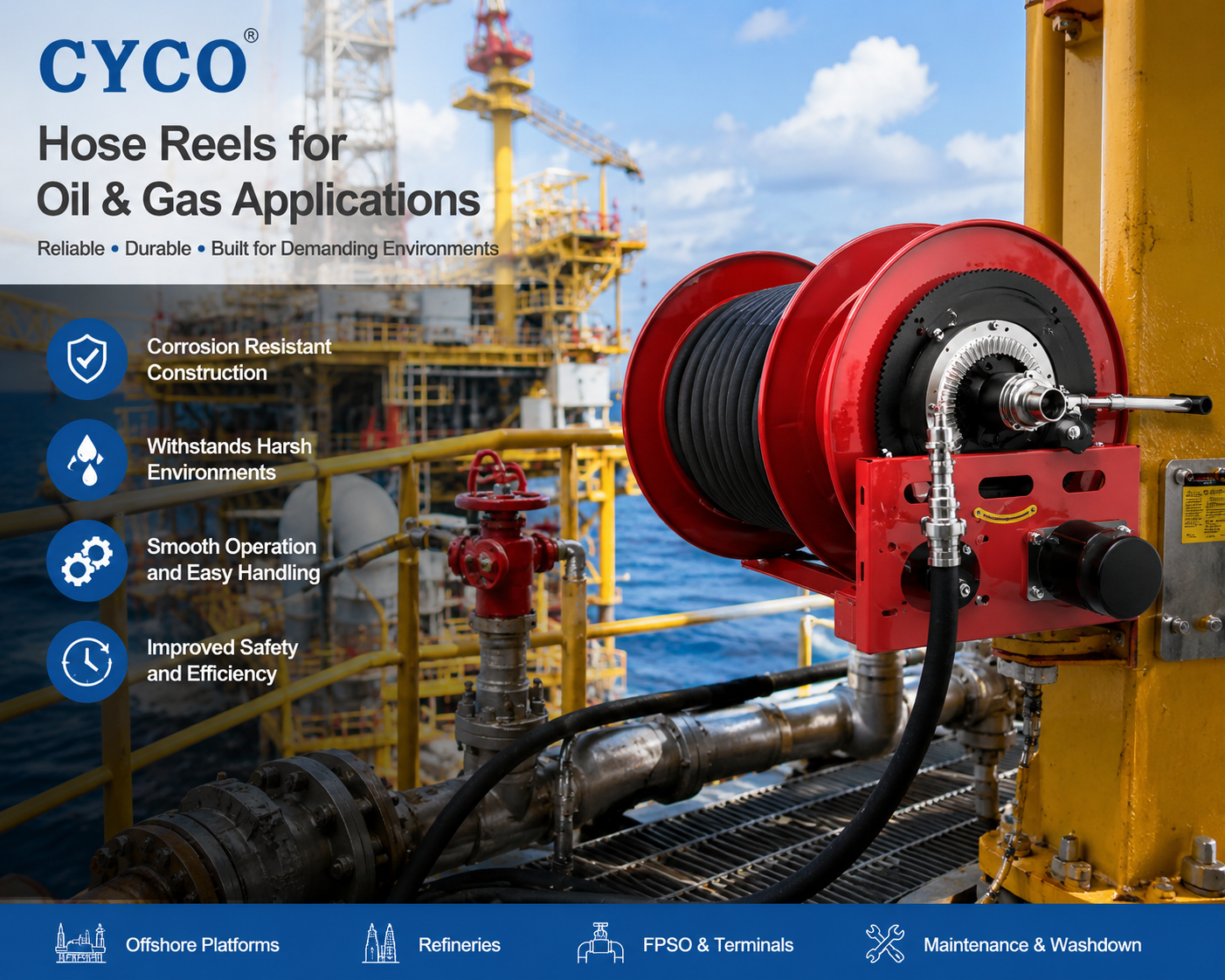
Common Applications of Electric Hose Reels in the Oil & Gas Industry
Fuel Transfer
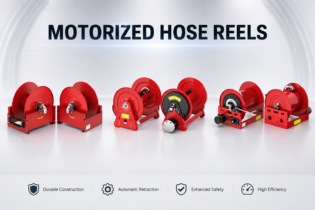
An electric hose reel for oil & gas industry applications is widely used for transferring diesel, gasoline, aviation fuel, and other petroleum products at refineries, fuel terminals, and service facilities. Powered operation makes it easy to deploy and retract long, heavy fuel hoses while keeping the work area organized.
Lubrication Systems
Electric hose reels are commonly used to manage lubricating oil and grease hoses during equipment servicing. In the oil & gas industry, they simplify hose handling and help keep maintenance areas organized. To learn more about hose management solutions for lubrication applications, see our guide to oil hose reel.
Hydraulic Systems
An electric hose reel for oil & gas industry maintenance vehicles provides an efficient way to manage hydraulic hoses. Automatic hose handling reduces manual effort while supporting routine maintenance of hydraulic equipment.
Offshore and Marine Operations
Electric hose reels are well suited for offshore platforms, port terminals, and marine fueling stations where long, heavy hoses are used daily. Their rugged construction makes them a reliable motorized hose reel for oil & gas industry applications in harsh coastal environments.
Chemical Transfer
Refineries and petrochemical plants use electric hose reels to manage hoses for transferring industrial chemicals and process fluids. Organized hose storage and controlled hose deployment help support safe daily operations.
Choosing the Right Electric Hose Reel for Oil & Gas Industry
Selecting the right electric hose reel for oil & gas industry applications requires careful consideration of the operating environment, hose specifications, and system requirements. In the oil & gas industry, choosing a properly matched reel helps ensure reliable hose management, stable operation, and long service life even under demanding working conditions.
Hose Length
Choose the hose length based on the required transfer distance between the fluid source and the point of use. The hose should provide sufficient reach without being excessively long, as unnecessary hose length increases reel size, hose weight, and winding time. Selecting the appropriate hose length helps improve hose management and keeps operations more organized in oil and gas applications.
Hose Size
The hose diameter should match the required flow rate while minimizing pressure loss. Larger hoses provide higher flow capacity but require larger reels and more powerful drive systems. In electric hose reel for oil & gas industry applications, correct hose sizing ensures efficient fluid transfer and stable operation under load.
Working Pressure
Always select a reel with a pressure rating that matches your application. Fuel transfer systems, hydraulic systems, and chemical transfer systems often operate under different working pressures, so the hose reel, hose, and fittings should all be compatible with system requirements. Proper pressure matching is especially important in the oil & gas industry, where safety and reliability are critical.
Drive System
The drive system should be selected according to the application and available power source. Electric hose reels are widely used in fixed industrial facilities where a stable power supply is available, providing reliable and convenient automatic hose handling. Hydraulic motor-driven hose reels are often preferred for mobile equipment and heavy-duty applications where hydraulic power is already part of the system. Choosing the right drive method helps ensure consistent performance under different operating conditions.
Reel Material
The reel material should suit the working environment. Powder-coated steel hose reels offer excellent strength and are suitable for most indoor industrial facilities and general oil and gas applications. Stainless steel hose reels provide superior corrosion resistance and are recommended for offshore platforms, marine terminals, coastal facilities, and other environments exposed to moisture, salt spray, or corrosive chemicals. Choosing the appropriate material helps extend equipment service life while reducing maintenance requirements.
Why Industrial-Grade Electric Hose Reels Are Better for the Oil & Gas Industry
Industrial environments in the oil and gas sector place higher demands on hose management equipment in terms of load capacity, durability, and operational reliability. Compared with standard models, industrial electric hose reels for oil & gas industry applications are specifically engineered to handle long-term, heavy-duty, and high-frequency operation in harsh working conditions.
Heavy-Duty Structural Design
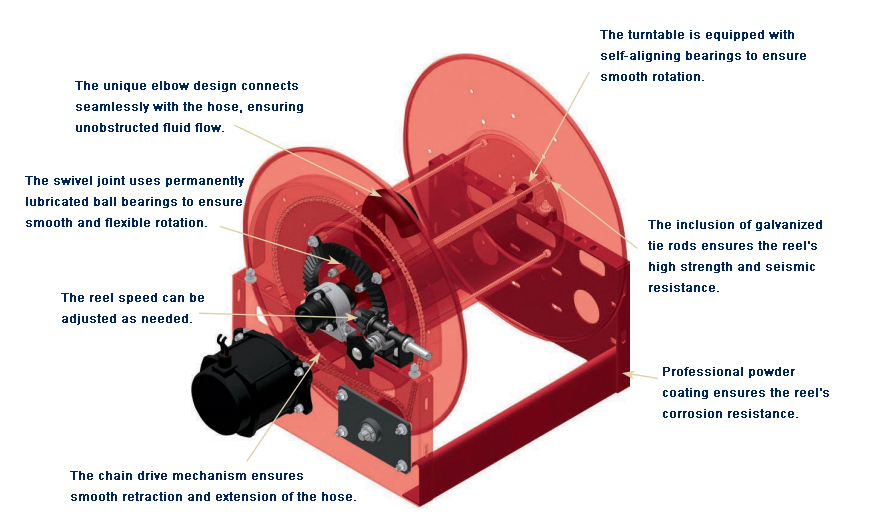
Industrial-grade electric hose reels are built with reinforced steel or stainless steel frames to withstand continuous mechanical stress, impact, and harsh field environments. This robust structure ensures stable operation even when handling long, heavy hoses used in fuel, hydraulic, or chemical transfer applications.
High-Torque Drive Motor
Equipped with powerful electric or hydraulic motors, industrial reels provide strong and consistent torque for smooth hose retraction. This allows reliable handling of large-diameter and high-pressure hoses commonly used in oil and gas operations, reducing strain on operators and improving system stability.
Smooth Automatic Rewinding
The controlled electric system ensures smooth and even hose retraction, preventing sudden jerks or uncontrolled winding. This helps reduce hose wear, avoids tangling, and keeps the work area organized, especially in continuous industrial workflows.
Excellent Corrosion Resistance
Industrial electric hose reels are often treated with powder-coated finishes or manufactured in stainless steel to resist rust, moisture, oil, and chemical exposure. This makes them suitable for offshore platforms, refineries, and other corrosive environments commonly found in the oil and gas industry.
Designed for Continuous Industrial Operation
Unlike light-duty equipment, industrial-grade reels are engineered for continuous, high-frequency use under demanding conditions. Electric hose reels in the oil & gas industry must operate reliably throughout long shifts, and industrial designs ensure consistent performance, reduced downtime, and long service life.
Why Choose CYCO Electric Hose Reels for Oil & Gas Industry
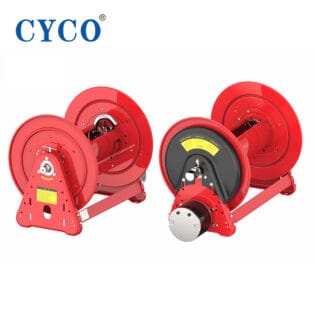
CYCO provides industrial-grade electric hose reels designed for harsh oil and gas environments. They are widely used in fuel transfer, lubrication systems, hydraulic applications, and chemical handling systems, delivering reliable performance and efficient hose management for demanding industrial operations.
Conclusion
When properly selected and matched to the application, an electric hose reel for oil & gas industry use becomes more than just equipment—it becomes part of a safer, smoother, and more reliable workflow. For operators working in demanding conditions, it is a practical upgrade that delivers long-term value without adding complexity to the job.
Related Posts