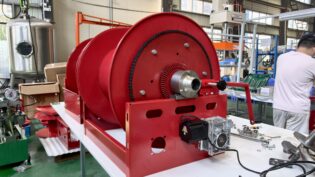
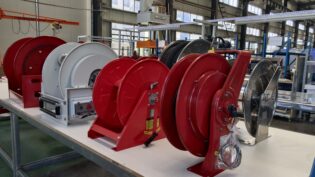
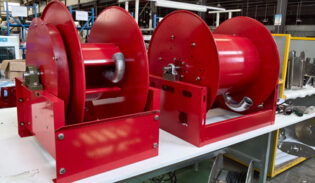
How to Choose the Right Automotive Hose Reel for Your Workshop
August 14, 2026 | Air Hose Reel, Electric Hose Reels, Manual Hose Reel, Oil Hose Reel, Spring-Driven Hose Reel, Water Hose Reel
1. Introduction
Automotive workshops often use different types of hoses for compressed air, water, oil, grease, and high-pressure cleaning. As hose lengths increase, loose hoses can quickly become difficult to manage, creating clutter, blocking walkways, and increasing the risk of damage.
Choosing the right automotive hose reel can help keep hoses organized while making them easier to access during daily repair and maintenance work. However, the best reel depends on the application, hose specifications, workshop layout, and working environment.
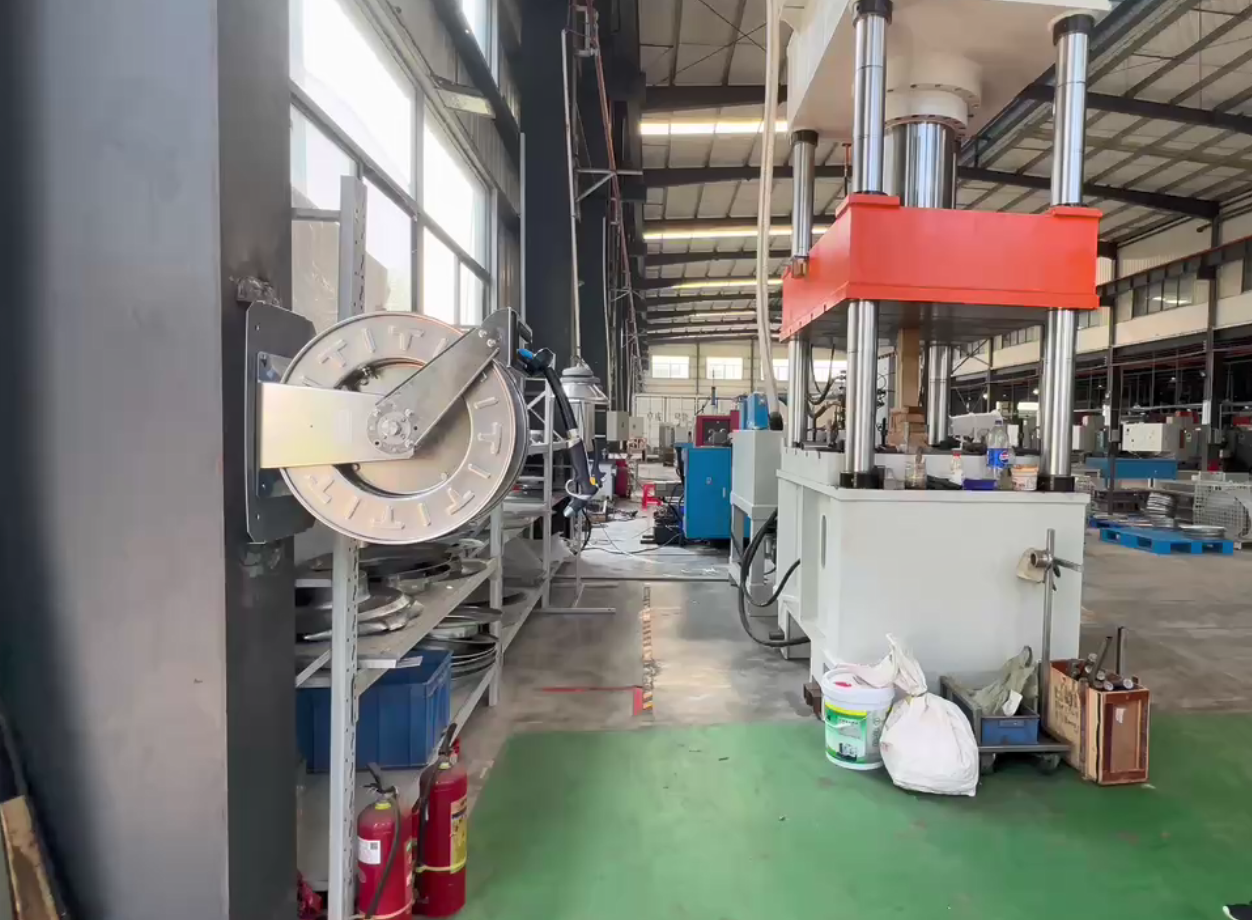
2. Identify the Hose Reel Application
The first step is to determine what the reel will be used for. Different fluids and tools require different hose specifications and reel configurations.
2.1 Air Hose Reel
Air hose reels are commonly used for:
- Tire inflation
- Pneumatic tools
- Air-powered maintenance equipment
When selecting an air hose reel, pay attention to working pressure, hose diameter, length, and frequency of use. A hose that is too small may restrict airflow to pneumatic tools, while an unnecessarily long hose adds weight and storage requirements.
2.2 Oil and Grease Hose Reel
Oil and grease reels are used for:
- Engine oil
- Lubricating oil
- Grease
- Vehicle lubrication and maintenance
For these applications, fluid compatibility is particularly important. The hose, swivel, seals, and fittings should all be compatible with the specific oil or grease being transferred.
Pressure and hose size should also match the lubrication equipment to ensure reliable delivery.
2.3 Water and High-Pressure Hose Reel
Water hose reels are often used for:
- Vehicle washing
- Automotive detailing
- Equipment cleaning
For high-pressure cleaning applications, the reel and hose must be rated for the system’s working pressure. Water resistance, abrasion resistance, hose length, and ease of retraction should also be considered.
The reel should provide enough hose to reach the required cleaning area without making the hose unnecessarily long or difficult to handle.
3. Choose the Right Hose Length and Size
Hose length and diameter have a direct impact on reel performance.
Hose length should be based on the coverage required at the workstation. A hose should reach the vehicle or equipment without requiring excessive extension, but choosing a much longer hose than necessary can increase weight and reduce available reel capacity.
Hose diameter should match the required flow rate and connected equipment. Pneumatic tools and high-flow applications may require a larger inside diameter to maintain adequate flow.
Hose weight also matters. Longer and larger-diameter hoses are heavier and require a reel with sufficient capacity and an appropriate rewind mechanism.
Bend radius should not be overlooked. The reel should provide enough space for the hose to bend naturally without forcing it into tight curves that could accelerate hose fatigue.
In short, do not choose a larger reel simply because a longer hose seems more convenient. Determine the actual coverage required at the workstation first.
4. Select the Right Rewind Method
The rewind mechanism affects both operator convenience and the overall suitability of the reel.
4.1 Spring-Driven Hose Reels
Spring-driven hose reels are widely used in automotive workshops where hoses are deployed frequently.
Their main advantages include:
- Automatic hose retraction
- Easy operation
- Efficient use of workshop space
- No external power source required
The operator simply pulls out the required length and allows the reel to retract the hose after use. This makes spring-driven reels a practical choice for many fixed repair stations.
4.2 Manual Hose Reels
Manual hose reels use a handle or crank to wind the hose back onto the drum.
They can be suitable for:
- Occasional use
- Shorter hoses
- Applications where automatic retraction is not necessary
Their structure is generally simple, but manual rewinding requires additional operator effort. For high-frequency workshop operations, an automatic solution may provide greater convenience.
4.3 Electric Hose Reels
Electric hose reels are more suitable for longer or heavier hoses and applications where the reel is used frequently.
They can be considered for:
- Long hoses
- Heavy-duty hoses
- High-frequency operation
- Large automotive service facilities
Depending on the application, electric, pneumatic, or hydraulic drives may be used. An electric system can reduce manual effort, particularly when the hose is too heavy for comfortable spring retraction.
5. Consider the Workshop Layout
Workshop layout is one of the most important factors when selecting a automototive hose reel, yet it is often overlooked.
Wall-Mounted
Wall-mounted reels are suitable for fixed workstations. They keep the hose off the floor and make good use of vertical space.
The mounting position should allow the hose to reach the vehicle without repeatedly rubbing against corners, equipment, or other obstacles.
Ceiling-Mounted
Ceiling-mounted reels can provide a larger operating range while keeping hoses away from vehicles and equipment.
They can be useful in workshops where several vehicles are serviced in the same area or where floor and wall space are limited.
Vehicle-Mounted
Vehicle-mounted hose reels are commonly used on mobile service trucks and maintenance vehicles.
In this case, the reel must withstand vehicle vibration while being positioned so that operators can easily deploy and retract the hose.
Regardless of the mounting method, the key principle is simple: the automotive reel should cover the main working area without forcing the hose to cross major walkways.
6. Match the Reel to the Working Environment
The workshop environment can influence both reel material and service life.
Consider whether the reel will be installed:
- Indoors or outdoors
- In a dry or wet environment
- Near oil or chemicals
- In a high-temperature area
- In a location requiring frequent cleaning
For a typical indoor automotive workshop, painted steel may provide a practical balance between durability and cost.
For wet areas, frequent washdown operations, or environments where corrosion is a concern, a stainless steel hose reel can provide better resistance and easier cleaning.
Material selection should therefore reflect the actual working environment rather than being based only on appearance.
7. Check Pressure and Material Compatibility
Pressure compatibility is essential, particularly for oil, grease, and high-pressure water applications.
A simple principle is:
Reel pressure rating ≥ Hose working pressure ≥ Actual system pressure
The complete fluid path should be checked, not just the reel frame.
This includes:
- Hose material
- Swivel material
- Seal material
- Fluid compatibility
- Temperature rating
For example, a reel may have a suitable pressure rating but still be inappropriate for a particular chemical or oil if the hose and seals are not compatible with the fluid.
8. Prioritize Safety and Hose Management
A good hose reel should make the workshop safer as well as more organized.
Loose hoses can create several common problems. They may be dragged across the floor, stretched across walkways, run over by vehicles, or repeatedly twisted during use.
Fast or uncontrolled retraction can also damage the hose or fittings. Excessive pulling force can place unnecessary stress on the hose connection and swivel.
A properly selected reel helps control these issues by keeping the hose organized and providing a predictable path for deployment and retraction.
Operators should still inspect hoses regularly for cuts, abrasion, cracks, and other signs of wear. A automotive hose reel improves hose management, but it does not replace routine inspection and maintenance.
9. A Simple Selection Checklist
| Consideration | What to Check |
|---|---|
| Application | Air, oil, grease, water, or high pressure |
| Hose length | Required coverage area |
| Hose diameter | Flow and equipment requirements |
| Working pressure | Match the system pressure |
| Rewind method | Manual, spring-driven, or electric |
| Mounting | Wall, ceiling, or vehicle |
| Environment | Indoor, outdoor, wet, or corrosive |
| Usage frequency | Occasional or continuous |
| Hose weight | Match reel capacity |
| Maintenance | Accessibility and service requirements |
Using this checklist can help narrow down the available options before comparing specific reel models.
10. Conclusion
The right automotive hose reel is not simply the largest or most powerful option. It should match the hose, application, working environment, installation location, and frequency of use.
For most automotive workshops, the best approach is to first identify the fluids and tools involved, determine the required hose length and diameter, then select the appropriate rewind method and mounting configuration.
A properly matched reel can keep hoses organized, reduce unnecessary wear, improve access around the vehicle, and make everyday maintenance work more efficient.
Related Posts
Spring-Driven Hose Reels for Construction Sites
July 2, 2026