How Do I Replace the Hose on My Reel?
June 30, 2026 | Industrial Hose Reels
Introduction
If your hose has started leaking, cracking, or showing signs of wear, it may be time to replace the hose on your hose reel. Regular hose replacement helps prevent unexpected downtime, improves workplace safety, and ensures reliable fluid transfer. Whether you use an industrial hose reel, garden hose reel, or another type of reel, replacing a damaged hose is a straightforward maintenance task when done correctly.
Common reasons for hose reel replacement include abrasion, chemical damage, aging, and pressure-related wear. Waiting until the hose fails completely can result in leaks, equipment damage, or costly interruptions.
This guide explains how do I replace the hose on my reel step by step, covering the tools you’ll need, proper installation methods, and common mistakes to avoid.
Before You Start: Gather the Necessary Tools
Before you replace the hose on a reel, prepare the following tools and materials:
- A compatible replacement hose
- Adjustable wrench
- Screwdrivers
- PTFE thread seal tape
- Safety gloves
- Safety glasses
- Lubricant (if required)
Most importantly, verify that the replacement hose matches your reel’s pressure rating, hose diameter, fitting type, and maximum hose capacity. Using an incompatible hose can reduce performance and create safety risks.
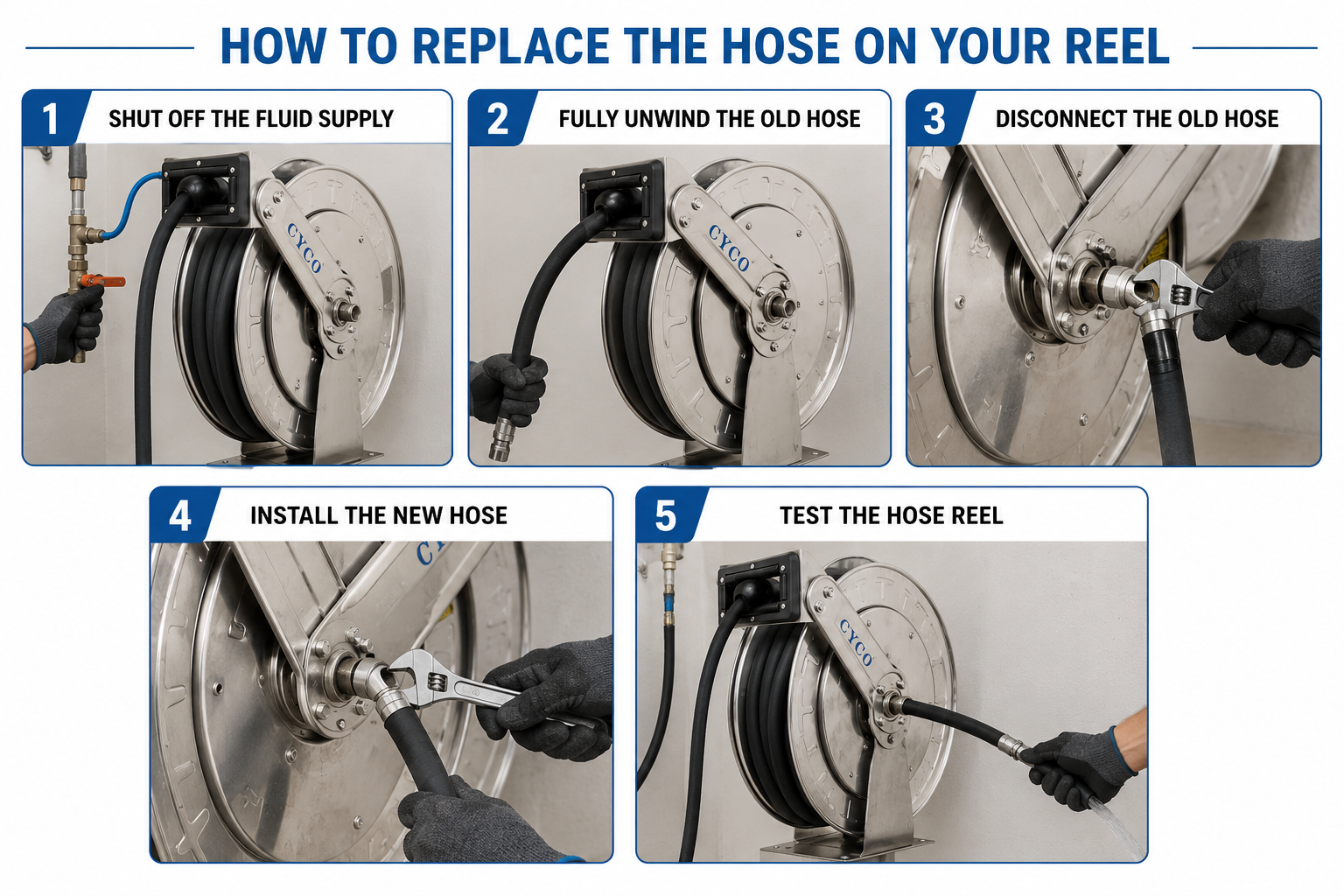
How to Replace Hose on Hose Reel: Step-by-Step Instructions
Step 1: Shut Off the Fluid Supply
Before starting, shut off the supply of water, air, oil, or fuel connected to the hose reel. Release any remaining system pressure before disconnecting the hose.
Wear safety gloves and safety glasses throughout this step to protect yourself from sharp fittings, residual pressure, or unexpected fluid discharge.
Step 2: Fully Unwind the Old Hose
Pull the hose completely off the reel until it is fully extended. This removes tension from the reel and provides easier access to the hose connections.
While the hose is extended, inspect the guide rollers, reel drum, and swivel joint for wear or damage. Safety gloves are recommended when handling worn or dirty hoses to reduce the risk of cuts and improve grip.
Step 3: Disconnect the Old Hose
Use an adjustable wrench to loosen the hose fitting and swivel connection. If your hose reel is equipped with retaining clamps or protective covers, remove them with a screwdriver before disconnecting the hose.
Work carefully to avoid damaging the swivel joint, as it provides the rotating seal during hose operation. If the swivel shows signs of leakage or excessive wear, replacing it at the same time is recommended.
Step 4: Install the New Hose
Route the replacement hose in the same direction as the original and keep it straight without twisting.
Before tightening the threaded fittings, wrap PTFE thread seal tape around the threads to improve sealing performance. Then use the adjustable wrench to tighten the fittings securely, but avoid overtightening.
If recommended by the manufacturer, apply a small amount of lubricant to the swivel joint or other moving components to ensure smooth operation after installation.
Step 5: Test the Hose Reel
Reconnect the fluid supply and slowly operate the hose reel while observing its performance.
Continue wearing safety gloves and safety glasses during testing in case of unexpected leaks or pressure release.
Verify that:
- The hose retracts smoothly.
- The hose unwinds smoothly.
- All fittings remain leak-free.
- There are no unusual noises.
- The hose guide keeps the hose evenly aligned on the drum.
If any abnormal movement or leakage is detected, stop the reel immediately and inspect the hose connections again before returning the equipment to service.
Common Mistakes to Avoid
Many hose reel replacement problems are caused by improper installation rather than defective components. Avoid these common mistakes:
- Using the wrong hose diameter or length
- Ignoring the reel’s pressure rating
- Twisting the hose during installation
- Failing to inspect the swivel joint
- Overfilling the reel with excessive hose length
Proper installation not only improves performance but also extends the service life of both the hose and the reel.
When Should You Replace the Entire Hose Reel Instead?
Sometimes replacing only the hose is no longer the best solution.
If the reel has a deformed drum, worn bearings, a failed swivel, severe corrosion, or structural cracks, replacing the complete industrial hose reel is usually more economical and reliable than repeated repairs.
Depending on your application, you may consider upgrading to a stainless steel hose reel for corrosive environments, a manual hose reel for simple operation, or a motorized hose reel for high-frequency industrial use.
Why Choose CYCO Hose Reels?
A high-quality reel makes future hose replacement easier while improving daily operation.
CYCO hose reels feature durable stainless steel or heavy-duty steel construction, smooth hose management, reliable swivel joints, and corrosion-resistant finishes for a long service life. Designed for demanding industrial applications, they are suitable for water, fuel, oil, and compressed air systems, delivering dependable performance in workshops, factories, commercial facilities, and outdoor environments.
FAQs
Can I replace the hose without removing the reel?
Yes. Most hose reels allow the hose to be replaced while the reel remains mounted.
How long does a hose reel hose last?
Service life depends on operating pressure, environment, and usage frequency. Regular inspection helps identify wear before failure occurs.
Can I install a longer hose?
Only if the reel’s rated hose capacity allows it. Overfilling the reel can affect winding performance.
Should I replace the swivel at the same time?
If the swivel shows leakage, excessive wear, or rough rotation, replacing it together with the hose is recommended.
How can I prevent hose twisting?
Install the hose in the correct orientation, avoid twisting during assembly, and ensure the hose guide is properly aligned.
Conclusion
Knowing how do I replace the hose on my reel helps keep your equipment operating safely and efficiently. By following the correct installation steps and selecting a compatible replacement hose, you can reduce downtime, improve reliability, and extend the service life of your equipment.
If your reel is heavily worn or no longer performs reliably, upgrading to a high-quality CYCO industrial hose reel, stainless steel hose reel, manual hose reel, or motorized hose reel can provide a more durable long-term solution for demanding fluid transfer applications.
Related Posts
Best Hose Reel Solutions for the Paper Industry
August 27, 2026
Why Do Workshops Need Hose Reels?
March 18, 2026