How Does a Motorized Hose Reel Work
June 25, 2026 | Electric Hose Reels, Industrial Hose Reels
Introduction
A Motorized Hose Reel, also known as a Powered Hose Reel, is an advanced hose management solution designed to automatically wind and store hoses with minimal manual effort. Unlike manual reels that require operators to rewind hoses by hand, motorized systems use a powered drive mechanism to retract hoses quickly, safely, and efficiently.
As industrial hoses become longer, heavier, and more critical to daily operations, automatic hose handling systems have become increasingly important across many industries. A Motorized Hose Reel helps reduce labor requirements, improve workplace safety, and extend hose service life by ensuring controlled and organized hose storage.
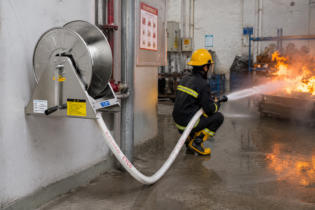
Today, motorized hose reels are widely used in Oil & Gas operations, Mining sites, Marine and offshore facilities, Manufacturing plants, Fire protection systems, etc.
Understanding how a Motorized Hose Reel works can help users select the right system and maximize operational efficiency.
Main Components of a Motorized Hose Reel
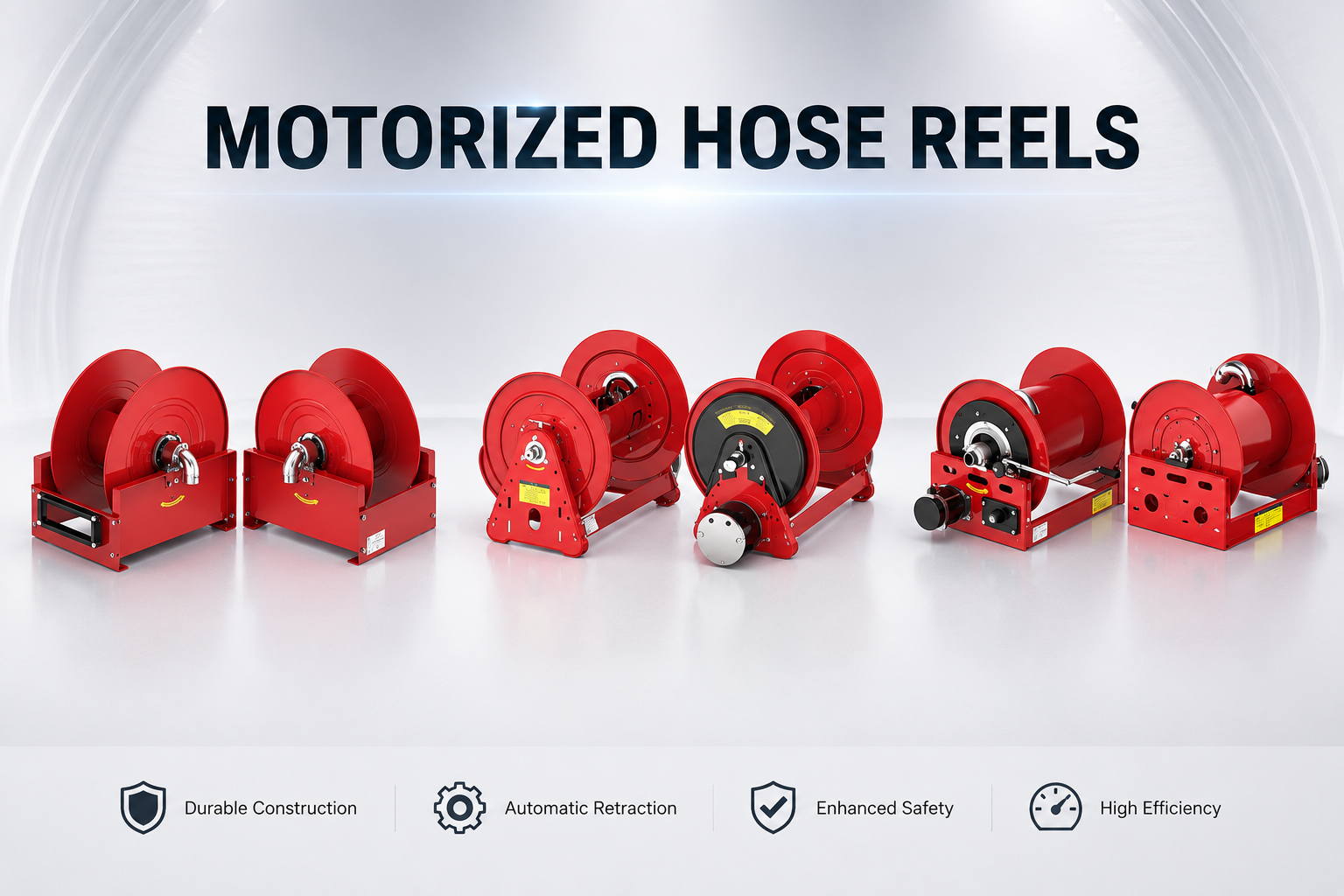
A Motorized Hose Reel consists of several key components that work together to ensure smooth hose deployment and automatic rewinding.
Reel Drum
The reel drum is the central component responsible for storing the hose.
Its size determines:
- Hose capacity
- Maximum hose length
- Hose winding efficiency
The drum rotates during both hose deployment and retrieval, making it the foundation of the entire reel system.
Drive Motor
The drive motor provides the power required to rewind the hose onto the drum.
Depending on the application, different motor types may be used:
1. Electric Motor
Electric motors are commonly used in factories, workshops, warehouses, and manufacturing facilities. They offer reliable performance, precise control, and relatively simple installation.
2. Hydraulic Motor
Hydraulic motors deliver high torque output, making them ideal for heavy-duty applications such as mining equipment, offshore platforms, and large industrial hose systems.
3. Pneumatic Motor
Pneumatic motors are often selected for hazardous environments where electrical equipment may not be suitable. They are commonly used in certain chemical and industrial facilities.
Hose Guide System
The hose guide system plays a critical role in ensuring the hose is wound evenly across the drum.
Its primary functions include:
- Maintaining orderly hose layers
- Preventing hose pile-up
- Reducing hose twisting and tangling
- Improving rewinding efficiency
One of the most effective designs is the Reciprocating Screw Hose Guide, which automatically moves from side to side while the drum rotates. This synchronized movement allows the hose to be distributed evenly across the reel width.
Control System
The control system allows operators to manage hose retraction safely and efficiently.
Typical control components include:
- Push buttons
- Remote controls
- Limit switches
These devices provide convenient operation while helping protect both the reel and hose from damage.
Mounting Frame
The mounting frame supports the entire reel assembly and ensures structural stability during operation.
Depending on application requirements, the frame may be installed on:
- Floors
- Walls
- Vehicles
- Mobile equipment
- Offshore structures
Step-by-Step Working Principle of a Motorized Hose Reel
Understanding the working process of a Motorized Hose Reel helps explain why it is such an efficient hose management solution.
Step 1: Hose Deployment
The operator manually pulls the hose from the reel to the desired work location.
As the hose is extended, the drum rotates freely, allowing smooth hose deployment without excessive resistance.
Step 2: Hose Usage
Once deployed, the hose performs its intended function by transporting fluids or gases such as: Water, Compressed air, Oil, Fuel, Chemicals etc.
The hose remains extended throughout the operation.
Step 3: Rewind Activation
After the task is completed, the operator activates the rewinding system.
Depending on the reel design, the system may use:
- An electric motor
- A hydraulic drive system
The motor receives a signal from the control system and begins the hose retrieval process. This process is often controlled by components such as limit switches, which help ensure accurate stopping and prevent over-retraction.
Step 4: Drum Rotation
The motor transfers power to the reel drum through a drive mechanism.
As the drum rotates, the hose is pulled back onto the reel in a controlled manner.
This powered retrieval eliminates the need for manual winding and significantly reduces operator effort.
Step 5: Hose Guiding
As the hose is rewound, the hose guide system automatically moves laterally across the drum.
This movement is synchronized with drum rotation, ensuring that each layer of hose is positioned neatly beside the previous one.
Proper hose guiding prevents Overlapping coils, Hose stacking, Uneven winding and Excessive wear.
The result is a clean and organized hose package that is ready for the next operation.
Step 6: Automatic Stop
When the hose reaches its fully retracted position, the system automatically stops.
This function is typically controlled by Limit switches, Position sensors and Automatic control systems.
Automatic stopping helps prevent over-winding, protects the hose, and improves operational safety.
Why the Hose Guide System Is Critical
Among all components of a Motorized Hose Reel, the hose guide system has one of the greatest impacts on performance and hose longevity.
Without proper hose guiding, several operational problems can occur.
Prevents Hose Overlapping
When hoses overlap during rewinding, they can become trapped or pinched between layers. Over time, this may damage the hose structure and reduce operational reliability.
A properly designed hose guide system ensures each hose layer is positioned accurately.
Reduces Hose Wear
Uneven winding often causes friction between hose layers.
By maintaining orderly hose placement, the guide system minimizes abrasion and helps preserve hose integrity.
Improves Rewinding Efficiency
Operators spend less time correcting tangled or improperly wound hoses.
This results in faster hose retrieval and improved workplace productivity.
Extends Hose Service Life
Because the hose experiences less stress and wear during each rewind cycle, overall hose lifespan can be significantly increased.
The Advantage of a Reciprocating Screw Level Wind System
A Reciprocating Screw Level Wind System is widely recognized as one of the most reliable hose guiding solutions for industrial applications.
This system uses a precision-machined screw mechanism to drive the guide carriage back and forth across the reel width.
Key benefits include:
- Accurate hose positioning
- Consistent winding patterns
- Reduced hose damage
- Improved reel efficiency
- Enhanced long-term reliability
For heavy-duty industrial hose reels, this type of guide system provides superior hose management compared with basic guiding methods.
Conclusion
A Motorized Hose Reel is an efficient and reliable solution for managing industrial hoses in demanding applications. By combining a reel drum, drive motor, hose guide system, control system, and mounting frame, it enables automatic hose retrieval while improving workplace safety and productivity.
The operating process is straightforward: the hose is deployed, used for fluid transfer, rewound through a powered drive system, guided evenly across the drum, and automatically stopped when fully retracted.
Among all reel components, the hose guide system plays a particularly important role. Advanced solutions such as the Reciprocating Screw Level Wind System help ensure smooth winding, reduce hose wear, improve efficiency, and significantly extend hose service life.
As industries continue to seek safer and more efficient hose management solutions, Motorized Hose Reels remain an essential tool for operations in oil and gas, mining, marine, manufacturing, and fire protection environments.
Related Posts
Best Hose Reel Solutions for the Paper Industry
August 27, 2026
How Do I Replace the Hose on My Reel?
June 30, 2026