Stainless Steel Hose Reel Solutions – Free Selection Assistance
July 28, 2026 | Stainless Steel Hose Reels
1. Introduction
Industrial hose management requirements vary significantly across industries. Food processing plants prioritize hygiene, chemical plants require corrosion resistance, and marine environments demand reliable hose operation under continuous seawater corrosion. Choosing the right reel for stainless steel hose reel is not simply about selecting a durable material. More importantly, the reel must match the operating environment, hose specifications, and daily workflow.
Stainless steel hose reels are widely used across industries due to their proven reliability in harsh environments. For more information on their structure and key benefits, please refer to our dedicated article on the characteristics of stainless steel hose reels. This guide focuses on how to select the most suitable stainless steel hose reel solution for different industrial applications.
2. Industry-Specific Stainless Steel Hose Reel Solutions
Different application scenarios require different reel configurations. Choosing the right solution can improve hose management, enhance workplace safety, and increase operational efficiency.
2.1 Food and Beverage Processing
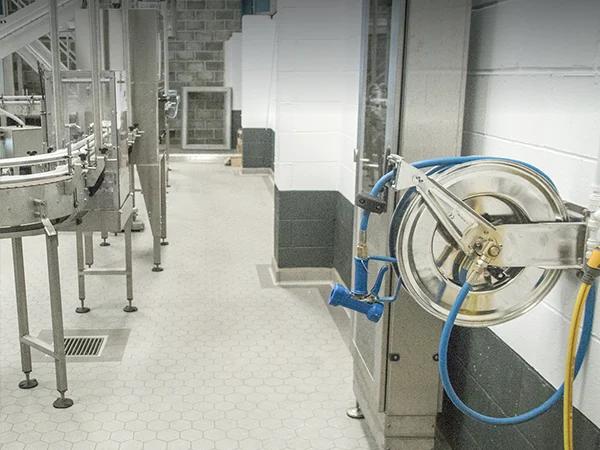
Food and beverage production facilities frequently use hoses for rinsing, equipment cleaning, and water supply. Properly storing hoses helps keep production areas clean while reducing wear and tear caused by dragging hoses on the ground.
Manual and spring-driven stainless steel hose reels are common equipment in these applications. Spring-driven reels allow operators to quickly extend and retract hoses, making them particularly suitable for production lines requiring multiple cleanings daily.
2.2 Pharmaceutical Production
Pharmaceutical plants typically require efficient hose management to meet the needs of pure water systems, cleaning procedures, and equipment maintenance. Stainless steel reels minimize hose damage when not in use and contribute to clean and efficient production.
Wall-mounted hose reels are typically used for ready-to-use installations. They can be mounted on walls or pillars, occupying less floor space while providing easy access to hoses.
2.3 Marine and Offshore Operations
Hoses are used frequently and intensively in marine environments, making them highly susceptible to corrosion and aging. In marine environments, reels are exposed to seawater, humid air, and changing weather conditions, factors that can quickly damage ordinary reels.
Stainless steel hose reels are widely used in washdown systems, water supply systems, and maintenance operations on ships, docks, offshore platforms, and port facilities. Selecting corrosion-resistant materials and appropriately sized reels is crucial to ensuring reliable operation in these harsh environments.
2.4 Chemical Processing
Chemical processing hoses are widely used in chemical processing facilities for cleaning equipment, conveying process water, and transporting compatible chemicals. Due to the significant differences in operating conditions for various chemicals, selecting the appropriate reel configuration and the correct hose is crucial.
For facilities exposed to corrosive chemicals or chloride-rich environments, such as seawater desalination facilities, 316 stainless steel should be considered because it provides better resistance to chloride corrosion than standard 304 stainless steel.
2.5 Production and Equipment Maintenance
Manufacturing plants use hoses to deliver compressed air, cooling water, equipment cleaning, and routine maintenance. Different types of Manual hose reels, Spring-driven hose reels, or electric hose reels are available depending on hose length and application requirements.
For maintenance workshops where hoses are operated throughout the day, spring-driven reels can help save valuable time spent extending, retracting, and storing hoses.
2.6 Water and Wastewater Treatment
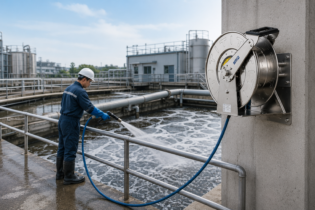
Water treatment plants rely on hoses for equipment cleaning, maintenance, and water supply. Since many water treatment plants operate outdoors or in humid environments, stainless steel hose reels provide a practical solution for long-term hose management while minimizing maintenance needs.
3. How to Choose the Right Stainless Steel Hose Reel Solution
Choosing the right hose reel requires an application-oriented approach, not just material considerations.
3.1 Choosing the Right Stainless Steel Grade
The stainless steel grade should be determined based on the conveying medium, cleaning agent, operating temperature, humidity, and actual working environment. For general industrial environments, 304 stainless steel is usually sufficient; if exposed to chlorides, brine, or other more corrosive media for extended periods, 316 or 316L stainless steel may be considered.
| Stainless‑Steel Grade | Chemical Medium | Cleaning Agent | Operating Temperature | Humidity & Environment | Typical Applications |
|---|---|---|---|---|---|
| 304 | Good corrosion resistance against fresh‑water and mild‑strength cleaning agents | Ordinary clean water and mild‑duty detergents | Conventional industrial‑grade temperatures | Indoor spaces and generally damp surroundings | Food processing, beverage manufacturing and general‑purpose industrial cleaning |
| 316 | Media containing chlorides, salt content or moderately corrosive substances | Complex‑condition cleaning environments | Adaptable to complicated thermal conditions, subject to evaluation based on specific working media | High‑humidity, seaside and salt‑fog‑prone locations | Chemical‑related industries, offshore projects, coastal‑located facilities and industrial cleaning |
| 316L | Corrosive media and use‑cases demanding superior anti‑corrosion performance | Frequent‑use or rigorous cleaning scenarios | Industrial settings with strict temperature tolerance and corrosion‑resistance standards | High‑humidity zones and environments with strict sanitation requirements | Pharmaceutical workshops, chemical plants, food‑processing lines and sanitary‑grade machinery |
3.2 Choosing the Right Drive Type
The stainless steel construction does not determine how the reel should be driven. The rewind method should be selected according to hose length, hose weight, and operating frequency.
- Manual stainless steel hose reels are suitable for shorter and lighter hoses or applications where the hose is used occasionally. Their simple structure makes them easy to operate and maintain.
- Spring-driven stainless steel hose reels are a practical option for workstations, cleaning stations, food-processing areas, workshops, and other locations where the hose is frequently extended and retracted. The automatic rewind function helps keep the hose off the floor and reduces manual handling.
- Motor-driven stainless steel hose reels are better suited to long or heavy hoses and high-frequency industrial applications. Electric, hydraulic, or pneumatic drives can provide additional pulling and rewinding force when a large hose assembly would be difficult to handle manually.
For heavy-duty industrial applications, the rewind system should be matched to the total hose weight, including fittings and accessories. An undersized spring or motor can result in incomplete retraction and excessive mechanical wear.
3.3 Matching Hose Specifications
A stainless steel hose reel should be selected according to the actual hose being used. Important hose parameters include:
- Hose inner diameter: Determines connection size and affects fluid flow.
- Hose outer diameter: Determines how much hose the reel can store.
- Hose length: Determines the required reel capacity.
- Hose weight: Affects the required reel strength and rewind mechanism.
- Working pressure: Determines the required pressure rating of the reel and swivel.
- Working temperature: Affects hose, seals, and swivel selection.
- Minimum bend radius: Determines whether the reel can wind the hose without excessive bending.
- Media compatibility: Ensures the hose and fluid-path components are suitable for the conveyed medium.
3.4 Consider Installation Location
Stainless steel hose reels are commonly installed in workshops, production lines, washdown areas, food-processing facilities, chemical plants, service areas, and outdoor industrial locations.
The installation position should allow the hose to reach the required working area without excessive side pulling.
- Wall-mounted stainless steel hose reels are suitable for fixed workstations and cleaning areas. They keep the reel away from the floor and make the hose easy to access.
- Ceiling-mounted reels can be useful in areas where floor and wall space is limited. They also help keep hoses away from vehicle traffic and busy walkways.
- Floor-mounted or heavy-duty reels may be preferred when large-diameter or long hoses are used and additional structural support is required.
For outdoor or mobile applications, the installation structure should also account for vibration, moisture, impact, and environmental exposure.
4. Common Mistakes to Avoid
Selecting stainless steel hose reels solely based on material can lead to performance problems. The following common mistakes should be avoided.
4.1 Choosing the Wrong Stainless Steel Grade
Using 304 stainless steel in highly corrosive marine environments may shorten service life, while choosing 316 stainless steel for general indoor applications may increase unnecessary costs. Material selection should always be matched to the actual operating environment.
4.2 Ignoring Hose Capacity
If the reel size is too small, the hose’s length or diameter cannot be fully accommodated within the reel, leading to difficulties in winding and increased wear. Therefore, always check the reel’s rated hose capacity before purchasing.
4.3 Choosing the Wrong Drive Type
Manual hose reels are better suited for small systems but are inefficient for heavy-duty and long industrial hoses. Choosing the appropriate drive mechanism based on daily operating needs can improve efficiency and user convenience.
4.4 Ignoring Future Needs
If future production capacity is likely to expand, choosing a hose reel with a larger hose capacity or higher operating pressure can help avoid premature equipment replacement and additional capital expenditures.
5. Conclusion
Understanding the application scenarios for stainless steel hose reels is crucial for selecting the appropriate stainless steel hose reel material. Whether supporting hygienic washdown procedures, operating hoses in chemical processing environments, or meeting applications that require higher reliability, suitable stainless steel hose reels can improve workplace organization, simplify hose handling, and reduce maintenance requirements.
By considering the operating environment, stainless steel grade, drive type, hose specifications, and installation requirements, companies can choose a solution that provides safe, efficient, and reliable hose management for years to come.
Related Posts
The Difference Between Stainless Steel and Carbon Steel Materials for…
December 11, 2025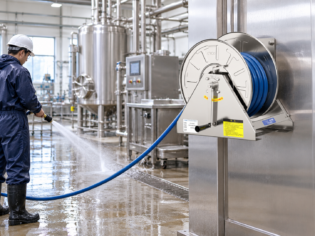
When Should You Choose a Stainless Steel Manual Hose Reel?
October 8, 2026