Why Choose Stainless Steel Hose Reels for Wastewater Treatment?
July 3, 2026 | Hose Reel Applications, Stainless Steel Hose Reels
1.Introduction
Hose reels are widely used in wastewater treatment plants for equipment flushing, chemical delivery, and routine maintenance. However, due to the long-term exposure to damp and corrosive environments in these facilities, ordinary steel reels often rust and fail within just a few months. A stainless steel hose reel provides excellent corrosion resistance and long-term durability, making it a preferred solution for wastewater treatment facilities.
This article will introduce their core advantages and key selection considerations. For a broader look at how stainless steel hose reels can be selected for different industrial environments, see our guide to Stainless Steel Hose Reel Solutions.
2.The Harsh Challenges of Wastewater Treatment Environments
To understand the importance of material selection, it is first necessary to recognize the daily challenges faced by wastewater treatment plants.
2.1 Persistent Dampness and High Humidity
Wastewater treatment plant environments are inherently humid, with moisture present everywhere—from open settling tanks to pipe leaks. Ordinary carbon steel reels exposed to such humidity oxidize rapidly, and once surface rust appears, structural integrity quickly deteriorates.
2.2 Exposure to Chemicals and Corrosive Media
Treatment plants involve various corrosive substances, including chlorine, ozone, coagulants, and acidic/alkaline cleaning agents, which exist in the form of vapors or splashes. These substances attack metal surfaces, leading to premature corrosion and increased replacement costs.
2.3 Frequent Wash-Down Operations
Equipment and work areas require regular flushing to maintain hygiene and operational efficiency. Continuous contact with water and cleaning agents damages painted surfaces and accelerates corrosion of traditional hose reels.
2.4 High Reliability Requirements
Wastewater treatment systems typically operate 24/7. Any equipment failure can interrupt maintenance work and increase downtime. Reliable hose management equipment is essential to keep the plant running efficiently.
Even with protective coatings, ordinary reels are prone to paint peeling that exposes the bare metal. Once moisture penetrates, corrosion occurs rapidly, resulting in higher maintenance costs due to repainting, rust removal, and component replacement.
3.Five Core Advantages of Stainless Steel Hose Reels for Wastewater Treatment
3.1 Superior Corrosion Resistance
Stainless steel (grades 304 and 316) contains chromium, which forms a passive oxide film on the surface that effectively resists attack from moisture, chemicals, and salts. For plants handling highly corrosive chemicals or located in coastal areas, 316 stainless steel offers even greater resistance to chlorides and acid corrosion, ensuring reliable service for decades.
3.2 Extended Service Life
Stainless steel hose reels for wastewater treatment are more resistant to rust and chemical attack than ordinary steel reels. Their longer lifespan reduces replacement frequency and lowers the total cost of ownership.
3.3 Improved Workplace Safety
Keeping hoses properly stored and organized helps eliminate clutter around work areas, reducing trip hazards and improving overall workplace organization. A well-managed hose system also allows maintenance personnel to work more efficiently and safely.
3.4 Minimal Maintenance Requirements
Unlike painted reels that require regular repainting and rust removal, stainless steel reels require very little maintenance. In most cases, a simple rinse with clean water is enough to keep them operating reliably, allowing maintenance teams to focus on more critical tasks.
3.5 Reliable Hose Management
Whether used as a washdown hose reel or a chemical delivery reel, a high-quality industrial hose reel helps protect hoses from abrasion, kinking, and accidental damage. For wastewater treatment applications, stainless steel construction provides additional corrosion resistance and long-term durability.
4.Typical Applications in Wastewater Treatment
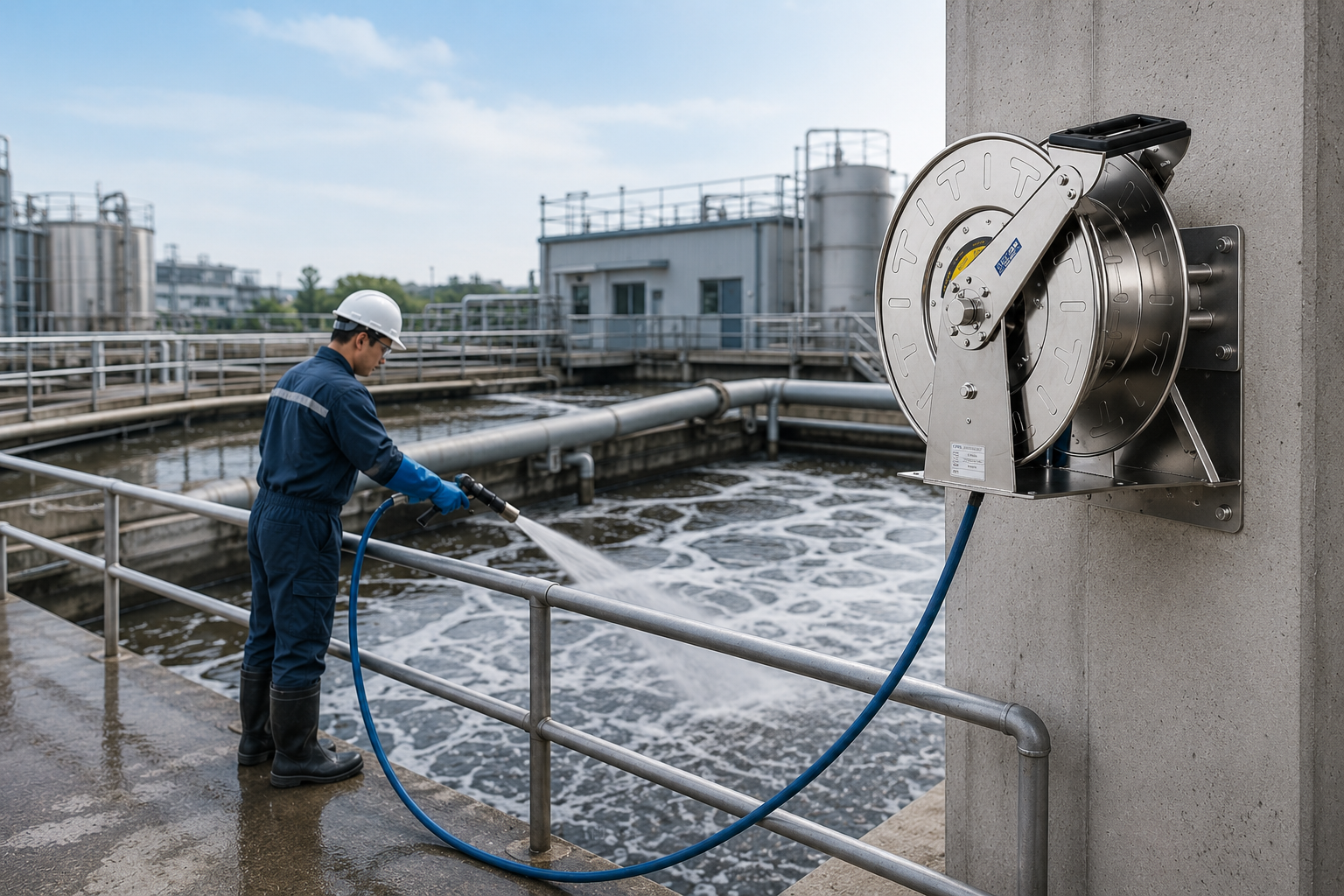
Stainless steel hose reels are widely used throughout wastewater treatment plants to improve operational efficiency and extend hose service life.
4.1 Equipment Washdown
Settling tanks, screens, and digesters require regular cleaning. Washdown hose reels installed nearby allow operators to quickly remove accumulated debris and maintain efficient equipment operation.
4.2 Pump and Filter Maintenance
Pump sets and filtration systems require routine flushing and inspection. Retractable stainless steel hose reels provide convenient access to water or compressed air, reducing setup time while keeping maintenance areas organized.
4.3 Chemical Delivery Systems
In chemical dosing areas, hoses are used to transfer coagulants, flocculants, and disinfectants. Corrosion-resistant hose reels withstand chemical vapors and occasional splashes while safely storing delivery hoses.
4.4 Sludge Handling Areas
Sludge handling zones are among the harshest environments in a treatment plant due to constant humidity, hydrogen sulfide gas, and abrasive sludge. Stainless steel hose reels provide the durability needed for heavy-duty cleaning, sampling, and sludge transfer operations.
5.How to Choose the Right Stainless Steel Hose Reel for Wastewater Treatment
Selecting the appropriate stainless steel hose reel for wastewater treatment requires evaluating several key factors.
5.1 Stainless Steel Grade
Grade 304 is suitable for general wastewater environments with moderate chemical exposure, while Grade 316 is recommended for coastal facilities, high-chloride environments, or applications involving strong acids and highly corrosive chemicals. If chlorine, ferric chloride, or sulfuric acid is present, 316 stainless steel is strongly recommended.
5.2 Hose Length and Pressure Rating
Choose a hose length that matches the distance between the water or chemical source and the point of use. Reel capacities typically range from 15 to over 60 meters. Also verify that the reel’s maximum working pressure matches the application, whether for high-pressure washdown or chemical transfer.
5.3 Retraction Method
Select the rewind system based on usage frequency.
- Manual hose reels are cost-effective for low-frequency or stationary applications.
- Spring retractable hose reels automatically rewind the hose, making them ideal for routine washdown and maintenance.
- Electric hose reels are designed for continuous industrial operation, easily handling long, heavy hoses in large facilities.
5.4 Installation Environment
Consider whether the reel will be wall-mounted, ceiling-mounted, or floor-mounted. Exposure to sunlight, heavy rain, chemicals, or extreme temperatures may require additional protection such as UV-resistant covers or all-stainless swivel joints.
6.CYCO Recommended Stainless Steel Hose Reels
At CYCO, we understand the demanding conditions of wastewater treatment facilities. We offer a full range of stainless steel hose reels designed for wet, corrosive, and high-intensity environments, featuring premium stainless steel components and precision swivel joints for long-term reliability.
Our most popular models include:
- Stainless Steel Spring-Retractable Hose Reel — Automatic hose retraction for efficient daily washdown and maintenance.
- Manual Stainless Steel Hose Reel — A cost-effective solution for low-frequency applications with reliable hand-crank operation.
- Heavy-Duty Electric Stainless Steel Hose Reel — Motor-driven retraction and large hose capacity for demanding industrial operations.
7.Conclusion
Wastewater treatment facilities require equipment that can withstand constant moisture, corrosive chemicals, and demanding daily operations. A stainless steel hose reel offers superior corrosion resistance, longer service life, lower maintenance requirements, and reliable hose management, making it a smart long-term investment.
Whether you need a manual, spring retractable, or electric hose reel, choosing the right stainless steel model helps improve workplace safety, reduce downtime, and ensure dependable performance in even the harshest wastewater treatment environments. CYCO provides a complete range of industrial stainless steel hose reels designed to meet the needs of modern wastewater treatment plants.
Related Posts
Electric Hose Reels for Oil & Gas Industry
July 6, 2026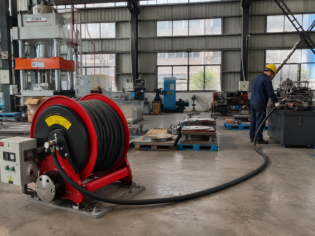
How to Choose a Large Capacity Hose Reel for Heavy-Duty…
July 13, 2026