Fuel Hose Reel Selection Guide for Safe Fueling Systems
June 22, 2026 | Industrial Hose Reels
Introduction
Fuel leaks, tangled hoses, slow fueling operations, and frequent hose replacements are common challenges in many fuel transfer systems that rely on Industrial Hose Reels for safe and efficient hose management. Whether in fleet fueling stations, construction sites, agricultural operations, or industrial facilities, poorly managed fuel hoses can reduce efficiency, increase maintenance costs, and create serious safety risks.
A fuel hose reel provides a simple yet effective solution by keeping fuel hoses organized, protected, and ready for use. Proper hose management not only improves fueling efficiency but also helps prevent hose damage, reduce downtime, and maintain a safer working environment.
However, not all fuel hose reels are designed for the same application. Factors such as fuel type, hose length, operating pressure, reel material, and installation environment can significantly affect performance and reliability. In this guide, we will explore seven key factors to consider before buying a fuel hose reel to help you select the best solution for your specific needs.
What Is a Fuel Hose Reel?
A fuel hose reel is a specialized hose management device designed for storing, protecting, and deploying hoses used in diesel, gasoline, biodiesel, and other fuel transfer applications. By keeping fuel hoses neatly organized and readily accessible, it helps prevent tangling, kinking, and unnecessary wear while improving the overall efficiency of fueling operations.
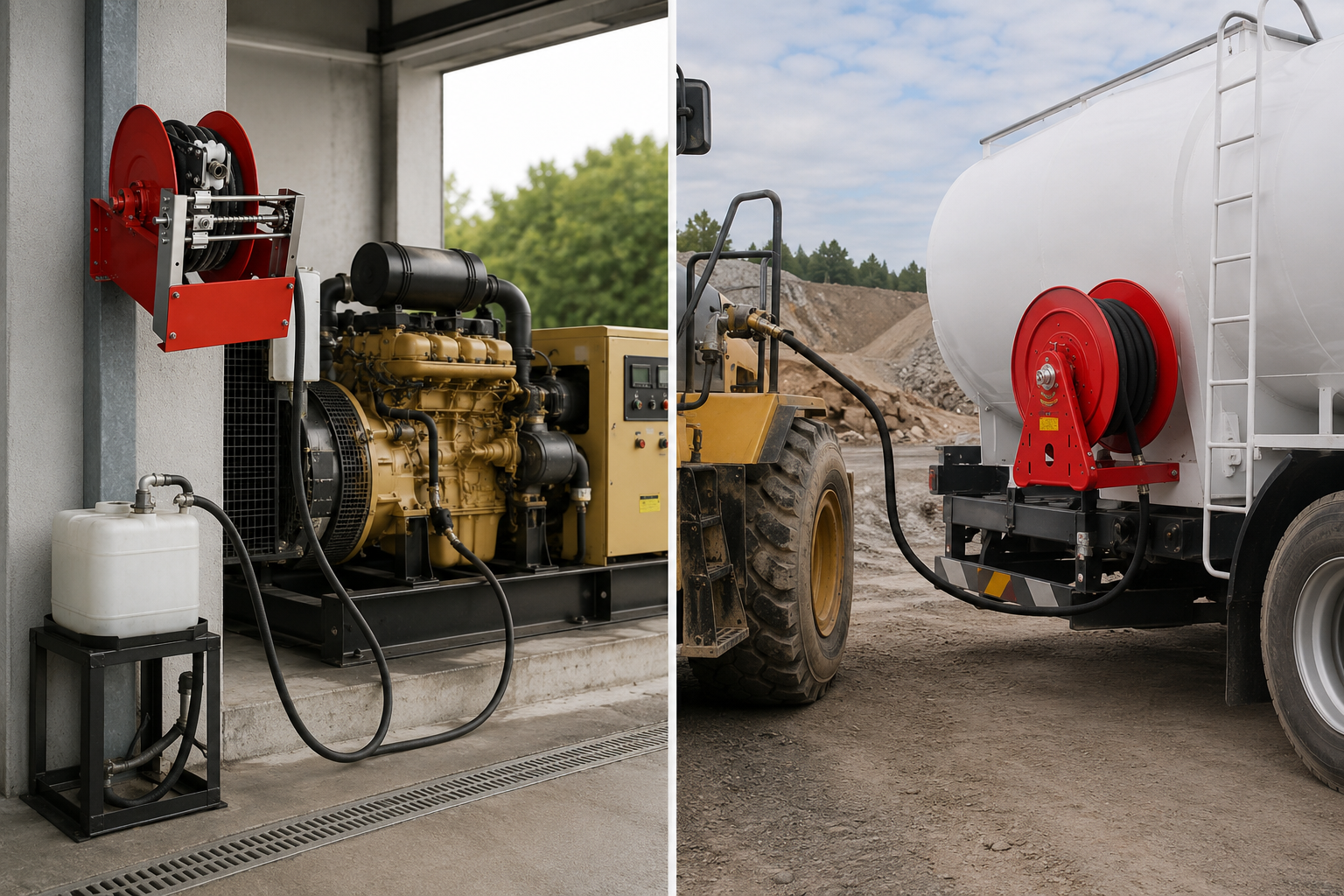
Fuel hose reels are widely used in fleet fueling stations, construction equipment, agricultural machinery, fuel service vehicles, and mining operations. In these demanding environments, they help improve workplace safety, reduce hose damage, streamline fuel transfer processes, and ensure reliable fuel delivery when and where it is needed.
How to Choose the Right Fuel Hose Reel: 7 Key Factors to Consider Before Buying
1. Consider the Type of Fuel
One of the first factors to consider when selecting a fuel hose reel is the type of fuel being transferred. Different fuels have different chemical properties, which can affect the performance and service life of hoses, seals, and reel components. Common fuels include diesel, gasoline, biodiesel, and lubricating oil, each of which may require specific hose materials and sealing systems to ensure safe and reliable operation.
Before purchasing a fuel hose reel, always verify that the hose, swivel joint, seals, and reel materials are compatible with the intended fuel. Using incompatible materials can lead to hose degradation, seal failure, fuel leakage, and increased maintenance costs.
2. Determine Hose Length and Reel Capacity
Hose length and reel capacity are important factors when selecting a fuel hose reel. Before choosing a reel, consider the required hose length, hose diameter, and hose weight, as these directly affect how much hose the reel can safely accommodate. Common fuel hose lengths include 25 ft, 50 ft, and 100 ft or more, depending on the fueling application and operating area.
Selecting a reel with insufficient capacity can make hose winding difficult, increase wear, and reduce overall efficiency. To ensure smooth operation and proper hose storage, the reel should be capable of accommodating the entire hose without overcrowding the drum.
3. Check Working Pressure Requirements
Working pressure is one of the most important factors when selecting a fuel hose reel. Fuel transfer systems can operate under different pressure conditions depending on the pump configuration, flow rate requirements, and application environment. Whether used for low-pressure fuel transfer or medium-pressure fuel dispensing, the reel, hose, swivel joint, and fittings must be properly rated to safely handle the system’s operating pressure.
When evaluating a fuel hose reel, always verify its maximum working pressure rating and ensure it matches the requirements of the application. As a general rule, the reel pressure rating should always exceed the maximum operating pressure of the system. Choosing a reel with an adequate safety margin helps prevent leaks, component failures, and premature equipment wear, while ensuring safe and efficient fuel transfer over the long term.
4. Select the Right Reel Material
The material of a fuel hose reel directly affects its durability, corrosion resistance, and overall service life. Selecting the right material based on the operating environment can help reduce maintenance requirements and extend equipment lifespan.
Steel Fuel Hose Reels
Steel fuel hose reels are a cost-effective and durable solution for general fuel transfer applications. They offer excellent structural strength and are suitable for indoor facilities, workshops, fleet maintenance areas, and other environments where exposure to moisture and corrosive substances is limited. For many standard fueling operations, steel reels provide a reliable balance between performance and affordability.
Stainless Steel Fuel Hose Reels
Stainless steel fuel hose reels are designed for applications where corrosion resistance is a priority. Their superior resistance to rust, moisture, chemicals, and saltwater makes them ideal for outdoor installations, coastal facilities, marine fueling systems, and other harsh environments. Although they typically require a higher initial investment, stainless steel reels often provide a longer service life and lower maintenance costs in demanding operating conditions.
5. Choose the Appropriate Rewind System
The rewind mechanism has a significant impact on the convenience, efficiency, and overall performance of a fuel hose reel. The right rewind system should be selected based on hose length, frequency of use, and operational requirements.
Manual Fuel Hose Reels
Manual fuel hose reels are a practical and cost-effective solution for applications where fueling operations are performed infrequently. The hose is rewound by hand, making these reels suitable for shorter hose lengths and light-duty fuel transfer tasks. They offer a simple design, low maintenance requirements, and reliable performance for occasional use.
Spring-Driven Fuel Hose Reels
Spring-driven fuel hose reels automatically retract the hose using an internal spring mechanism. They are ideal for fueling stations and service vehicles where hoses are frequently deployed and retrieved throughout the day. Automatic hose retraction helps improve efficiency, reduces operator effort, and keeps the work area organized and safe.
Motor-Driven Fuel Hose Reels
Motor-driven fuel hose reels use electric, hydraulic, or pneumatic power to rewind the hose. They are designed for long hose lengths, heavy-duty applications, and high-frequency fueling operations. Commonly used in fleet fueling systems, mining sites, and industrial fuel transfer facilities, motor-driven reels improve productivity, reduce manual labor, and provide smooth hose handling even under demanding operating conditions.
6. Evaluate the Installation Environment
The installation environment should be carefully evaluated before selecting a fuel hose reel, as environmental conditions can significantly affect equipment performance, durability, and maintenance requirements. Key factors to consider include whether the reel will be installed indoors or outdoors, as well as exposure to humidity, corrosive substances, and temperature fluctuations.
Outdoor installations often face challenges such as rain, UV exposure, dust, and extreme temperatures, while humid or coastal environments may accelerate corrosion and shorten equipment life. In these conditions, corrosion-resistant materials such as stainless steel are often recommended. Matching the reel type appropriately with the operating environment is an important prerequisite for ensuring stable equipment performance and reducing long-term operational risks, while also helping to extend maintenance intervals and overall service life.
7. Prioritize Safety and Maintenance
Safety and maintenance are critical factors in ensuring the reliable and long-term operation of a fuel hose reel. Proper attention to these aspects helps prevent accidents, reduce downtime, and maintain consistent system performance in demanding working environments.
Key maintenance considerations include:
- Leak Prevention: Regularly check all connections, seals, and hose surfaces to prevent fuel leakage, which can create serious safety and environmental hazards.
- Regular Hose Inspection: Inspect the hose for wear, cracks, abrasion, or deformation to ensure it remains in safe working condition.
- Swivel Joint Maintenance: Ensure swivel joints rotate smoothly and are properly lubricated to avoid stiffness, leakage, or premature failure.
- Secure Mounting: Verify that the reel is firmly installed on walls, floors, or structural supports to prevent movement or vibration during operation.
Conclusion
By carefully evaluating these seven factors—fuel type, hose length, pressure rating, material, rewind system, installation environment, and safety maintenance—you can confidently choose a fuel hose reel that enhances efficiency, reduces costs, and ensures safe, reliable fueling operations for years to come.
Related Posts
Hose Reel Solutions for Manufacturing Plants
July 22, 2026