7 Key Advantages of Electric Hose Reels
September 24, 2026 | Electric Hose Reels
Electric hose reels use power to retract hoses, reducing operator reliance on manual cranks. For applications requiring frequent hose handling, dealing with long or heavy hoses, or integrating the hose reel into vehicles and equipment, electric drive offers a different operating method compared to traditional manual reels.
This article will introduce the main advantages of electric hose reels in terms of operation, frequency of use, control methods, and equipment integration, and analyze in which situations electric drive is more suitable for actual work needs.
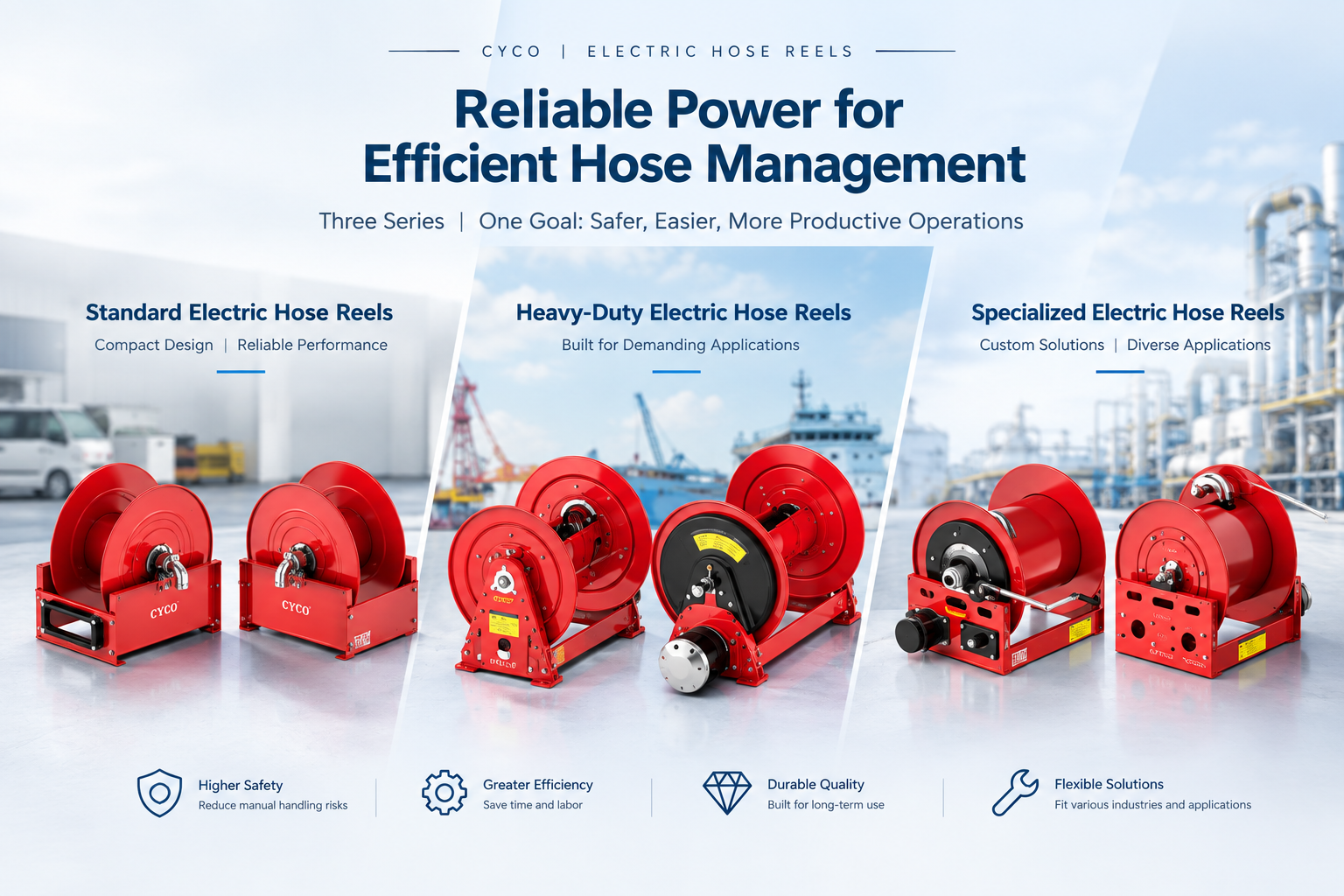
Electric vs. Manual Hose Reels: Key Differences
The most direct difference between electric and manual hose reels lies in the way the hose is retracted. Manual hose reels require the operator to turn a handle or lever, while electric hose reels are powered to retract the hose, eliminating the need for continuous manual cranking. For an explanation of how electric hose reels work, please refer to our article: How Does a Motorized Hose Reel Work.
This difference will have different practical effects under different working conditions. For scenarios where the hose is short, lightweight, and used infrequently, a manual hose reel can usually meet basic needs. When the hose is long or heavy, requires frequent retraction, or the hose reel is installed in a location that is inconvenient to operate directly, such as on a vehicle or piece of equipment, electric drive can reduce manual intervention and provide a more flexible control method.
Therefore, the difference between the two types of hose reels is not just the drive method, but more importantly, the amount of manual operation required during hose retraction and how the hose reel integrates into the overall workflow. This is also the main basis for determining whether an electric hose reel is needed.
7 Key Advantages of Electric Hose Reels
1. Reduce Physical Exertion from Manual Winding
One of the most direct advantages of electric hose reels is that they reduce the manual labor required to retract the hose.
When using a manual hose reel, the operator must continuously turn the handle as the hose is wound back onto the drum. This may be manageable for short hoses; however, as the length, diameter, and weight of the hose increase, frequent turning of the handle becomes increasingly strenuous and inconvenient.
The electric hose reel delegates the winding task to the power drive unit. The operator only needs to initiate the winding process through the control system, without having to continuously turn the handle.
2. Easier Handling of Long and Heavy Hoses
The length and weight of the hose directly affect how easy or difficult it is to operate the hose reel manually.
Longer hoses typically require a larger reel capacity, while larger diameter hoses add a considerable amount of weight. When these factors combine, manually winding up the hose can require significantly more physical effort.
Electric hose reels make handling these hoses much easier by providing powered winding. Therefore, electric reels are a better choice for applications where repeated manual winding is inconvenient due to the weight or length of the hose.
3. More Stable Hose Winding
Compared to repeated manual cranking, electric operation provides a more stable way to retract the hose.
In scenarios where hoses are used frequently, the stability of the winding process is particularly important. Electric hose reels allow the winding process to be controlled through their drive and control systems, eliminating the need for complete manual operation by the operator.
This approach also makes hose operation more predictable when the hose reel is part of a large piece of equipment.
However, the stability of the winding still depends on the overall design of the hose reel. The hose, drum capacity, guiding system, drive system, and control configuration should work together, rather than treating the motor as an isolated component.
4. More Suitable for Frequent Hose Deployment
The more frequently the hose is deployed and retracted, the more pronounced the difference between manual and electric operation becomes.
For hoses used only occasionally, manual winding may not pose a significant operational burden. In contrast, if the application requires the hose to be repeatedly unwound and retracted throughout the day, it will place higher demands on the operator.
Therefore, motorized hose reels are particularly suitable for applications requiring frequent extension, use, and retraction of hoses. However, this does not mean that all high-frequency usage scenarios require a motorized hose reel. When choosing a hose reel, factors such as usage frequency, hose length, weight, installation location, and the required manual effort should be considered.
5. More Flexible Control Methods
Electric hose reels offer a variety of control options, depending on the reel configuration and application requirements.
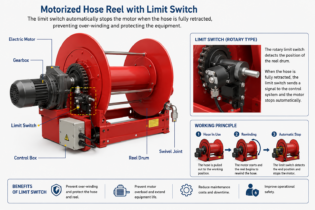
For example, the system can be operated via local switches, button controls, or other control devices. More advanced configurations can integrate position or limit controls to meet application requirements that require controlled stopping.
For hose reels mounted on equipment, control operation may be more important than for hose reels directly next to the operator. Therefore, when selecting a motorized hose reel, the control system should be considered as part of the complete operating system, not as a separate accessory.
6. Easier to Integrate with Equipment and Vehicles
Electric hose reels are very useful when hose management needs to be part of large machines or mobile systems.
The hose reel can be installed in service vehicles, maintenance equipment, mobile machinery, production equipment, or other systems so that operators can easily use the hose from different work locations.
In these situations, manual crank operation may not always be convenient. The hose reel may be located in a confined space, installed at an inaccessible height, or integrated into a device where the operator already has a dedicated control interface.
Electric operation offers greater flexibility in these situations because hose retraction does not require direct operation of the manual crank.
7. More Organized Hose Management
Electric hose reels can also help manage hose storage more effectively by simplifying the periodic retraction of hoses.
When manually retracting the hose is inconvenient, operators may prefer to leave it extended temporarily after use. Using an electric hose reel makes it much easier to retract the hose after the task is completed. Storing the hose on the reel reduces hose clutter around the work area and makes it easier to find the hose for the next use.
Of course, proper hose management depends on more than just electric operation. The hose reel must have the appropriate capacity, and its design must ensure the hose is stored correctly. Whether the hose reel is manual or electric, proper installation and hose handling procedures are crucial.
When Should You Choose an Electric Hose Reel?
When multiple working conditions indicate the need for powered hose operation, an electric hose reel may be worth considering.
Frequent hose use is one of the most obvious factors. If operators repeatedly unwind and rewind the same hose within a shift, reducing manual winding can reduce repetitive physical effort.
Hose length and weight are also important considerations. As the length, diameter, and weight of the hose increase, manual winding becomes more difficult.
Ease of use also influences the decision. If the hose reel is installed in a vehicle, machine, overhead structure, or confined space, manual operation may be inconvenient.
Integration with equipment is another reason to consider electric operation. When the hose reel is part of a larger system, powered retraction can be integrated into the equipment’s operation.
Meanwhile, if the hose is relatively short and lightweight, used infrequently, and the operator can easily access the hose reel, a manual hose reel may still be suitable.
Factors to Consider Before Choosing a Powered Hose Reel
When selecting a motorized hose reel, you should first understand its specific application rather than simply comparing technical specifications. The key is whether the motorized winding function brings tangible advantages to the actual application. The following operating conditions can help determine whether a motorized hose reel is suitable.
How Frequently Should the Hose Be Wound Up?
The frequency of hose extension and retraction during normal operation needs to be considered. Applications that use the hose occasionally versus those that involve repeated unwinding and rewinding throughout the shift have different requirements for the hose reel.
For low-frequency use scenarios, manual winding may be sufficient; however, when the hose needs to be repeatedly unwound and rewound, electric operation can reduce the burden of repetitive manual operations.
How Much Manual Operation Is Required?
While the length and weight of the hose are important, the more crucial question is how much physical effort is required to retract the hose after use.
Short, lightweight hoses may be easy to wind by hand; however, as the hose becomes longer, heavier, or more difficult to handle, repeated manual winding becomes inconvenient. Electric hose reels can transform the winding task from manual to powered operation.
How Convenient Is the Hose Reel to Operate During Use?
The location of the hose reel affects the feasibility of manual operation. If the hose reel is within easy reach of the operator, using the hand crank is relatively easy. However, if the hose reel is installed in a vehicle, machine, on a high structure, or in a confined space, the situation is quite different.
Before selecting an electric hose reel, the operator’s position and the control method during normal use should be considered. If access to the hose reel or operation of the hand crank is inconvenient, electric winding may be a more suitable solution.
What Level of Control Is Needed During the Winding Process?
Different application scenarios have different control requirements for hose reel winding. Some scenarios only require simple start and stop functions, while others may require operators to control the hose reel from specific locations or integrate the hose reel with other equipment.
Therefore, the required control methods should be fully considered before determining the hose reel configuration. The goal is to match the reel’s operation to the actual workflow rather than adding unnecessary control devices.
Is There a Suitable Power Supply?
Electric hose reels require a power source, so the availability of a suitable power source should be confirmed before installation.
Fixed equipment typically has readily available power interfaces, while vehicle-mounted or mobile applications may require different power supply solutions. The available voltage, electrical configuration, and installation conditions must be compatible with the selected hose reel.
Does the Hose Reel Need to Be Integrated with the Equipment?
Electric hose reels may be installed as part of large machinery, service vehicles, maintenance systems, or other equipment. In such applications, the hose reel should be considered as part of a complete operating system rather than a standalone product. Considerations should include the hose reel’s installation location, operator control methods, hose routing, and whether the hose reel needs to work with other equipment.
Is Electric Operation Necessary for This Application?
Finally, it should be considered whether electric operation can meet the actual operational needs.
If the hose is short and lightweight, the hose reel is easily accessible, and it is only used occasionally, a manual hose reel remains a practical choice. However, when frequent winding, demanding manual operation, limited access, or equipment integration makes manual operation inconvenient, an electric hose reel may be more suitable.
Conclusion
The value of electric hose reels lies primarily in scenarios where hoses need to be frequently retracted, manual operation is burdensome, or the hose reel needs to be installed and integrated into vehicles, machinery, and other equipment. Compared to manual hose reels, electric drive reduces repetitive manual winding operations and provides a more flexible control method for hose management.
However, electric operation does not mean it is suitable for all applications. For scenarios with low usage frequency, short hoses, and light hoses, manual hose reels may be sufficient. Therefore, when selecting a hose reel, a comprehensive judgment should be made considering the hose’s usage method, operating frequency, installation conditions, power supply, and equipment integration requirements.
For industrial applications that require powered winding and more flexible operation, selecting an electric hose reel that matches the hose specifications, working environment, and equipment requirements can make hose management more aligned with actual workflows.
Related Posts