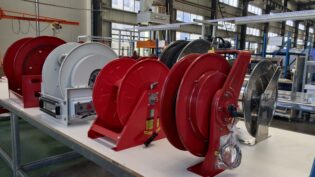
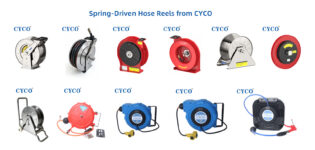
7 Key Advantages of Spring-Driven Hose Reels
October 9, 2026 | Spring-Driven Hose Reel
Spring-driven hose reels are commonly used in industrial plants, auto repair shops, equipment maintenance facilities, and other workplaces where hoses are frequently extended and retracted. Unlike manual hose reels, these hose reels use the mechanical energy stored in an internal spring to retract the hose, eliminating the need for manual cranking or electric motor operation. No external power source is required.
Along with automatic retraction, spring-driven hose reels offer numerous advantages in hose control, workplace safety, installation, daily operation, and maintenance. Understanding these features helps businesses determine whether spring-driven hose reels are suitable for their equipment and working environments.
Spring-Driven vs. Manual and Motor-Driven Hose Reels
Industrial hose reels use different driving mechanisms, which determines how hoses are unfolded, retracted and stored. Manual hose reel relies on manual crank, spring-driven reel automatically retracts with stored mechanical energy, and motor-driven reel uses power drive system. These differences will affect the operator’s work, power requirements and the types of applications that each hose reel can support.
Understanding the differences of these driving mechanisms is a good starting point for evaluating the spring-driven hose reel.
| Comparison | Spring-Driven Hose Reels | Manual Hose Reels | Motor-Driven Hose Reels |
|---|---|---|---|
| Retraction Method | Automatic spring-powered retraction | Manual cranking | Motor-powered retraction |
| External Power | Not required | Not required | Usually required |
| Operator Effort | Pull out and guide the hose during retraction | Turn the crank to wind the hose | Operate the motor controls |
| Hose Control | Often includes a locking mechanism | Controlled through manual winding | Depends on the drive and control system |
| Typical Applications | Frequent hose use at fixed workstations | Applications requiring manual control | Applications requiring powered winding, including some long or heavy hose setups |
Each driver type can meet different operational requirements. Manual hose reel provides direct control, while motor-driven hose reel provides power winding function for specific specifications. Spring-driven hose reels provide a balance between convenient hose operation and simple mechanical operation, making their advantages worth examining in more detail.
7 Key Advantages of Spring-Driven Hose Reels
1. Automatic Hose Retraction Without Manual Winding
One of the main advantages of spring-driven hose reels is that they automatically retract the hose without manual winding. When the operator pulls out the hose, the spring stores energy. Once the hose is released from its working position, the stored energy is released, drawing the hose back onto the hose reel and eliminating the need to turn a handle after each use.
This feature is particularly useful in workplaces where compressed air, water, or other fluids are used repeatedly throughout the day. Operators do not need to spend time manually winding the hose after each task, making it easier to return the hose to its designated storage position.
Automatic retraction also helps prevent hoses from being left scattered around the work area. However, operators should guide the hose during retraction rather than allowing it to snap back under spring tension.
2. Improved Workplace Safety by Reducing Tripping Hazards
Hoses left across walkways can create tripping hazards in industrial facilities, workshops, and maintenance areas. A spring-driven hose reel retracts the hose after use, helping keep it off the floor and reducing obstructions in areas where people and equipment move frequently.
Combined with a built-in ratchet locking mechanism, the hose reel allows operators to extend and secure the hose at the length needed for each task. This helps limit the amount of excess hose exposed in the work area and reduces the likelihood of accidental trips and falls.
3. No External Power Supply Required
Spring-driven hose reels operate using mechanical energy stored in an internal spring. They do not require an electrical connection, compressed air supply, or hydraulic power unit to retract the hose.
This makes them suitable for workstations with limited access to power or applications where motorized operation is unnecessary. Users can install these hose reels wherever hoses are needed without having to arrange additional power connections for hose retraction.
For businesses equipping multiple workstations, spring-driven hose reels can also simplify equipment installation by eliminating the need for a separate electric drive system at each station.
4. Reduced Hose Wear and Longer Service Life
Repeated dragging, improper handling, and uneven winding can cause surface abrasion, kinking, and other forms of hose damage. A properly configured spring-driven hose reel helps guide the hose back onto the drum in an organized manner, reducing unnecessary contact with floors and surrounding equipment.
By keeping the hose stored when it is not in use, the hose reel can also reduce exposure to accidental impacts, crushing, and repeated bending. These benefits may help extend hose service life and reduce replacement costs, particularly in workplaces where hoses are used frequently.
5. Flexible Control of Hose Extension Length
Many spring-driven hose reels feature a ratchet or locking mechanism that holds the hose at the required extension length. Operators can pull the hose to the working position and secure it without having to maintain continuous pulling force throughout the task.
An adjustable hose stopper can also control how much hose remains outside the hose reel after retraction, keeping the hose end accessible for the next use. This reduces the need to reach for the reel or repeatedly pull out a long section of hose.
These features are particularly useful when operators work at different distances from a fixed hose station. For reliable operation, the locking mechanism and hose stopper must be compatible with the hosereel model and adjusted according to the manufacturer’s instructions.
6. Flexible Installation to Optimize Workspace
Depending on the model and mounting bracket, spring-driven hose reels can be installed on walls, ceilings, floors, or equipment. Ceiling-mounted hose reels can free up valuable floor space, which is useful in crowded automotive workshops, compact assembly stations, and maintenance vehicles. Wall-mounted hose reels provide convenient hose access near workbenches, service bays, and other designated work areas.
The mounting position should also match the hose pull-out direction. If the hose repeatedly rubs against structural edges or is pulled at an unsuitable angle, unnecessary wear can occur on both the hose and its guide components.
7. Simple Mechanical Operation and Convenient Maintenance
Compared with electric hose reels, spring-driven models generally have a simpler drive structure because they do not require a motor or associated motor control components for hose retraction. This can simplify installation and reduce the number of drive-system components that need to be inspected.
However, spring-driven hose reels still contain mechanical components that require proper maintenance. The spring assembly, locking mechanism, rotary joint, seals, hose, and mounting fasteners can all affect operating performance. Regular inspections help identify hose damage, fluid leaks, loose fasteners, and abnormal retraction before these issues interfere with normal operation.
Maintenance typically includes checking the spring mechanism, inspecting the rotary joint for leaks, and ensuring that the ratchet engages properly. Although the absence of a motor simplifies the drive system, maintenance requirements and long-term costs still depend on the hose reel design, operating conditions, and usage frequency.
When Should You Choose a Spring-Driven Hose Reel?
A spring-driven hose reel is a practical choice when a workplace needs automatic hose retraction without a motorized drive system. It is particularly suitable for applications involving frequent hose extension and retraction at fixed or semi-fixed workstations.
In automotive maintenance, pneumatic tool stations, equipment servicing, and general industrial operations involving compatible air, water, oil, or other fluids, these hose reels can simplify routine hose handling. The appropriate model depends on the hose specifications, operating conditions, and available installation space.
However, standard spring-driven hose reels are not suitable for every application. Long or heavy hoses may require greater retraction force, while high-pressure fluid systems require the reel, hose, and rotary joint to meet the relevant pressure ratings. Applications involving continuously moving equipment or unusually frequent operation also require careful assessment of the hose reel’s capabilities.
The selection process should therefore be based on actual operating requirements rather than automatic retraction alone.
Factors to Consider Before Choosing a Spring-Driven Hose Reel
Choosing the right spring-driven hose reel involves more than matching hose length to hose reel capacity. Several technical factors affect whether the reel can operate reliably in a specific system.
Hose Length and Inside Diameter
The hose reel must accommodate the required hose length and inside diameter. A hose that is too short may limit the operating range, while an excessively long or large-diameter hose may exceed the hose reel’s rated capacity.
The hose’s inside diameter also affects flow performance. When determining the required specifications, consider the target flow rate and pressure loss through the hose.
Working Pressure and Fluid Compatibility
Check the maximum working pressure and temperature ratings of the hose reel, hose, rotary joint, seals, and connectors. Every component in the assembled system must be suitable for the expected operating conditions, and none should be used beyond its rated limits.
Fluid compatibility is equally important. Materials suitable for compressed air or water may not be appropriate for certain oils, fuels, chemicals, or other media. Confirm that all relevant materials are compatible with the conveyed fluid before finalizing the hose reel specifications.
Spring Retraction Capacity
The spring mechanism must provide sufficient retraction force to recover the specified hose under normal operating conditions. Hose length, diameter, weight, and construction all affect the required force.
If the hose reel is poorly matched to the hose, retraction may be too slow, the hose may not retract completely, or the pull-back force may be excessive. Check the manufacturer’s rated hose capacity and retraction requirements rather than assuming that hose reels with similar external dimensions offer equivalent performance.
Installation Location and Space
Confirm that the mounting surface can support the hose reel and its associated components, and ensure that the mounting bracket is suitable for the intended installation method. The hose outlet direction, operator working range, and space available around nearby equipment should also be considered.
Position the hose reel to minimize sharp hose bends and repeated contact with structural edges. For overhead installations, use the mounting hardware specified by the manufacturer and provide any additional safety restraints required by the manufacturer’s instructions and applicable installation standards.
Working Environment and Construction Materials
The working environment influences the choice of hose reel structure and materials. Areas with high humidity, outdoor exposure, frequent washdowns, or corrosion risks may require corrosion-resistant materials or appropriate surface treatments.
Other factors, including dust, impact exposure, temperature fluctuations, and operating frequency, should also be considered. An enclosed hose reel may be appropriate where additional protection is needed, while an open design may provide easier access for inspection and maintenance. The choice of materials and housing should reflect actual operating conditions rather than appearance alone.
Conclusion
Spring-driven hose reels offer automatic retraction, flexible hose length control, organized storage, and operation without an electric drive system. These features make them suitable for many fixed workstations and conventional industrial applications where hoses are frequently extended and retracted. Choosing the right hose reel requires careful consideration of hose specifications, pressure ratings, retraction capacity, installation conditions, and material compatibility to ensure reliable operation.
Related Posts
Spring-Driven Hose Reels for Construction Sites
July 2, 2026
What Causes Uneven Hose Winding on a Spring Driven Hose…
August 18, 2026