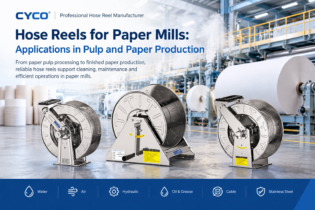
Oil Hose Reel Solutions for Lubrication Systems
July 23, 2026 | Hose Reel Applications, Oil Hose Reel
Introduction
In industrial lubrication systems, hoses play a critical role in transferring engine oil, hydraulic oil, gear oil, and other lubricants. However, hoses left on the floor can quickly become tangled, damaged, or contaminated, creating safety hazards and reducing maintenance efficiency. An industrial hose reel provides an effective way to organize hoses, improve workplace safety, and streamline lubrication operations.
For automotive workshops, lubrication stations, mining sites, equipment maintenance teams, and OEM equipment manufacturers, choosing the right oil hose reel solution can help reduce downtime, extend hose service life, and improve overall productivity.
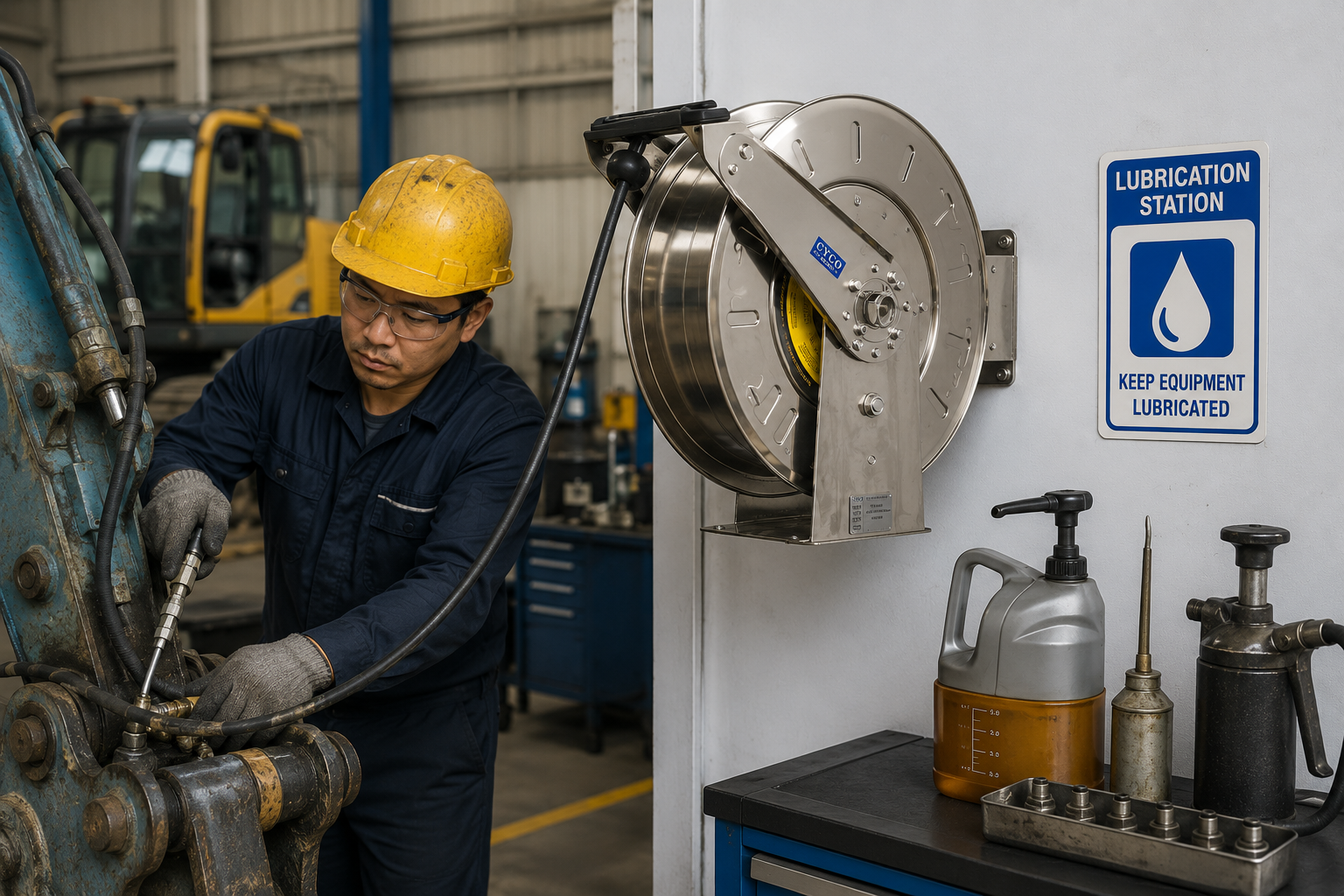
Why Oil Hose Reel Solutions Matter
Lubrication systems are used daily in many industries, and proper hose management is just as important as selecting the right lubricant. Compared with manually storing hoses, using an oil hose reel offers several operational advantages.
Improve Workplace Safety
Loose oil hoses can create trip hazards and are easily damaged by vehicles or heavy equipment. Keeping hoses neatly stored on a reel helps maintain a safer, cleaner working environment while reducing the risk of leaks caused by hose abrasion.
Increase Maintenance Efficiency
Whether in an automotive workshop or an industrial production facility, technicians need quick access to lubricants. Oil hose reels allow hoses to be deployed and retracted quickly, reducing setup time and improving maintenance efficiency.
Extend Hose Service Life
Dragging hoses across rough surfaces or repeatedly bending them can significantly shorten their lifespan. An oil hose reel helps prevent kinks, twists, and excessive wear, reducing replacement costs over time.
Oil Hose Reel Solutions for Different Lubrication Applications
Different industries have different lubrication requirements, so selecting the right oil hose reel depends on the working environment and application.
Automotive Repair Workshops
Automotive service centers frequently dispense engine oil, transmission fluid, lubricants, and hydraulic oil. Since technicians use hoses multiple times throughout the day, efficient hose management directly affects workshop productivity.
For most automotive repair applications, a spring-driven hose reel provides the ideal balance between convenience and efficiency by automatically retracting the hose after each use. This helps keep service bays organized while protecting hoses from unnecessary wear.
Typical applications include:
- Engine oil dispensing
- Transmission fluid service
- General vehicle maintenance
- Fleet maintenance centers
Industrial Lubrication Stations
Manufacturing plants often rely on centralized lubrication systems to supply oil to production equipment and machinery.
By integrating oil hose reel solutions into these systems, facilities can improve hose organization, reduce maintenance time, and minimize unnecessary equipment downtime.
Typical applications include:
- Manufacturing plants
- Assembly lines
- Preventive maintenance systems
- Central lubrication stations
Mining Equipment Maintenance
Mining equipment operates in dusty, wet, and highly demanding environments where lubrication systems must perform reliably under harsh conditions.
Large excavators, haul trucks, and drilling equipment often require long and heavy oil hoses. In these situations, a heavy duty hose reel provides the strength and hose capacity needed to support continuous industrial operation.
Key benefits include:
- Reinforced steel construction
- Large hose capacity
- Reliable hose retraction
- Long service life in demanding environments
For outdoor mining operations, corrosion-resistant materials are also recommended to maximize equipment reliability.
Heavy Equipment Maintenance
Construction and agricultural machinery require routine lubrication to maintain peak performance.
Common equipment includes:
- Excavators
- Bulldozers
- Loaders
- Cranes
- Agricultural machinery
Because maintenance is often performed in the field, oil hose reels can be installed on mobile service vehicles or portable lubrication systems, allowing technicians to complete servicing quickly and efficiently.
OEM Equipment Manufacturers
Many OEM equipment manufacturers integrate oil hose reels directly into their lubrication systems to provide end users with complete fluid management solutions.
Common applications include:
- Mobile lubrication units
- Service trucks
- Industrial maintenance carts
- Centralized lubrication equipment
Depending on the application, OEM customers can customize hose capacity, pressure rating, mounting configuration, and drive type to meet specific operational requirements.
How to Choose the Right Oil Hose Reel
Selecting the right oil hose reel requires evaluating several important factors.
Hose Size
Choose a reel that matches both the hose diameter and total hose length.
Common hose sizes include:
- 3/8″
- 1/2″
- 3/4″
Longer hoses require reels with greater capacity and stronger structural support.
Working Pressure
Different lubrication systems operate at different pressures.
Always ensure the reel’s pressure rating exceeds the system’s operating pressure to ensure long-term reliability.
Drive Type
Different rewind systems are suitable for different applications.
Manual Oil Hose Reel
Ideal for shorter hoses and lower-frequency applications. Manual reels are simple, economical, and easy to maintain.
Spring-Driven Oil Hose Reel
Provides automatic hose retraction, making it the preferred solution for automotive workshops and lubrication stations.
Motor-Driven Oil Hose Reel
For long hoses or high-frequency industrial applications, a motor-driven hose reel significantly reduces manual effort while improving operating efficiency and workplace productivity.
Installation Method
Depending on available workspace, oil hose reels can be installed as:
- Wall-mounted
- Ceiling-mounted
- Floor-mounted
- Vehicle-mounted
Proper installation improves accessibility while minimizing hose wear.
Features to Look for in an Oil Hose Reel
When selecting an oil hose reel, consider the following features:
- Heavy-duty steel or stainless steel construction
- Automatic spring rewind
- Smooth full-flow swivel
- Adjustable hose stop
- Adjustable guide arm
- Corrosion-resistant finish
- Large hose capacity
- Reliable sealing performance
These features help improve operational efficiency while reducing maintenance requirements and extending equipment life.
Best Practices for Oil Hose Reel Maintenance
Even a high-quality oil hose reel benefits from regular maintenance.
Recommended practices include:
- Inspect hoses regularly for wear or leaks.
- Keep the reel clean to prevent dirt and oil buildup.
- Check swivel joints for proper sealing.
- Ensure mounting brackets remain secure.
- Never exceed the reel’s pressure or hose capacity ratings.
- Periodically inspect the rewind mechanism to maintain smooth operation.
Routine maintenance helps maximize service life while ensuring reliable lubrication performance.
Conclusion
Efficient lubrication systems depend on more than just high-quality lubricants—they also require reliable hose management. Whether used in automotive repair, industrial lubrication stations, mining operations, heavy equipment maintenance, or OEM equipment manufacturing, the right oil hose reel solution helps improve maintenance efficiency, reduce downtime, extend hose life, and enhance workplace safety.
When selecting an oil hose reel, consider factors such as fluid type, operating pressure, hose size, installation method, and usage frequency. Choosing the right solution ensures more efficient lubrication, lower maintenance costs, and long-term operational reliability.
Related Posts
What are the applications of hydraulic hose reels?
September 25, 2025
How to Choose the Right Agricultural Hose Reel
July 7, 2026
Electric Hose Reels for Oil & Gas Industry
July 6, 2026