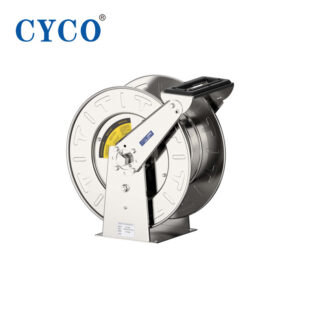
Hose Storage Solution: Industrial Hose Reel Rack
October 20, 2026 | Industrial Hose Reels
Industrial facilities usually need to use a variety of hoses, including air hoses, water pipes, oil pipes, hydraulic hoses and other hoses for fluid transportation. When these hoses are not used temporarily, proper storage is very important for protecting the equipment, keeping the work area clean and tidy, and ensuring that the suitable hoses can be found quickly when needed. With the increasing number of hoses and reels, placing them directly on the ground may bring some problems, such as equipment entanglement, channel blockage and difficulty in identifying different reels.
Industrial hose reel rack provides a way to store multiple reels centrally for workshops, maintenance areas, warehouses and manufacturing plants. However, an effective storage solution is more than just adding several shelves. It is also necessary to comprehensively consider the shelf size, bearing capacity, the convenience of taking and placing reels, and the characteristics of the stored equipment itself.
Why Industrial Hose Storage Needs a More Reasonable Solution?
First of all, putting the reel directly on the ground may make it affected by accidental impact, dust, wet environment and extrusion of surrounding equipment. If it is not properly fixed, the reel may also roll or shift. In busy maintenance areas, improperly placed hoses and reels may also block the passage or affect the movement of machines and other equipment.
Another problem is device identification. When multiple reels are similar in appearance, the staff may need to check the labels or even unfold some hoses to confirm their size, length or intended use. This will increase the extra operation time, and may also lead to unnecessary moving.
Dedicated storage shelves help to set a fixed storage location for each reel. By dividing the storage area according to the hose type, size or frequency of use, the factory can make the equipment easier to find and reduce the risk of improper storage.
How to Improve Hose Storage by Hose Reel Rack
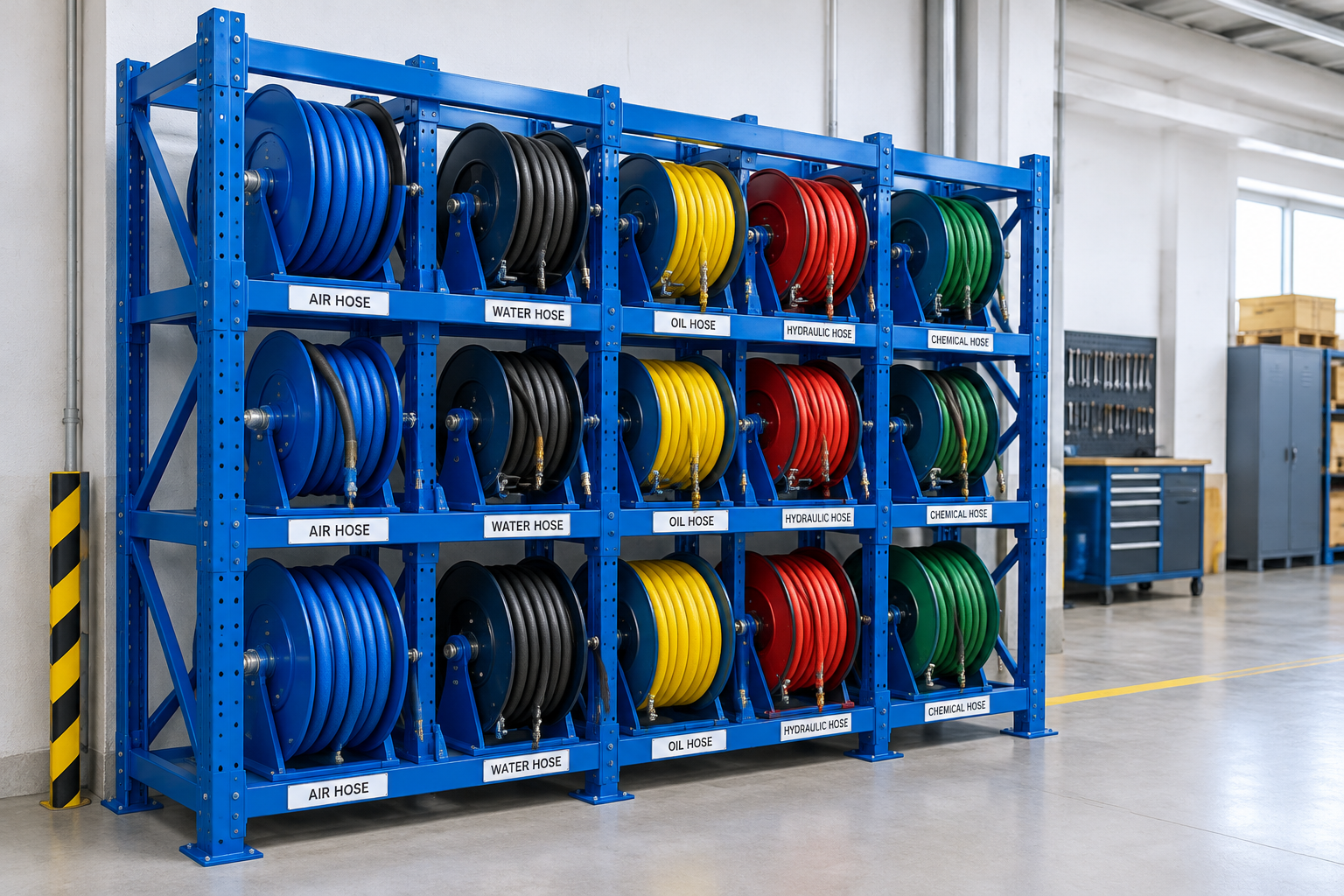
Industrial hose reel rack can store multiple reels in a designated area, and establish a more organized storage layout according to the equipment type and operation process of the factory.
Make full use of the existing space. Multi-layer shelves can use vertical space to reduce the floor area occupied by reels. This is especially useful for maintenance workshops and warehouses, because these areas usually need to place workstations, spare parts and handling equipment. However, when using vertical space, it is still necessary to ensure that there is enough safe space when loading, unloading and inspecting equipment.
Easier to identify and access equipment. Putting the reels in the designated positions can distinguish different types, sizes, lengths or uses more conveniently. The label can indicate information such as hose specifications, applicable media and equipment number.
It is convenient to carry out equipment inspection. Clear and orderly storage area is helpful for workers to check the hose surface, reel rack, joints and other visible parts before the equipment is put into use again, and can help workers find obvious damage or missing identification before use.
Reduce the risk of damage during storage. Proper support and spacing can reduce the collision, displacement and excessive external load between reels. Shelves must match the size and weight of the stored reels, otherwise, improper storage arrangements may bring new security risks.
If the factory needs to store different types of reels, it can also establish reasonable storage groups for different reels by looking at the product classification of industrial hose reels and combining the equipment usage and specifications.
Common Types of Hose Reel Holders
The most suitable shelf structure depends on the number of reels, the available space, the size of reels, and the frequency of staff accessing equipment. In industrial storage scenarios, the following configurations can usually be considered.
Single Hose Reel Rack
Single-layer shelves place reels at the same storage height. This structure is suitable for heavy reels that are difficult to lift manually, and also for equipment that needs to be taken and placed frequently during working days.
Its main advantage is direct and convenient access. Workers can check and take out reels without going over other storage devices. However, when the number of reels increases, single-tier storage usually needs to occupy more floor space.
Multi-Layer Hose Reel Rack
Multi-layer shelves use vertical space by setting up multiple storage layers. This structure is suitable for warehouses and industrial facilities with a large number of reels but limited floor space.
When planning multi-layer shelves, it is necessary to consider the rated bearing capacity of each layer and the overall bearing capacity of the whole shelf respectively. Heavy reels cannot be placed on a laminate that cannot bear its weight. Reels with high frequency of use are usually more suitable to be placed at an easy-to-take height, while spare equipment with less use can be placed at a higher position on the premise of safe handling.
In addition, sufficient clearance should be reserved for the operation space required by the reel side plate, handle, hose connector and pick-and-place equipment.
Fixed Storage Rack
Fixed shelves are installed in designated storage locations, which are suitable for places where the inventory is relatively stable and the storage layout does not change frequently. This structure can provide relatively fixed storage arrangements for maintenance departments, production plants and parts warehouses.
Before installation, the ground conditions, anchorage requirements, access space and the rated bearing capacity of the shelf should be evaluated; The conditions and installation methods of bearing the ground must also meet the actual load requirements.
Mobile Storage Scheme
When reels need to be moved between storage areas and nearby workstations, mobile shelves may be more practical. However, the moving structure will also bring additional considerations, including the bearing capacity of casters, braking devices, overall stability and load distribution.
Only when the structure and rated bearing capacity of the mobile shelf meet the storage requirements of reels should this scheme be selected. During the movement, the goods must remain stable; When the shelf is parked, it should also be prevented from moving accidentally. For heavy industrial reels, the fixed storage rack may be a more suitable choice.
How to Choose a Suitable Hose Reel Rack
If you choose only according to how many reels can be stored in the shelf, it may lead to inconvenience, overload or waste of space. A more practical selection method is based on the actual equipment situation and daily handling requirements.
1. Check the Reel Size and Weight.
Measure the overall width, diameter and depth of the reel, taking into account parts such as handles, brackets or joints protruding from the main structure. These dimensions determine whether the reel can be put in the specified position and whether it will touch the adjacent equipment when it is taken out.
Weight is equally important. The weight of the complete reel assembly, including hoses and accessories, should be considered in the calculation. If the inventory contains reels with large size differences, the shelf may need to be divided into multiple storage areas, and the corresponding bearing capacity should be set for different areas.
2. Determine the Storage Capacity and Carrying Capacity
First, estimate the number of reels to be stored at present, and reserve space for reasonable inventory changes. Shelves should be able to accommodate the required number of reels, without forcing the staff to squeeze the equipment into places that are not suitable for storage.
Check the rated bearing capacity of the whole shelf and the supporting structure of each floor. The load should be distributed according to the manufacturer’s requirements to ensure that the shelf remains stable under the expected load. When necessary, the ground bearing capacity and installation and anchorage requirements should also be evaluated.
3. Plan the Pick-and-Place Mode and Handling Process.
The loading and unloading mode of reels will directly affect the shelf design. For small reels whose weight and shape are suitable for manual handling, manual picking and placing can be considered; Heavier equipment may require lifting equipment or mechanical handling systems.
Sufficient space should be reserved on the shelf to ensure that other equipment does not have to be moved when taking out a reel. If forklift trucks or other handling equipment are needed, the width of the passage, the approaching direction of the equipment, the lifting height and the operator’s vision should also be considered before installation.
4. According to Hose Types and Application Scenarios.
Air, water, oil and hydraulic hoses may have different material requirements and working restrictions. Classification according to application scenarios helps workers to choose the right equipment and reduce the risk of hose being misused.
For example, hydraulic hoses used in high-pressure systems should be clearly marked and stored in a way that is convenient for inspection and handling. Oil hoses can be identified separately according to the requirements of fluid compatibility, while general air hoses and water pipes can be grouped according to specifications.
5. Consider the Storage Environment
The surrounding environment will affect shelf materials, surface protection methods and maintenance requirements. Dry indoor warehouses may have different shelf requirements from areas that need frequent washing, wet workshops or places where corrosive substances exist.
The metal shelf should choose the appropriate surface treatment method according to the actual environment. If there is a high requirement for corrosion resistance, stainless steel can be considered. If the hose or reel may come into contact with chemicals, oil stains, moisture or extreme temperatures, the storage process should also comply with the relevant recommendations of the hose and reel assembly manufacturers.
Best Practice of Storage and Management of Hose Reel
Even if you choose the right shelf, you need to establish a consistent storage management process. Clear operating specifications help to ensure that the storage area remains safe and orderly as the equipment is constantly taken and placed.
First, specify a fixed storage location for each reel. Use labels or inventory records to indicate hose type, size, length, applicable medium and related equipment number. If the hose has a specific pressure rating or fluid compatibility restrictions, make sure that the relevant identification is legible and easy to see.
Load the reels according to the shelf manufacturer’s instructions. Do not exceed the bearing capacity of a single supporting structure, laminate or the whole shelf. Heavy reels should be placed and fixed according to the design requirements of shelves, and equipment that may roll or fall cannot be supported by temporary stacked structures.
Hoses should follow the storage recommendations provided by the manufacturer. Avoid sharp bending, excessive extrusion, and contact with surfaces or substances that may damage the outer layer of the hose. Before the hose is re-stored, check whether there are obvious cuts, abrasion, leakage, joint damage or other problems that need further inspection.
Keep passages, emergency exits, electrical control panels and work areas clear. If a mobile shelf is used, the braking device should be activated when parking, and the operation should be carried out according to the specified load and moving process. The shelf itself should also be inspected regularly to see if there are any loose fasteners, structural deformation, corrosion, damaged supports or other conditions that may affect stability.
Finally, when inventory changes, the storage layout should be re-evaluated. If reels of different sizes are added, heavier equipment components are added, or different handling equipment needs to be used, it may be necessary to adjust the shelf position or even change the storage scheme.
Conclusion
Industrial hose reel rack can centrally manage multiple reels, which provides a clearer layout for hose storage and makes equipment identification and access more convenient. The suitable storage scheme depends on the size and weight of the reel, required storage capacity, available space, handling mode and surrounding environment.
Before selecting shelves, the actual inventory should be evaluated, and the process of loading, taking, checking and returning reels should be defined. Reasonable storage layout with clear labels and regular inspection will help to keep the industrial storage area safe and tidy for a long time.
Related Posts
CYCO Food-Grade Retractable Water Hose Reel
September 30, 2026
Chemical Hose Reels: Safety & Material Guide
July 20, 2026