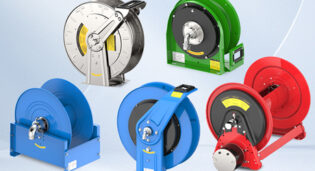
Industrial Hose Reel for Power Plant Maintenance
October 29, 2026 | Industrial Hose Reels
Introduction
Power plants, cogeneration facilities, energy storage power plants and biomass power plants all need regular maintenance to ensure the safe and stable operation of equipment. In the process of inspection and maintenance, if the hoses used for high-pressure washing, lubrication, cooling and dust removal are randomly scattered on the ground, it may cause tripping risk and be easily worn by dragging. In high temperature, humidity and dusty environment, the aging speed of hose may be accelerated. Manual handling and sorting of long hoses will also slow down maintenance work.
Choosing the appropriate industrial hose reel is helpful for maintenance personnel to standardize the hose storage, control the medium transportation, and reduce unnecessary manual operation. This paper will introduce the common applications and main advantages of hose reel in power plants and energy facilities, as well as the materials, driving methods, hose specifications and installation requirements that need to be considered when selecting the type.
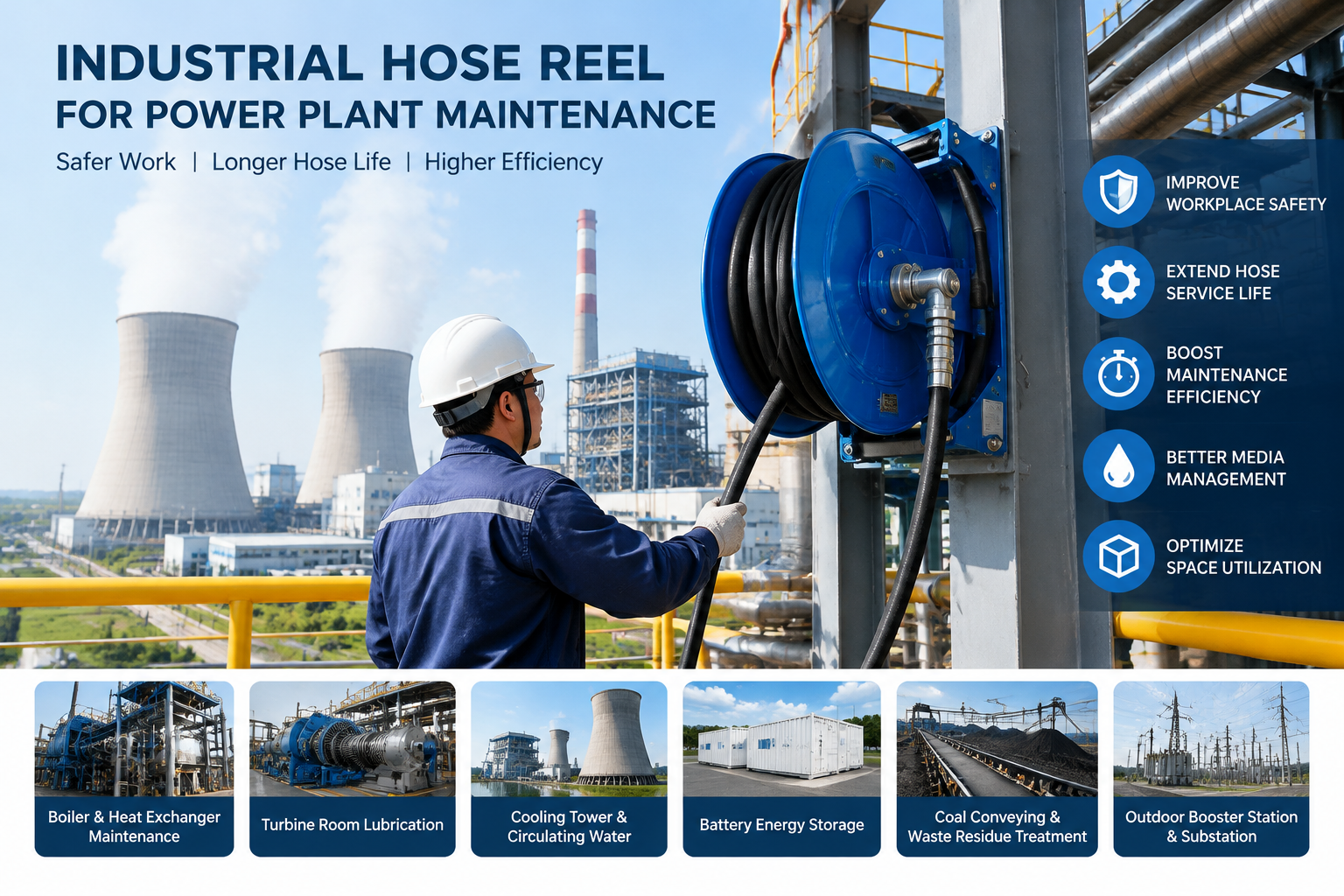
1. The Application of Hose Reel in Power Plants and Energy Facilities
Different areas of the power plant have different requirements for conveying medium, working pressure and environmental protection. Selecting reels according to actual working conditions is helpful to avoid premature wear of equipment and improve the safety of maintenance work.
Maintenance of Boiler and Heat Exchanger
Boiler surfaces and heat exchangers may need to be flushed with high-pressure water to remove deposits and dirt. Some maintenance procedures will also use approved chemical cleaning solutions, such as scale remover. These operations require hoses and reels to have corresponding pressure resistance, temperature resistance and chemical corrosion resistance.
A suitable high-pressure hose reel can properly store the hose between cleaning operations, so as to reduce the contact between the hose and dusty ground and surrounding equipment. Because there may still be residual heat and suspended particles in the maintenance area after the equipment is shut down, the material and installation position of the reel should match the field conditions.
Lubrication Operation of Steam Turbine Room
Steam turbines, bearings and auxiliary equipment need to be lubricated regularly to maintain reliable operation. For hose reels used for conveying lubricating oil or grease, oil supply hoses can be centrally arranged near designated maintenance points.
In these applications, reels, hoses, seals and rotary joints must be compatible with the lubricating medium and its working temperature. Using special hoses for different lubricating media and marking them will also help to avoid wrong connection and cross-contamination of media.
Cooling Tower and Circulating Water System
Cooling towers and circulating water systems usually need equipment washing, cleaning and maintenance, and clean water or compatible water treatment chemicals may be used in the process. These areas are often wet for a long time, with condensed water and possible contact with water treatment chemicals.
In this kind of environment, corrosion-resistant materials, including stainless steel of appropriate grade, can be considered. However, the specific materials should be determined according to the chemical environment, chloride ion exposure and cleaning procedures. The hose and reel assembly must also meet the actual working pressure and temperature requirements.
Battery Energy Storage Facility
Battery energy storage facilities may need to use compressed air for cleaning in accordance with specifications and use water supply hoses in designated fire fighting or maintenance systems. However, there are obvious differences between the requirements of routine maintenance and emergency fire fighting.
For areas with hazardous area division or special ignition source control requirements, hose reels and their accessories must meet the applicable field standards. According to the risk assessment, it may be necessary to use anti-static hoses or take other protective measures. When using compressed air to clean the equipment, you must also follow the instructions of the battery manufacturer and the safety regulations of the facility.
Coal Conveying and Waste Residue Treatment Area
Dust will be produced in the coal conveying system and waste residue treatment area, and it is usually necessary to use water spraying hoses for dust suppression, equipment washing or site cleaning. Hoses may be affected by abrasive particles, people stepping on them and contact with mechanical equipment.
Robust reel frame and wear-resistant hose help to cope with these conditions. If there is a risk of combustible dust in the area, the ignition risk must also be evaluated according to the requirements of site zoning and applicable electrical or mechanical equipment. When installing, avoid the hose from being close to the running conveyor belt and other pinch points.
Outdoor Booster Station and Substation
Outdoor substations and booster stations may need hoses for equipment cleaning and other approved maintenance work. Outdoor reels should have proper protection ability to cope with rain, ultraviolet radiation, temperature change and corrosion.
Before cleaning electrical equipment or insulators, maintenance personnel must observe the power outage isolation, safe distance and cleaning procedures specified by the facility. The installation position of the reel shall not obstruct the maintenance channel of electrical equipment, nor affect the specified safe distance.
Different from many oil and gas or mining sites, power plants and energy facilities may have residual heat, water vapor, pulverized coal, chemical cleaning agents and designated dangerous areas at the same time. Therefore, the selection of hose reel should be determined according to the specific working conditions of each installation position.
2. The Main Advantages of Industrial Hose Reel in Power Plant Maintenance
Improve Workplace Safety
Scattered hoses may block the passage, cause tripping risk, and may also hinder valve operation or equipment maintenance. The hose reel can provide a fixed storage position and help the hose to get off the ground when not in use.
For facilities with strict environment, health and safety (EHS) requirements, this helps to improve site management and reduce avoidable hazards. However, the reel should still be installed outside the emergency passage and equipment operation space.
Extend the Service Life of Hoses
If the hose is dragged on rough surfaces such as concrete and metal edges, it may damage the outer sheath. Improper storage may also lead to kinking, squeezing or excessive bending of hoses.
A hose reel with proper size can keep the hose tidy and reduce unnecessary contact between the hose and the surrounding environment. Correct capacity and guide structure are equally important, because forcibly storing oversized hoses on mismatched reels will increase wear.
Improve Maintenance Efficiency
Maintenance personnel often need to use hoses to wash, lubricate or clean at designated locations. Installing the reel in a convenient position allows people to pull out the hose as needed and take it back after use.
For working points with high frequency of use, spring-driven or power-driven hose reels can reduce the workload of manual winding. During the planned downtime, more convenient hose management is also helpful to improve the organizational efficiency of maintenance work, but the actual time saved depends on the specific tasks and site layout.
Better Management of Different Media
Power plants may use hoses to transport lubricating oil, water, cleaning fluid and other media respectively. It is helpful for operators to choose the correct pipeline by configuring special reels for different media and clearly marking them.
This way can reduce the risk of media mixing or cross-contamination. The materials of hoses, joints and reels shall be compatible with the conveying medium and conform to the operation regulations of the facility.
Make More Rational Use of Space
Space around the turbine room, equipment room and maintenance platform may be limited. Wall-mounted, side-mounted or pedestal-fixed reels can store hoses centrally, reducing unnecessary floor occupation.
Before installation, check the supporting structure, hose coverage, personnel operation space, and the safe spacing around valves, electrical equipment and maintenance channels.
3. Key Selection Criteria of Hose Reel in Power Plant
The suitable hose reel must match the hose specification and actual working environment. The following selection criteria are helpful for maintenance engineers to evaluate suitable products for different areas of energy facilities.
Frame Material and Corrosion Resistance
Sprayed carbon steel is suitable for areas that are relatively dry, require mechanical strength and need to control costs. Stainless steel may have better corrosion resistance in cooling towers, water treatment areas and other environments with long-term humidity or corrosive media.
The specific brand of stainless steel is also very important. 304 stainless steel is suitable for many general environments, and 316 or 316L stainless steel may be more suitable in the case of more chloride ion exposure or more severe corrosion conditions. However, no one material is suitable for all chemical environments, and it still needs to be selected according to the actual contact conditions.
Select the Appropriate Driving Mode
The driving mechanism should match the weight of the hose, the frequency of use and the length of the hose to be retracted.
- Spring-driven hose reel: it is suitable for frequent and routine hose retraction, such as short-distance washing and cleaning operations. Automatic recovery function can reduce manual winding.
- Motor-driven hose reel: it is suitable for long hose, heavy hose or large hose diameter, and it needs power to drive it to retract. When selecting the type, confirm the power supply conditions, control requirements and whether the equipment is suitable for the installation area.
- Manual hose reel: suitable for maintenance points with low frequency of use, controllable hose operation load and no need of power recovery.
Pressure Resistance, Temperature Resistance and Chemical Resistance of Hose
The hose must be able to withstand the highest working pressure and temperature that may occur during operation. For boiler high-pressure cleaning, hoses, reels, rotary joints, connectors and joints must meet the system requirements.
Chemical cleaning operations also need to consider material compatibility. It should be confirmed that the hose and related components can adapt to the type, concentration, temperature and contact time of cleaning solution. If there is flammable dust or flammable gas environment at the site, it should also be determined whether anti-static hoses and other ignition source control measures are needed according to regional division and risk assessment.
Compatibility of Rotary Joint and Seal
The rotary joint can transfer the medium between the fixed liquid supply pipeline and the rotating drum. In the high-frequency application scenario, its rated pressure, flow capacity, sealing performance and maintenance requirements will all affect the reliability of the equipment.
The seal material should be selected according to the medium and temperature. PTFE and suitable fluororubber materials can be used in some applications, but their compatibility must be verified for specific chemicals, temperature ranges and pressure conditions. For the scene where leakage may lead to wet ground or equipment pollution, more attention should be paid to regular inspection.
Installation Mode and Fixed Form
If the supporting structure can bear the weight and operating load of the reel, the wall-mounted and side-mounted reels can save the floor space around the fixed service point. The fixed reel on the base is suitable for designated maintenance stations, while the movable reel cart is convenient for maintenance personnel to transfer hoses between temporary operation areas.
During installation, the hose should be smoothly retracted, avoiding sharp bends, excessive stretching angles, and contact with high-temperature surfaces and running machinery. At the same time, the necessary operating space for emergency equipment, valves, passages and electrical facilities must be reserved.
4. Common Mistakes in Hose Reel Selection
Some common mistakes may shorten the service life of equipment or cause avoidable security risks.
- Without considering the environmental conditions, the universal reel is directly selected: high humidity, corrosive cleaning agent and abrasive dust may cause premature damage to inappropriate materials or mechanisms.
- Ignore hazardous area requirements: Not all ordinary reels are suitable for hazardous areas with energy storage, hydrogen energy or combustible dust, and the applicable site requirements should be confirmed before installation.
- Insufficient rated parameters of hose components: hoses, rotary joints or connectors with insufficient pressure or temperature resistance may fail in operation, so the rated parameters of all components should be checked one by one.
- Obstructing maintenance access: If the reel obstructs access, valve or equipment maintenance, it may create new risks, and the site layout should be evaluated before installation.
- Ignore the influence of dust and humid environment: debris accumulation, corrosion and seal wear may affect the recovery function and the sealing performance of the medium, and an inspection plan should be made according to the operating conditions and the manufacturer’s recommendations.
It is more effective to solve these problems in the stage of product specification determination and installation than to deal with them after equipment failure.
5. Suggestions on the Maintenance of Hose Reels in Energy Facilities
Regular inspection helps to find anomalies in time before problems affect maintenance work. The inspection frequency shall be determined according to the working environment, frequency of use and manufacturer’s instructions.
- Use approved cleaning methods to remove dust and sundries from the surface of the reel and the accessible mechanism.
- Check hoses, connectors and rotary joints for wear, leakage, cracking or other visible damage.
- Check the spring drive mechanism for recovery abnormality. Maintenance involving spring tension shall be carried out in accordance with the manufacturer’s safety regulations.
- Check the mounting bolts, frame and protective coating for looseness, corrosion or damage.
- Replace worn seals and other vulnerable parts according to the manufacturer’s suggestions and actual use.
If conditions permit, hose reel inspection can be included in the planned downtime maintenance project, so as to deal with damaged parts synchronously with other maintenance work. The spring mechanism with pre-tightening force shall not be disassembled or adjusted without the safety procedures specified by the manufacturer.
6. Conclusion
Power plants and energy facilities need hose reels that can adapt to specific pressure, temperature, humidity, dust, chemical media and maintenance requirements. Correct selection of frame material, driving mode, hose assembly, rotary joint and installation form is helpful to keep the working area clean, reduce unnecessary damage to hoses and improve the efficiency of maintenance.
CYCO provides a variety of industrial hose reel solutions, which can be selected according to different hose capacities, materials, drive systems and installation requirements. For power plants and energy facilities, the actual working conditions and applicable hazardous area requirements should be confirmed before determining the product model. Welcome to contact CYCO to discuss the hose reel configuration suitable for specific maintenance applications.
Related Posts
How Does a Motorized Hose Reel Work
June 25, 2026
Dual Hose Reel Applications & Selection: A Practical Guide
October 14, 2026