CYCO Hose Reels Keep Offshore Operation Efficient
October 26, 2026 | Industrial Hose Reels
Offshore operations involve frequent cleaning, equipment maintenance, fluid transportation and inspection. In ships, shipyards and offshore facilities, hoses are often used to transport water, compressed air, lubricating oil and other fluids. If it is not properly managed, the hose may be entangled, damaged or occupy the passage, which will slow down the daily work progress and bring safety hazards.
Industrial hose reels provide a practical management method for these hoses. By keeping hoses neatly stored and making them easier to unfold and recycle, hose reels can help offshore operators keep their work areas clean and tidy, reduce manual operation, and ensure that equipment can be put into use at any time. Choosing the right reel according to different offshore tasks will also help to reduce hose wear and simplify daily maintenance.
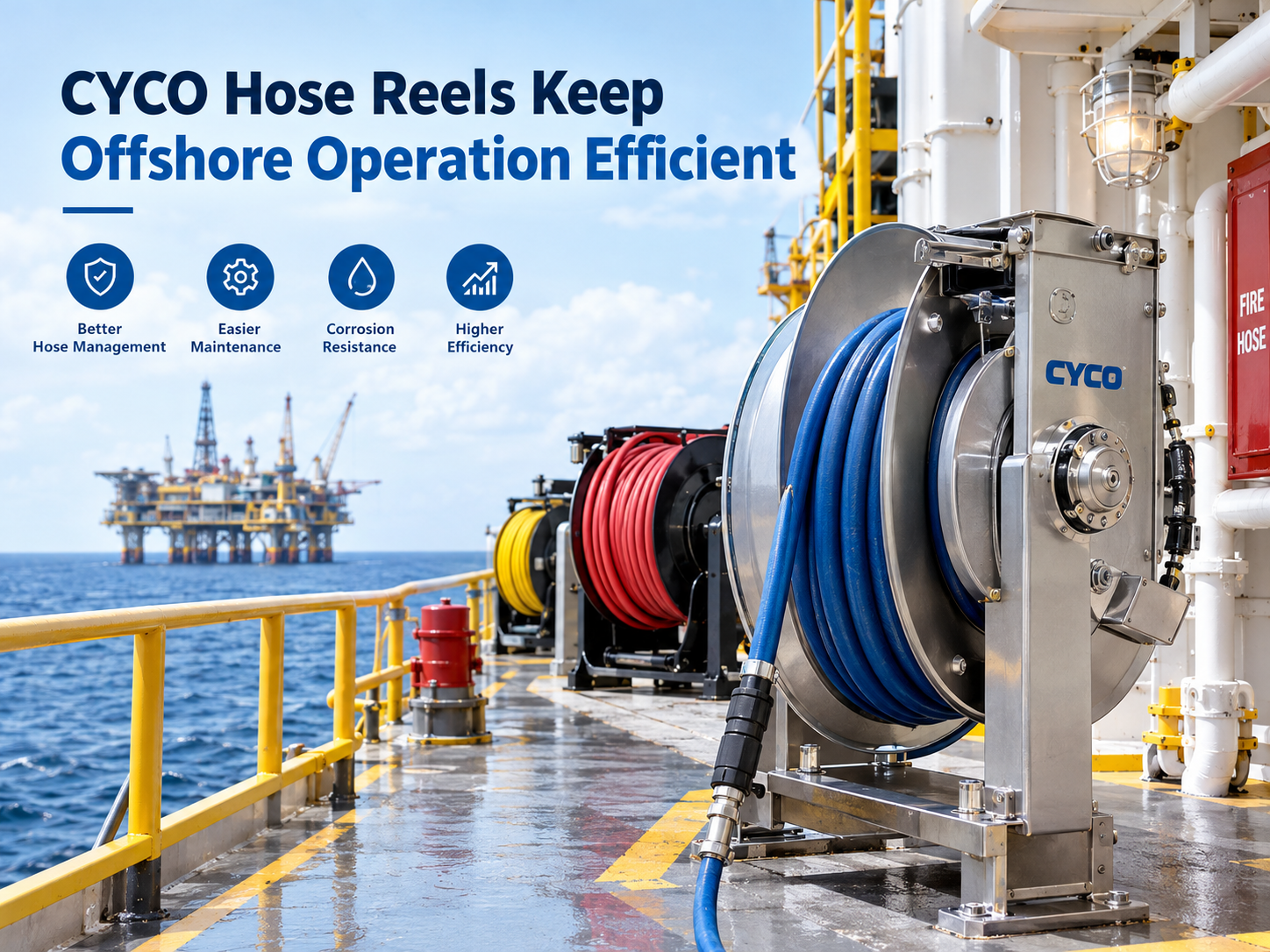
Keep the Offshore Operation Area Clean and Orderly
In areas such as ship deck, engine room and shipyard maintenance station, hoses often need to move between different working positions. If the hose is placed on the ground or deck after use, it may hinder the passage of people, be hooked by equipment, or be worn due to repeated contact with rough surfaces.
The hose reel can help the hose stay in the designated storage position when not in use. Retractable reels can take back hoses after operation, while manual and electric reels can help operators manage longer or heavier hoses according to specific application requirements.
Spring-Driven Hose Reel for Daily Cleaning of Ships
Daily cleaning is an important part of ship maintenance. Crew members may need to use water pipes to remove salt deposits, dirt and debris from decks, equipment surfaces and designated cleaning areas. If you frequently rely on manual deployment and coiling of hoses, the cleaning work will take more time, especially if you need to clean many times in one shift.
CYCO’s CY-DS84 and CY-DS900 stainless steel spring-driven hose reels can automatically recycle hoses after use, and can be used in compatible media such as air, water, oil or grease. Its 304 stainless steel structure is suitable for applications where corrosion resistance needs to be considered, and the adjustable guide arm is helpful to control the movement of the hose during use.
However, salt fog, moisture and weather changes in the marine environment will have an impact on the equipment. Only using stainless steel structure can not guarantee that the equipment is suitable for all offshore environments. Before installation, check the material grade, surface treatment, installation method, hose compatibility and rated working pressure of the reel according to the actual working conditions.
Manual and Electric Hose Reels for Ship Maintenance
Ship maintenance usually requires the use of different types of working media. In the engine room and maintenance workshop, technicians may use compressed air to drive pneumatic tools, use lubricating oil to maintain mechanical equipment, or use hydraulic hoses to connect compatible maintenance equipment. These tasks may involve long hoses and need to be unfolded repeatedly, so efficient hose storage is particularly important.
Manual hose reel is directly operated, which is suitable for maintenance stations with low frequency of hose use or intermittent operation. The electric hose reel can reduce the physical strength required to recover a long hose, especially suitable for maintenance work that requires frequent use of hoses or heavy hose components.
CYCO’s CY-E33 series of manual and electric hose reels can be used for the application requirements of ship or shipyard maintenance stations, provided that the selected configuration meets the hose length, conveying medium, working pressure and installation requirements. According to the specific configuration, its hose capacity can reach up to 99 meters. In the actual selection, the applicable capacity should be confirmed according to the hose diameter, length and working conditions. For the operation using compressed air, CYCO’s air hose reel can also be used as a practical scheme compatible with pneumatic maintenance equipment.
Before selecting manual or electric reels in ship environment, it should be confirmed whether there are any special restrictions on site power supply, bearing capacity of installation structure, environmental protection requirements and installation location. Equipment used in hazardous areas or special ship systems may need to meet additional certification and approval requirements.
Heavy Duty Hose Reel for Ship Equipment Maintenance
Ship maintenance facilities, port maintenance workshops and designated offshore maintenance areas may need to handle large-sized hoses or carry out maintenance tasks that require frequent deployment of hoses. Hoses used for compatible water, air, oil or hydraulic applications may be heavy, and it is not easy to manage manually, especially if it is necessary to repeatedly connect equipment and maintenance points.
Heavy-duty hose reels help reduce manual winding work and support hoses during storage. CYCO’s CY-FF96 heavy duty hose reel series provides manual, spring-driven and electric configurations, which are suitable for marine equipment maintenance. Choosing the appropriate driving mode according to the hose length and operation requirements is helpful for workers to recycle hoses more conveniently.
It should be noted that the universal heavy-duty reel may not be suitable for all offshore operations or fluid transportation tasks. Ship-shore fuel transportation, special fluid transportation and other applications with high safety requirements may require special hose handling system, specific pressure rating, verified fluid compatibility and relevant ship certification. These requirements should be confirmed before selecting or installing reels.
Corrosion-Resistant Hose Reel for Offshore Operation
Salt fog, high humidity and frequent contact with moisture may accelerate the corrosion of equipment in marine environment. Therefore, more attention should be paid to material selection and surface protection for equipment installed on open deck, near coastal facilities or offshore service places.
For the corrosive environment, the material grade and surface treatment method should be evaluated according to the actual exposure conditions. If necessary, consult CYCO for other material options suitable for configuration, including 316L stainless steel, etc. Mounting brackets, fasteners, rotary joints and hose joints should also be considered, because the corrosion resistance of the whole assembly does not depend only on the material of the reel body.
Regular inspection is also essential. The staff should check whether there are problems such as corrosion, leakage, damage to the outer layer of the hose, joint wear, and abnormal recovery or rotation. Removing salt deposits under appropriate conditions and dealing with early signs of damage in time are helpful to maintain the reliable operation of the equipment.
How to Choose Hose Reel for Offshore Application
The suitable hose reel depends on the task, hose specification, working environment and installation requirements. When selecting the type, the hose length and diameter, working pressure, fluid compatibility, driving mode, installation position, corrosion exposure and applicable requirements of ships or dangerous areas should be considered.
For further understanding of these factors, you can read CYCO’s guide to the selection of ship hose reels. Defining the actual application requirements before selecting the model is helpful to ensure that the reel and hose assembly are suitable for the intended operation.
Keep Offshore Operation Equipment Ready at Any Time
In offshore operations, efficient hose management can provide support for cleaning, maintenance and daily equipment maintenance. Hose reels can make it easier for workers to unwind and recycle hoses, keep the work area clean and tidy, and reduce unnecessary wear and tear caused by improper storage.
Spring-driven reels can simplify daily cleaning work, manual and electric reels can meet different maintenance requirements, while heavy reels help to manage compatible hoses in shipyards and service areas. When the equipment is exposed to salt water or harsh marine environment, the corrosion resistance and rated parameters of specific applications are particularly important.
By selecting the appropriate reel configuration according to the actual task and maintaining the complete hose assembly, offshore operators can improve the hose management mode and improve work efficiency.
Related Posts
Chemical Hose Reels: Safety & Material Guide
July 20, 2026
How to Deploy Mobile Hose Reels for Temporary Work Areas
October 30, 2026
Industrial Hose Reel for Power Plant Maintenance
October 29, 2026