How to Choose the Right Agricultural Hose Reel
July 7, 2026 | Hose Reel Applications, Industrial Hose Reels
Introduction
In modern agriculture, hose reels are essential auxiliary equipment. They effectively organize and protect hoses, enable rapid extension and retraction, eliminate manual coiling time, and maintain a safer and more organized work environment.
Selecting the right model requires matching it to your intended application, hose specifications, operating conditions, and productivity goals. Understanding these factors in advance ensures reliable performance and a better long-term return on investment.
What Is an Agricultural Hose Reel?
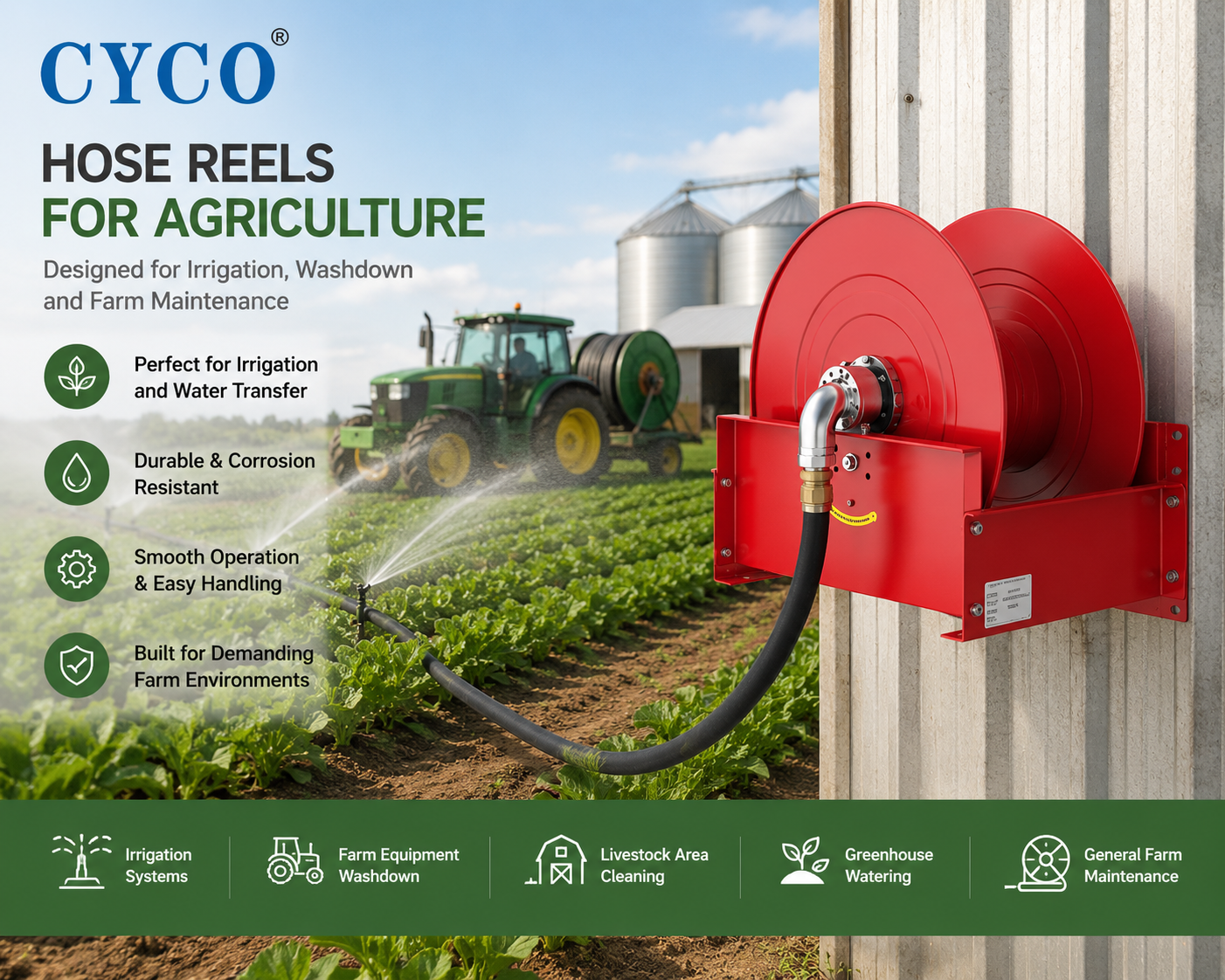
An agricultural hose reel is a dedicated device for storing, protecting, and deploying hoses used in farming operations. Unlike standard garden hose reels, agricultural reels are built to handle larger diameters, longer lengths, higher working pressures, and harsh outdoor conditions.
Winding hoses neatly onto a reel prevents twisting, kinking, and excessive wear during daily use. It also shields hoses from prolonged exposure to sunlight, mud, moisture, and mechanical damage—all of which shorten hose life and increase replacement costs. Proper hose management contributes to a safer workplace and improves efficiency in irrigation and liquid transfer operations.
Common applications include:
- Irrigation systems
- Crop spraying
- Fertigation
- Water transfer
- Livestock watering
Depending on the application, users can choose between manual, spring-driven, or electric/hydraulic reel systems.
Step 1: Determine Your Application Requirements
Before purchasing, clarify the specific use case. Different agricultural operations impose very different demands on hose reels, and selecting the right model directly improves efficiency while reducing future maintenance costs.
- Irrigation: Hoses are laid across fields and used repeatedly throughout the day. The reel must accommodate long hoses and enable smooth extension and retraction to reduce handling time and keep equipment organized.
- Liquid fertilizer or agrochemical transfer: Material compatibility is critical. Corrosion-resistant components, durable coatings, and high-quality swivel joints help protect the reel from chemical attack and ensure long-term reliability.
Defining the intended use upfront makes it much easier to choose the right size, drive system, and construction design.
Step 2: Select the Right Hose Size and Reel Capacity
This is one of the most important decisions in the selection process. A reel that is too small won’t hold the entire hose, while one that is too large adds unnecessary cost and occupies valuable space.
Common Agricultural Hose Diameters
- 3/4 inch
- 1 inch
- 1-1/4 inch
- 1-1/2 inch
Larger diameter hoses deliver higher flow rates for irrigation and water transfer, but they also require larger drums and more robust reel structures to support the added weight.
Choose the Correct Reel Capacity
Hose length must also be carefully evaluated. Short hoses are typically used around buildings, equipment sheds, and livestock areas, while medium to long hoses are better suited for field irrigation and long-distance water delivery.
You should keep this in your mind: reel capacity is determined by both hose diameter and length—the larger the diameter, the shorter the total length the reel can accommodate. Matching these two specifications ensures smooth coiling, reliable storage, and extended hose life.
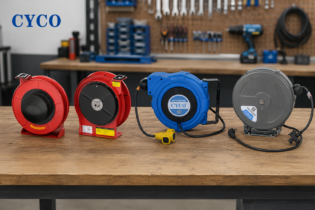
CYCO offers manual and electric hose reels with various drum sizes to accommodate different diameters and lengths, making it easier to find the right solution for a wide range of agricultural applications.
Step 3: Choose the Right Drive Type
The drive mechanism directly affects labor requirements, operational efficiency, and overall productivity. The optimal choice depends on farm size, hose length, frequency of use, and available power sources.
- Manual reels: Ideal for small farms with shorter hoses and infrequent use. They offer low initial cost, simple operation, and minimal maintenance.
- Spring-driven reels: Automatically retract the hose after use, reducing operator fatigue. They are particularly suitable for applications requiring frequent extension and retraction, and help keep work areas tidy.
- Electric/hydraulic/pneumatic reels: Best for large commercial farms and long, heavy hoses. While initial investment is higher, they significantly reduce labor, improve efficiency, and offer faster retraction in continuous operations.
For long-distance hose applications or continuous-duty cycles, explore our spring driven and electric hose reel series or read our guide: Spring-Driven vs. Electric Hose Reels: A Complete Industrial Guide.
Step 4: Consider the Operating Environment
Agricultural equipment must perform reliably under extremely harsh conditions. Unlike indoor industrial facilities, farm equipment is constantly exposed to direct sunlight, rain, mud, dust, temperature fluctuations, and frequent mechanical impacts, so environmental durability must be a priority.
Outdoor Fixed Installation
Corrosion resistance is paramount. Galvanized or powder-coated steel components and sealed bearings help prevent rust and ensure smooth operation even in prolonged wet conditions.
Chemical Exposure
When transferring liquid fertilizers or pesticides, drum components must resist chemical corrosion and maintain reliable sealing performance.
Mobile Installation
Continuous vibration demands reinforced frames, heavy-duty bearings, and locking fasteners to maintain structural stability when mounted on trailers or tractors.
Step 5: Evaluate Working Pressure and Hose Compatibility
The reel must not only match the hose size but also meet the pressure requirements of the entire fluid transfer system. Selecting a reel with insufficient pressure capacity can degrade performance or even lead to equipment failure.
Start by verifying the reel’s working pressure rating. It should comfortably handle the system’s normal operating pressure with a sufficient safety margin to absorb occasional pressure spikes. Also check the maximum pressure rating to ensure reliable operation under peak conditions.
Agricultural operations use various hose materials, including rubber, PVC, and reinforced composites. The reel design must accommodate the hose’s flexibility, outer diameter, and weight to ensure smooth winding and unwinding.
Step 6: Look for Features That Boost Efficiency
Beyond basic specifications, certain design features significantly impact long-term performance and productivity.
Key Features to Consider
- Smooth coiling mechanism that prevents twisting and uneven winding
- Full-flow swivel joint for continuous fluid transfer
- Heavy-duty steel frame and reinforced drum for long, heavy hoses
- Vibration-proof and self-locking fasteners for mobile equipment
- Corrosion-resistant coatings for outdoor durability
- Easy-maintenance design to reduce service time
Proper routine maintenance also helps maximize service life. For practical tips, read our article: How Long Do Hose Reels Last?
Conclusion
Selecting the right agricultural hose reel requires a balanced assessment of application scenarios, hose diameter and length, operating environment, working pressure, and usage frequency rather than focusing solely on price or size.
Whether you need a compact reel for livestock watering or a powered irrigation reel capable of handling long hoses in large-scale projects, choosing equipment that matches your actual operating conditions will boost productivity, reduce hose wear, and lower long-term maintenance costs. A high-quality agricultural hose reel is a worthwhile long-term investment.
Related Posts
How to Choose the Right Sewer Jetter Reel for Your…
July 14, 2026