How to Deploy Mobile Hose Reels for Temporary Work Areas
October 30, 2026 | Industrial Hose Reels
Introduction
In industrial maintenance, equipment maintenance, building construction and factory shutdown maintenance, it is often necessary to use hoses in areas without fixed fluid or compressed air supply points. The operation site may change with the progress of the project, and sometimes it is necessary to temporarily connect gas supply or liquid supply equipment to meet the needs of cleaning, lubrication, hydraulic operation or compressed air transportation. In this case, the mobile hose reel can help manage the hose deployment between the work area and the supply point.
However, the installation and use of mobile hose reel is not as simple as moving the reel to a new position. Hose length, supply interface, working pressure, ground conditions and surrounding equipment will all affect the operation effect of the whole system. If the pre-planning is not sufficient, it may lead to limited hose movement, unstable equipment placement, hose entanglement or unnecessary shutdown.
This paper will introduce how to plan and deploy mobile hose reel for temporary industrial work area, covering deployment requirements, connection methods, location arrangement and common operation problems.
Why Do Temporary Work Areas Need Mobile Hose Reels?
When the equipment needs to be maintained, the production line is adjusted, or the construction activities are moved away from the fixed service station, it is usually necessary to establish a temporary working area in the industrial site. Fixed hose joints may not be able to cover these positions, and repeated handling and sorting of scattered hoses will also increase the management difficulty of daily operations.
Mobile hose reel can help workers manage hoses more orderly. During the operation, the operator can release the hose with appropriate length as required; After the task is completed, take back the hose. When the working place changes, this way can make the deployment and recycling of hoses more convenient.
Movable hose reels are especially suitable for the following scenarios:
- Equipment maintenance: Maintenance personnel may need to use compressed air, water, lubricating oil or hydraulic medium between equipment in different areas of the factory.
- Temporary cleaning work: Industrial cleaning work may be distributed in different production areas, equipment areas or outdoor workplaces.
- Construction and installation projects: When working in different construction areas, staff may need to temporarily supply compressed air or water.
- Factory shutdown and equipment overhaul: in a limited project cycle, maintenance tasks may be concentrated in different areas of the factory.
- Outdoor industrial operation: When there is a lack of fixed hose joints at the job site, the staff may need to set up temporary workstations.
The main advantage of mobile hose reel is the flexible deployment of hoses. Instead of installing a fixed reel at every possible job site, it is better to move the whole set of equipment according to the work arrangement to meet the needs of different areas.
Main Components of Mobile Hose Reel System
Mobile hose reel should be regarded as a complete hose supply system, not as a separate reel device. Each component needs to meet the expected use and actual operating conditions.
Hose Reel and Supporting Structure
The hose reel is used to store the working hose and control the release and recovery of the hose. Its structure should adapt to the hose type, working pressure and frequency of use.
For example, the reel used for compressed air may be different from the reel used for hydraulic oil or high-pressure water in terms of structure and performance requirements. Before selecting equipment, check the drum size, hose capacity, connection specifications and overall structural strength.
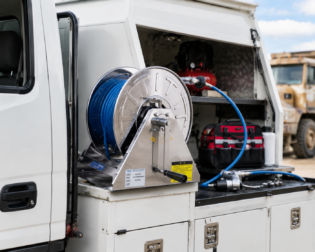
The supporting structure is equally important. It must be able to firmly support the reel during the hose release and recovery. If the reel is installed on a mobile platform or service equipment, the installation point should have sufficient strength to bear the operating load and the force generated during the movement. Loose mounting bolts may cause vibration, position deviation or unstable operation.
Hose and Supply Interface
The hose connects the reel to the actual operation equipment, and the supply interface is responsible for connecting the reel system to the supply source of air, water, oil or hydraulic medium.
Before deploying the system, make sure that the hose material is compatible with the conveying medium. At the same time, it is also necessary to check whether the inner diameter, working pressure, temperature range and length of the hose meet the actual application requirements.
The supplier interface should match the existing service outlet or equipment interface. Before connection, confirm the joint type, thread specification, pressure grade and sealing method. Using mismatched connectors or unsuitable adapters may cause leakage or connection failure.
Hose Length and Operation Coverage
The length of the hose determines the distance that the movable reel extends from the supply point to the working area. Too short hose may limit the operating range of equipment, while too long hose may increase pressure loss, lead to the accumulation of ground hoses, and make hose management more complicated.
The required length should be determined according to the actual distance between the supply point and the farthest working position, taking into account the routing path of the hose, the turning position, the moving space of the equipment and the allowance required for connecting the equipment.
For the application of pressure fluid transportation, it is also necessary to consider the inner diameter and length of the hose. Too long hose or improper selection of inner diameter may affect the flow and pressure at the end. Therefore, the final configuration should be confirmed according to the operation requirements of the connected equipment.
Moving and Positioning Parts
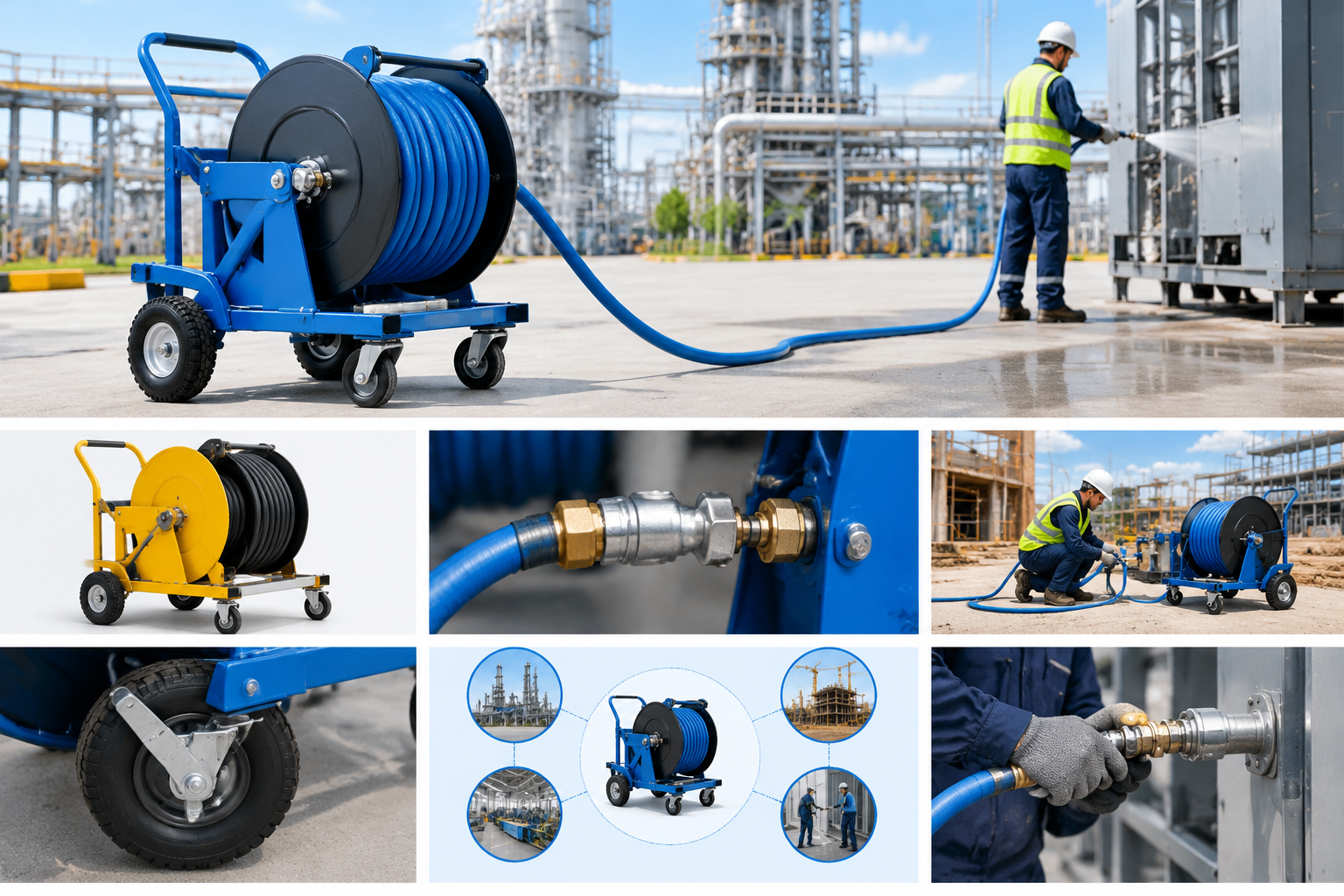
The mobile configuration determines how the reel system is transferred between different working areas. Depending on the specific application, reels can be installed on wheeled platforms, maintenance vehicles, service equipment or other mobile devices. For example, a wheeled reel cart can be used in scenes where hoses need to be transferred between different working positions. For the specific structure, please refer to the portable hose reel cart of CYCO.
The positioning parts shall ensure that the reel remains stable during operation. Equipment movement and hose deployment are two different requirements: a system that is easy to move may not be stable during operation. Therefore, the supporting structure, locking device and installation position should be able to prevent the equipment from moving unnecessarily during the use of the hose.
How to Plan the Deployment of Mobile Hose Reel?
Reasonable deployment planning can reduce unnecessary equipment movement and help operators use hoses more safely. You can refer to the following steps to deploy the mobile hose reel in the temporary industrial operation area.
1. Determine the Operation Area and Service Requirements
First of all, it is necessary to clarify the use position of the hose and the equipment to be connected. Determine the type of conveying medium, required pressure, flow rate, working temperature and estimated service time.
For example, the temporary compressed air supply station for maintenance tools has different configuration requirements from the water supply system for equipment cleaning. Hydraulic applications may also require the use of special hose assemblies and connectors that can withstand system pressure.
If the same system needs to serve multiple devices, it should be determined whether these devices are used in one place or whether the reels need to be moved to different workstations. This helps to determine the required coverage of the hose and the moving frequency of the equipment.
2. Choose the Right Supply Point
The supply point should be able to provide media that meets the application requirements and meet the corresponding pressure and flow requirements. It is necessary to check the distance between the supply source and the temporary operation area and the type of existing interface.
If the reel is connected to the fixed supply interface, it should be ensured that the feed hose can reach the working position of the reel without being overstretched or sharply bent. If the system is supplied by a service vehicle or portable equipment, it should be confirmed that the supply equipment can maintain the required operating conditions during the use of the hose.
The supply interface should also facilitate inspection and disconnection. Avoid setting the interface at the back of the equipment or in a position that is difficult for the operator to observe, so as not to find leakage or connection problems in time.
3. Plan Hose Route and Operation Coverage
Before releasing the hose, plan the route from the reel to the operation area. Need to consider the location of mechanical equipment, personnel passage area, vehicle driving route, doors, walkways and other possible obstacles.
Appropriate hose routes should avoid sharp edges, excessive bending, high temperature surfaces and areas where heavy equipment may crush hoses. If it is impossible to prevent the hose from passing through the traffic passage, appropriate hose protection devices should be used or the route should be re-planned.
The position of the reel should ensure that the hose can reach the required working position, and at the same time avoid pulling out the hose at an excessive angle. Sufficient space should also be reserved to ensure that the hose can move smoothly during release and recovery.
4. Check the Ground Conditions and Reel Stability
There may be uneven ground, loose gravel, wet ground or other conditions that affect the placement of equipment in the temporary operation area. Before deployment, it should be confirmed that the selected position can bear the weight of the reel and its mobile support structure.
Place the reel on a solid and relatively flat ground as much as possible. If the equipment is equipped with braking device or locking device, it should be fixed before operation. For the reel system installed on the vehicle, it should be confirmed that the vehicle is parked firmly, and whether the reel installation structure is suitable for the current operation.
When the hose is pulled out or recovered, the reel should not move. If the equipment shakes or shifts during deployment, it should stop operation and adjust its position before continuing to use.
5. Connect and Check the System
After the reel positioning is completed, connect the supply pipeline and check whether all joints are installed securely. Check the hose for cuts, wear, deformation or other obvious damage. At the same time, confirm that the pressure and temperature grades of hoses, reels, rotary joints, connectors and related components meet the expected use requirements. If applicable, the conveying medium should be connected gradually, and the connection position should be checked for leakage. The operating pressure of the system shall not exceed the minimum rated pressure of any component. If the connector leaks or the hose is damaged, isolate the supply source first and solve the problem before resuming use.
6. Establish a Standardized Recycling and Storage Process
After the operation is completed, the supply source should be closed or isolated according to the operation procedures. Relieve the residual pressure in a safe way before disconnecting the hose.
When recycling the hose, keep the operation stable, avoid sudden pulling, and don’t let the hose wind around nearby equipment. Check whether the hose is evenly wound on the drum to ensure that the hose is not caught or bent sharply.
If the reel needs to be moved to other operation areas, the hoses and connectors should be fixed before transportation. Establishing a unified operation process is helpful to reduce equipment damage during moving and ensure that the system can be prepared for the next deployment.
How to Choose a Suitable Mobile Hose Reel for Industrial Application?
The suitable mobile hose reel depends on the actual use conditions and the operation mode of the system. Before selecting a configuration, the following factors should be evaluated.
Compatibility of Conveying Medium and Hose
First of all, it should be clear whether the reel is used to transport air, water, oil, grease, hydraulic oil or other media. Hose materials and sealing parts must be compatible with the conveying medium. Hoses suitable for water are not necessarily suitable for transporting oil or some industrial chemicals.
Working Pressure and Temperature
Reels, hoses, rotary joints, joints and connecting parts must meet the required working pressure and temperature range. For high-pressure applications, in addition to the specifications of the hose, the rated parameters of the whole set of components should be checked.
Hose Length and Inner Diameter
Select the hose length that can cover the actual operation area, and avoid leaving too many idle hoses. The inner diameter of the hose should also meet the required flow and pressure requirements. If a system needs to serve multiple devices, the farthest connection location and the operation requirements of each device should be considered.
Reel Drive and Recovery Mode
Different applications may require different reel drive mechanisms. The spring-driven hose reel can automatically recover the hose, while the manual hose reel allows the operator to directly control the winding process. For longer or heavier hoses, the motor drive system can be considered according to the actual operation mode.
The recycling method should match the hose weight, length, frequency of use and the power source available on site. At the same time, we should also consider how to control the operator when releasing and recycling the hose.
Use Environment and Mobile Frequency
The reels used indoors may face different working conditions than those used in construction sites or outdoor environments. When selecting reel material and protective structure, factors such as humidity, dust, chemicals, collision and weather change should be considered.
In addition, the mobile frequency of the system should also be evaluated. Reels that need to be repositioned many times a day may have different requirements in moving configuration and fixing methods than reels that have been continuously used in temporary workstations for several weeks.
Common Problems in the Deployment of Mobile Hose Reel
Even if the appropriate reel is selected, unreasonable installation or operation may still cause problems. Understanding these common situations is helpful for maintenance personnel to find and solve problems in time.
Insufficient Hose Coverage
If the hose cannot reach the required working position, the operator may excessively pull the hose or add extra extension connections. This will not only increase the connection points, but also increase the risk of leakage.
Solution: Measure the actual working distance before deployment. When determining the hose length, the wiring path and the equipment operation space should be considered together.
Hoses Interfere with Equipment or Traffic Routes
If the hose is laid in a walkway or vehicle passage area, it may hinder the movement of people and vehicles, and may also be damaged by passing equipment. In addition, the ground hose may also cause tripping risk.
Solution: Plan the hose route before operation. Avoid traffic areas as much as possible; If crossing cannot be avoided, appropriate protective devices should be used.
The Reel Moves When the Hose Is Paid Out
If the supporting structure is not fixed properly or the ground conditions are not suitable, the movable reel may be displaced when the hose is pulled out. This will increase the difficulty of hose operation and generate additional stress on the connecting parts.
Solution: Check the ground condition and locking device before use. Confirm that the reel can remain stable when the hose is pulled out from the normal operating position.
Uneven Winding of Hose
If the hose is pulled out at an excessive angle, twisted during use, or lacks proper guidance during recycling, the hose may not be evenly wound on the drum. Improper long-term winding may affect the storage capacity of the hose and increase the difficulty of releasing the hose later.
Solution: As far as possible, keep the hose route in reasonable alignment with the reel outlet. Keep the speed steady when recycling, and check the winding state of the hose after use.
Leak or Connection Problem
Loose joints, incompatible connectors, damaged seals or unqualified pressure ratings may cause leakage and interrupt operations.
Solution: Confirm the connection specifications before assembly, and check the whole conveying pipeline before operation. Replace damaged parts in time. Never deal with connection leakage by increasing working pressure or using inappropriate joints.
Conclusion
In order to deploy mobile hose reel in temporary industrial operation area, it is necessary to plan the supply point, hose route, operation coverage, reel position and operation conditions reasonably. Its core goal is to establish a flexible hose supply system that can be moved according to needs while maintaining stability and reliability during use.
By selecting suitable reels and hoses according to practical applications, confirming connection compatibility, planning hose routes, and establishing standardized deployment and recycling processes, industrial enterprises can manage temporary hose supply more effectively. These factors are very important whether it is equipment maintenance, cleaning operation, building construction, or equipment maintenance in a large factory.
Appropriate mobile hose reel configuration should conform to the actual workflow, provide sufficient hose coverage, and ensure that operators can use and manage hoses in an orderly manner at each operation stage.
Related Posts
Air Hose Reels for Service Trucks: Complete Guide
August 6, 2026