Open Hose Reel vs Enclosed Hose Reel: Which Is Better for Your Application?
May 27, 2026 | Industrial Hose Reels
1. Introduction
In industrial manufacturing, automotive repair, equipment maintenance, and cleaning systems, industrial hose reels play a critical role in improving hose management and operational efficiency. Based on structural design, industrial hose reels are generally divided into two main categories: open hose reels and enclosed hose reels. Enclosed hose reels can be further classified into fully enclosed hose reels and semi-enclosed hose reels.
Open hose reels feature an exposed frame structure, with the reel drum and hose fully visible. They are known for their simple construction, easy maintenance, and suitability for heavy-duty working conditions. Enclosed hose reels are equipped with protective covers that help block dust, moisture, and debris, providing additional protection for internal components and hoses. They are more suitable for applications requiring cleaner environments and better equipment protection.
Different working environments, hose specifications, usage frequency, and installation conditions place different demands on hose reel performance. Improper reel selection may accelerate hose wear, increase maintenance costs, reduce operating efficiency, and even create safety risks. Therefore, understanding the structural differences, performance characteristics, and application suitability of these three hose reel types is essential for improving equipment reliability, optimizing workplace organization, and reducing long-term operating costs.
2. Open Hose Reels
2.1 Basic Structure
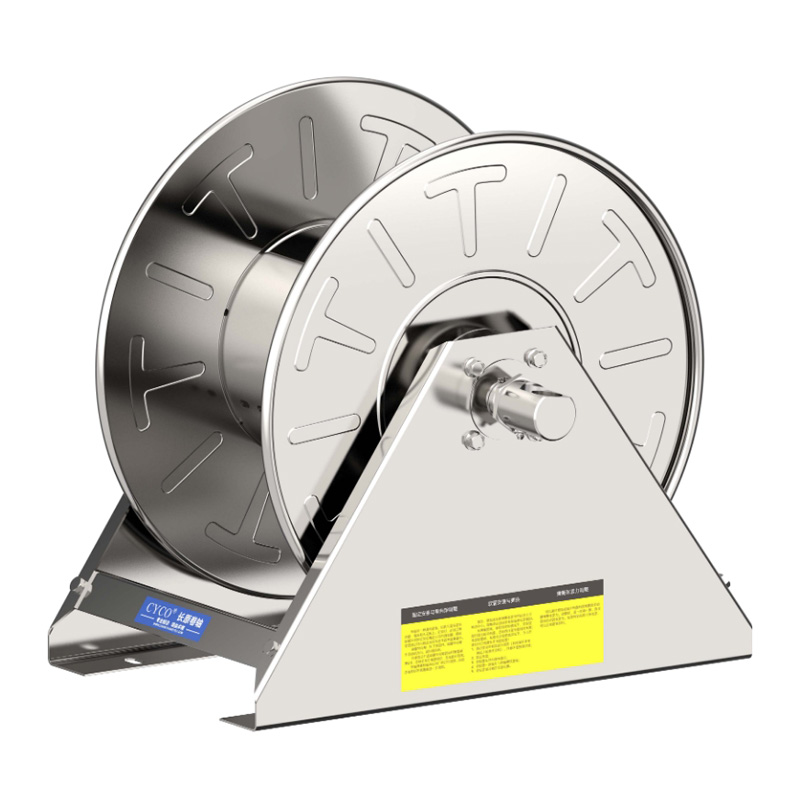
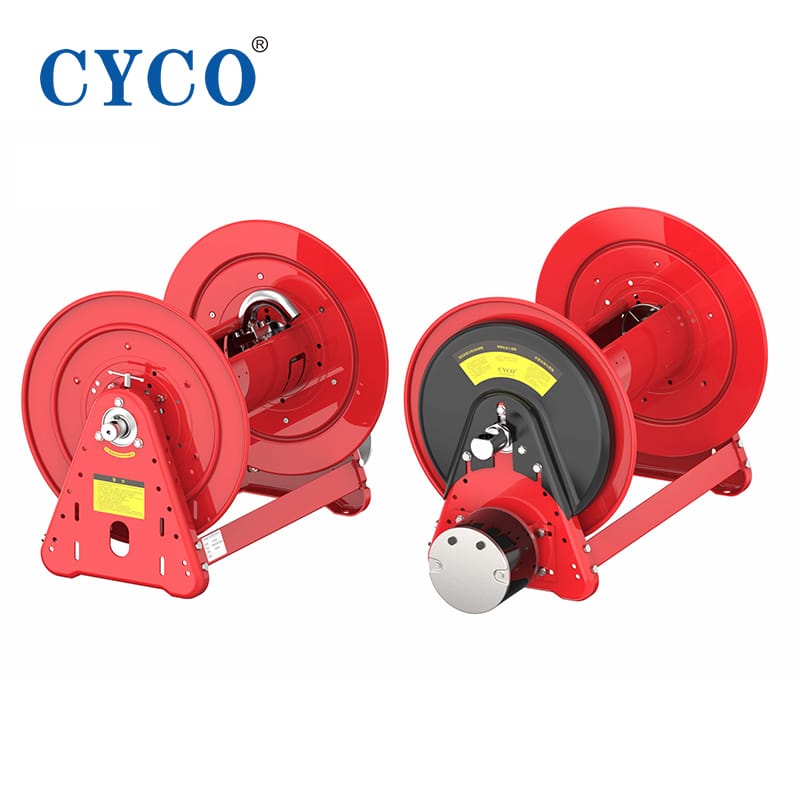
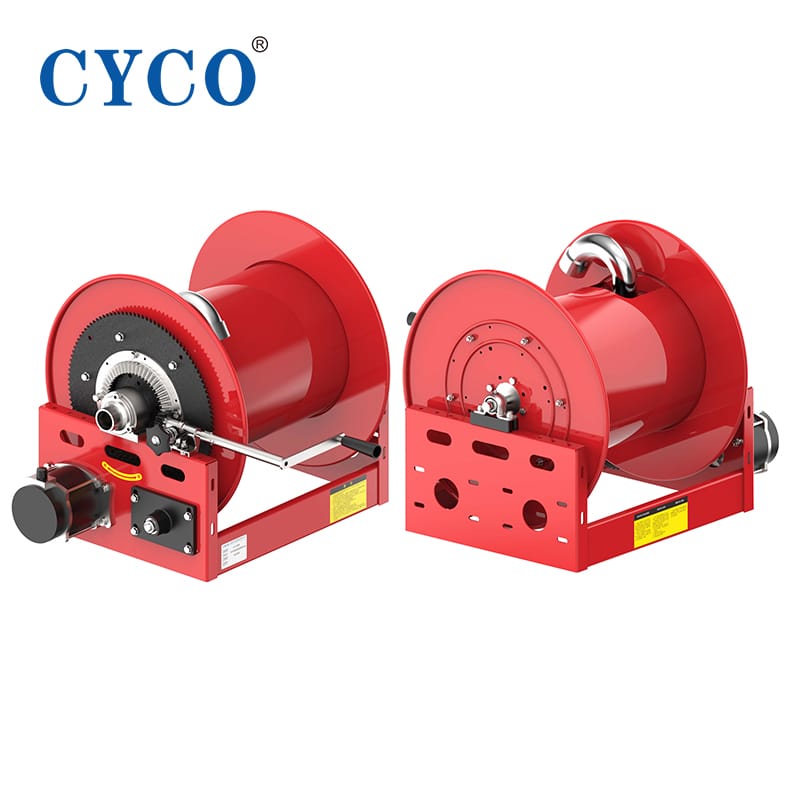
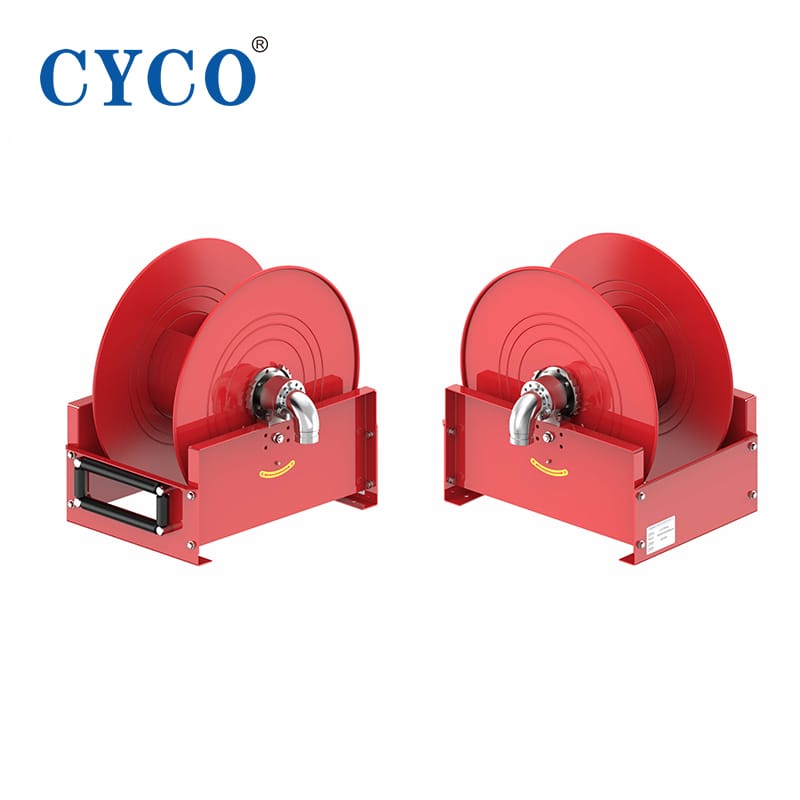
Open hose reels use a fully exposed frame design in which the reel drum, support arms, hose, and internal drive components remain visible without an external protective cover. The overall structure is simple and highly accessible, allowing operators to directly monitor hose winding and reel operation.
A complete open hose reel system typically consists of the reel drum, support frame, swivel joint, rewind mechanism, and hose assembly. The open-frame structure provides larger internal space, allowing the reel to accommodate longer hoses and larger hose diameters with excellent load capacity. As a result, open hose reels are widely used in long-distance fluid transfer, high-flow applications, and heavy-duty industrial hose management.
2.2 Advantages and Disadvantages
Main Advantages
- Easy Maintenance and Inspection
Internal components are fully accessible, making daily inspection, cleaning, and part replacement faster and easier while minimizing equipment downtime. - High Load Capacity
The strong structural design supports large-diameter, heavy-weight, and high-pressure industrial hoses for demanding industrial applications. - Large Hose Capacity
The spacious frame design allows storage of longer hoses, making it suitable for long-distance operations. - Better Heat Dissipation
Good airflow circulation helps prevent heat buildup during continuous operation and high-temperature working conditions.
Main Disadvantages
Because the reel and hose are fully exposed, open hose reels provide limited protection against dust, moisture, impacts, and contaminants. Long-term hose exposure may also increase surface wear. Therefore, they are less suitable for high-cleanliness environments, humid conditions, or precision working areas.
2.3 Common Applications
Due to their high load capacity and maintenance convenience, open hose reels are widely used in demanding industrial environments such as manufacturing production lines, construction machinery systems, mining operations, heavy industries, and other applications requiring long-distance or high-volume fluid transfer.
Our open-frame hose reel models are shown below for reference.
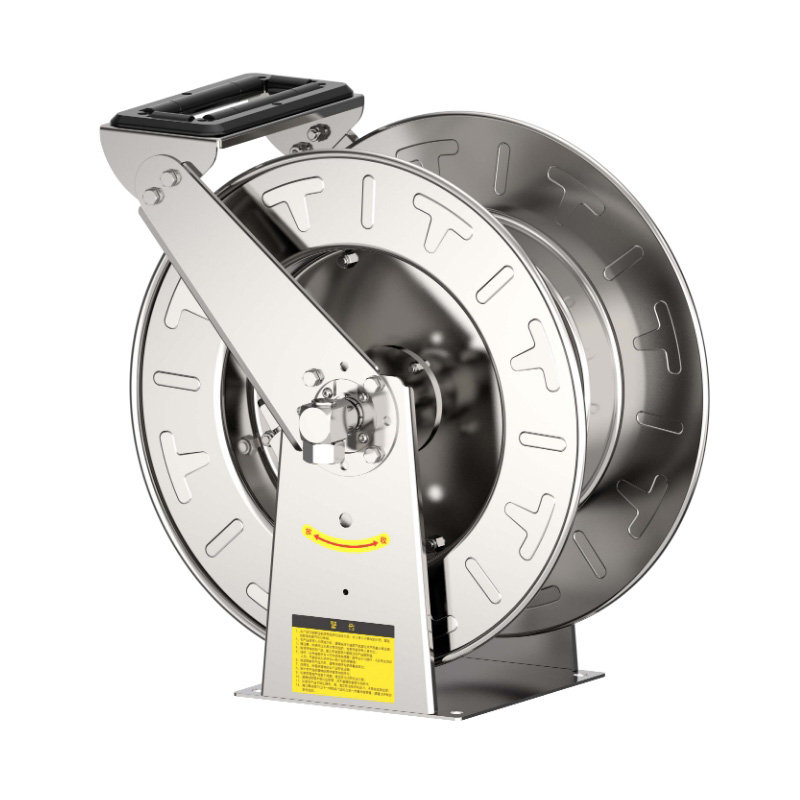
Air/Water/Oil/Grease Hose Reel CY-DS900
Manual Stainless Steel Fire Hose Reel CY-HS18
Manual/Motor Driven Hose Reel CY-E33 Series
Manual/Motor Driven Hose Reel CY-E39 Series
Heavy Duty Hose Reel CY-FF96 Series
3. Enclosed Hose Reels
Enclosed hose reels are equipped with protective outer covers that shield the reel drum, rewind mechanism, and other key components from external contamination. Based on protection level and structural design, enclosed hose reels are divided into two categories: fully enclosed hose reels and semi-enclosed hose reels.
3.1 Fully Enclosed Hose Reels
3.1.1 Basic Structure
Fully enclosed hose reels are completely covered by an outer housing. The reel drum, drive system, and hose storage area are all contained within a sealed enclosure that provides maximum protection. The protective housing helps isolate external contaminants while creating a cleaner and more organized appearance.
3.1.2 Advantages and Disadvantages
Main Advantages
- Comprehensive Protection
The enclosed housing effectively blocks dust, debris, and moisture from entering the reel system, helping reduce component contamination and corrosion while minimizing hose contact with external objects. - Cleaner Workplace Organization
The hose remains stored inside the housing during operation and storage, reducing clutter and minimizing tripping or hose entanglement risks.
Main Disadvantages
Due to the enclosed structure, internal space is more limited, making it less suitable for extremely long or large-diameter heavy-duty hoses. Maintenance and inspection may also require removal of the outer cover, resulting in a more complicated service process.
3.1.3 Common Applications
Fully enclosed hose reels are commonly used in environments with high hygiene standards, humid conditions, dusty workplaces, or areas requiring cleaner equipment layouts. Typical applications include automotive service workshops, food processing facilities, high-pressure cleaning systems, and indoor maintenance environments.
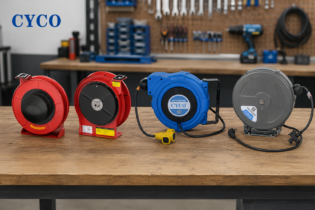
Our fully enclosed hose reel models are shown below for reference.
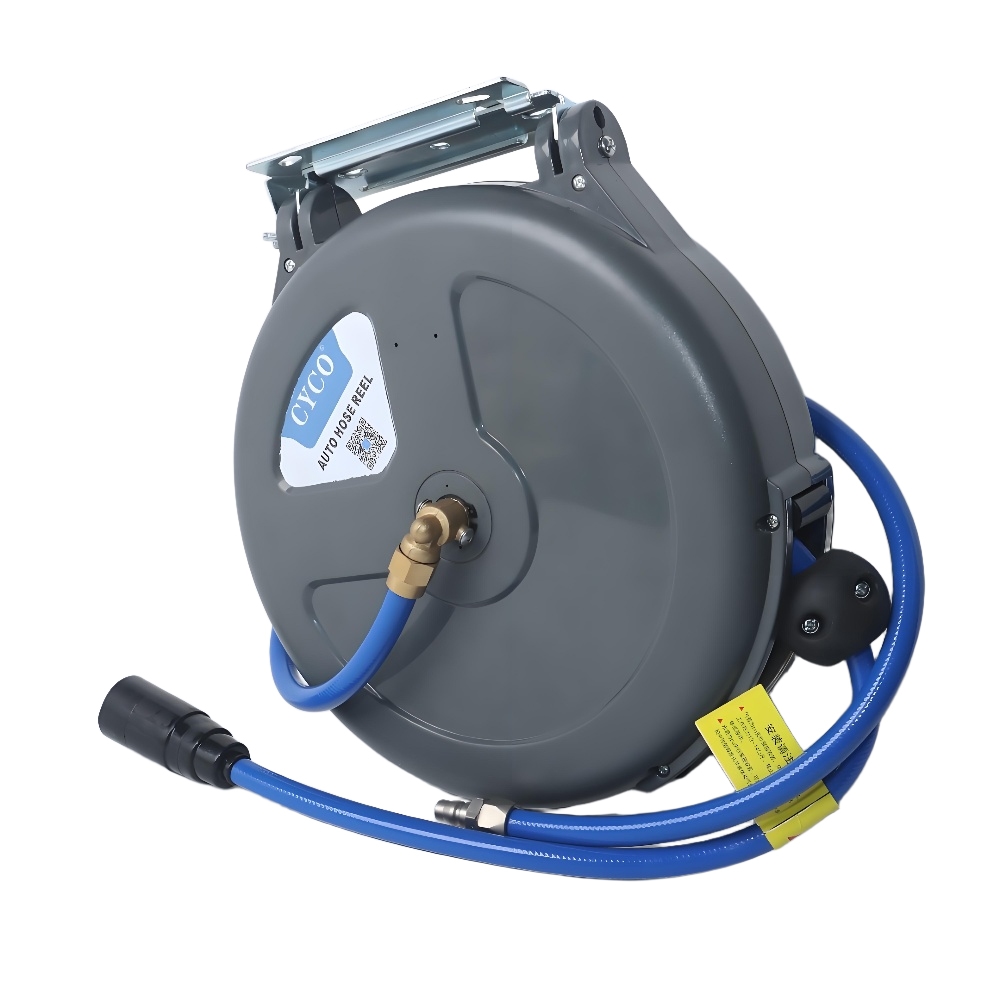
Auto Rewind Air Compressor Hose Reel
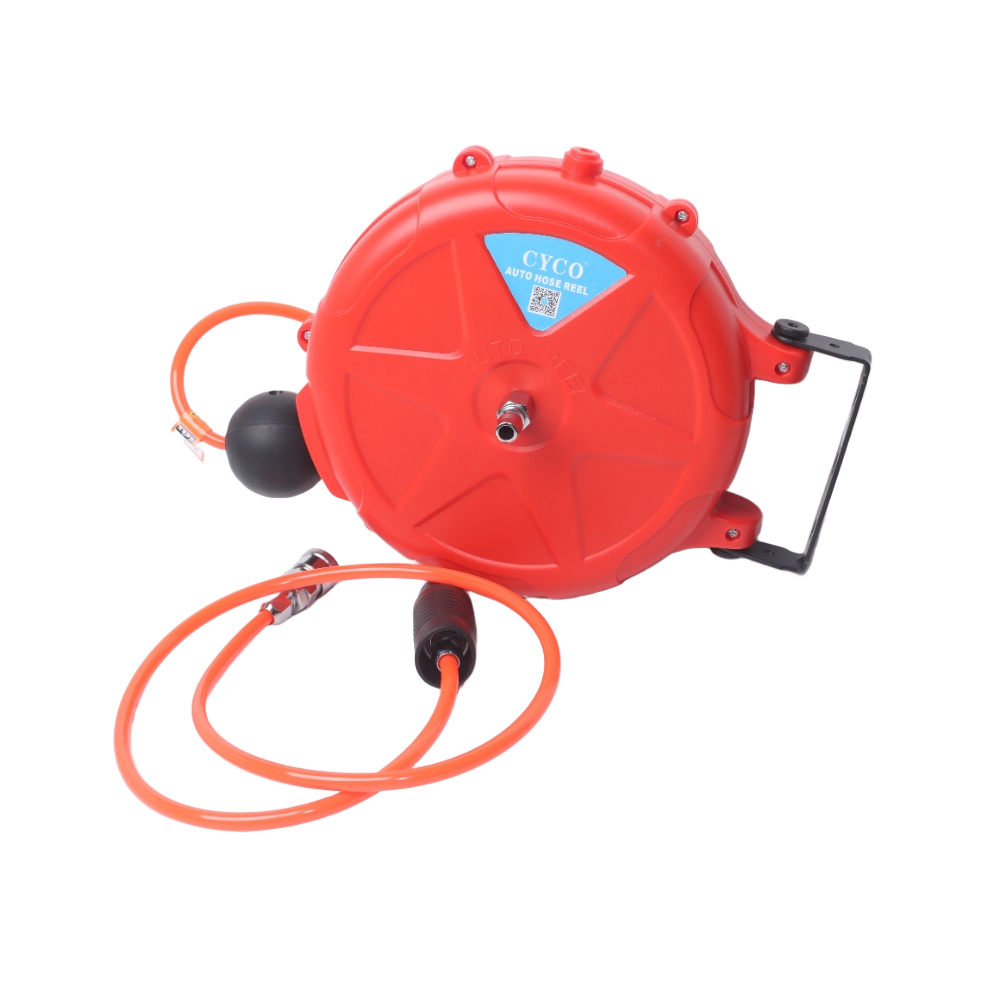
Mini Plastic Retractable Industrial Air Hose Reel
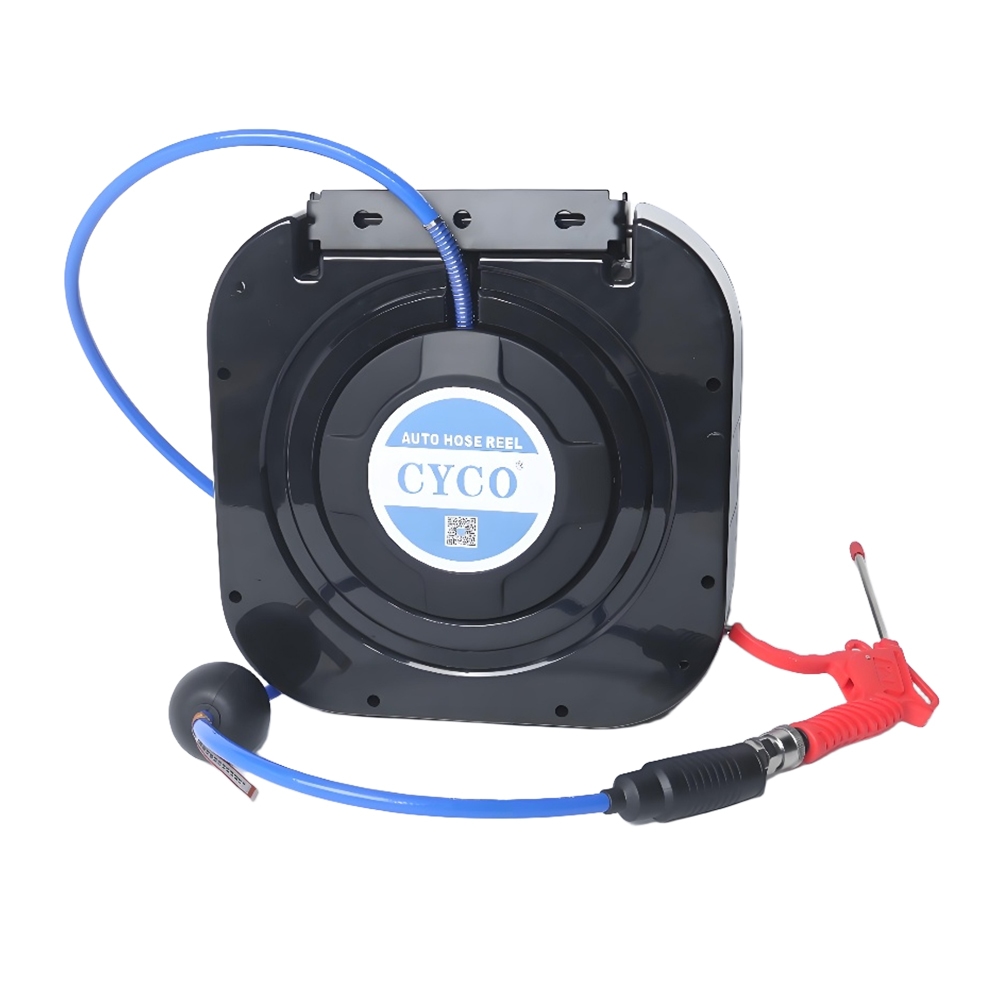
Spring Retractable Air Hose Reel
3.2 Semi-Enclosed Hose Reels
3.2.1 Basic Structure
Semi-enclosed hose reels use a partially protected structure with localized covers that protect key hose storage areas while leaving part of the frame and drive components exposed. This design combines structural features from both open and fully enclosed hose reels, balancing protection and practicality.
3.2.2 Advantages and Disadvantages
Main Advantages
- Balanced Protection and Maintenance Convenience
Partial covers help block most dust and moisture while exposed sections allow easier inspection, cleaning, and component replacement. - Strong Versatility
The compact structure supports standard hose sizes and lengths, making it suitable for most general industrial applications.
Main Disadvantages
Protection performance is lower than fully enclosed hose reels and may not be suitable for extremely dusty or high-humidity environments. Hose capacity and load-bearing capability are also lower than those of open hose reels, limiting their suitability for heavy-duty or high-flow operations.
3.2.3 Common Applications
Semi-enclosed hose reels are widely used in standard factory production lines, maintenance workshops, and general fluid transfer systems. They are considered a practical and cost-effective solution for most industrial environments.
Our semi-enclosed hose reel models are shown below for reference.
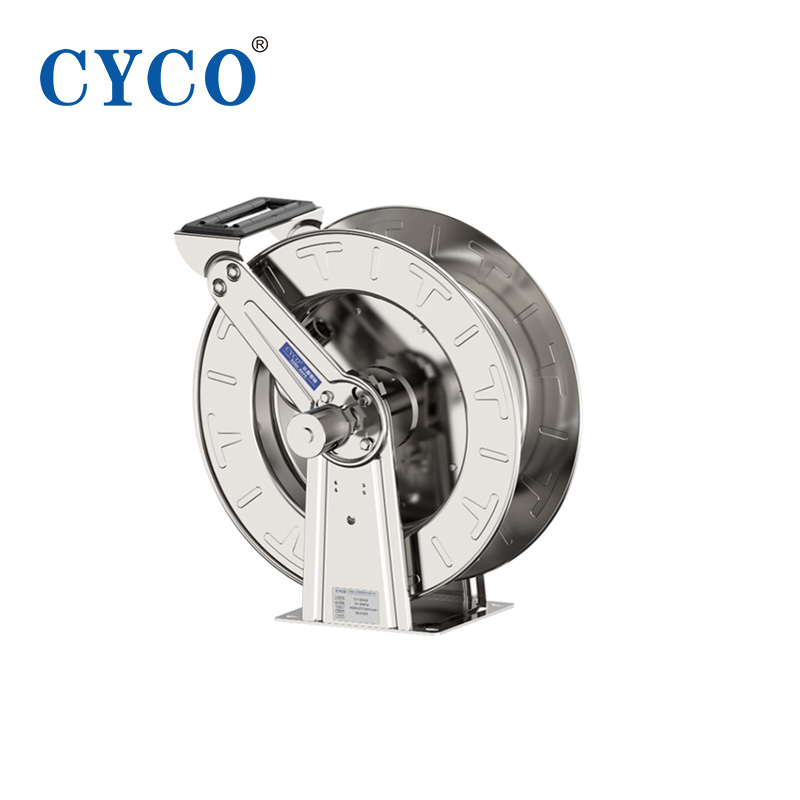
Stainless Steel Spring Driven Hose Reel CY-DS84
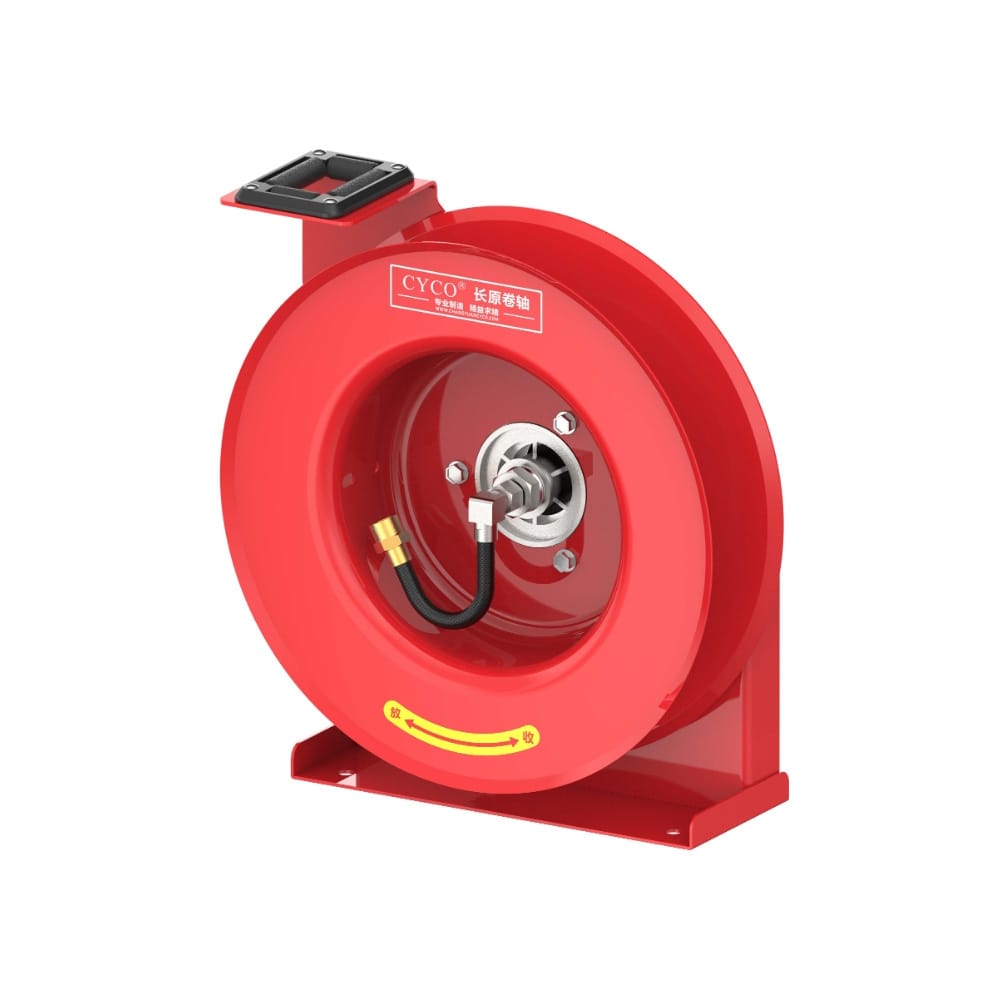
Powder-Coated Steel Hose Reel (CY-40/50 Series)
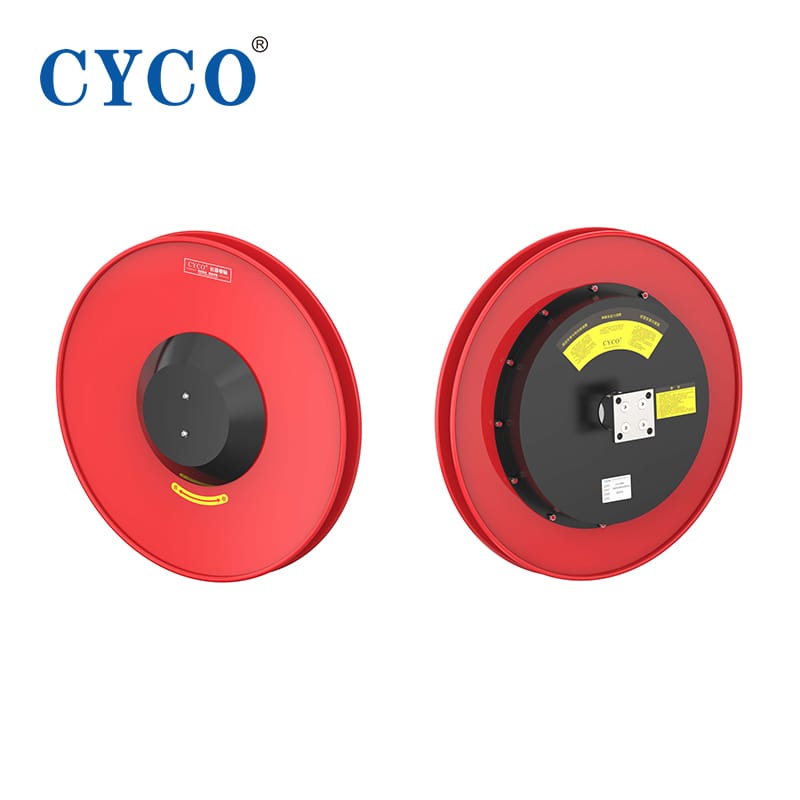
Hose Reel F584 Series
4. Key Differences Between the Three Hose Reel Types
Based on the characteristics discussed above, open, fully enclosed, and semi-enclosed hose reels can be compared across five key aspects: protection performance, maintenance difficulty, hose capacity, environmental suitability, and workplace organization.
4.1 Protection Performance
Open hose reels provide the lowest protection against dust, moisture, and external damage due to their exposed structure. Fully enclosed hose reels offer the highest level of protection, while semi-enclosed hose reels provide moderate protection.
4.2 Maintenance Difficulty
Open hose reels are the easiest to inspect and maintain because all components remain accessible. Semi-enclosed hose reels provide relatively convenient maintenance access, while fully enclosed hose reels require housing removal, making maintenance more complicated.
4.3 Hose Capacity and Load Capability
Open hose reels provide the largest hose capacity and strongest load capability, supporting long, large-diameter, and heavy-duty hoses. Semi-enclosed hose reels are suitable for standard hose sizes, while fully enclosed hose reels are more limited by internal space.
4.4 Working Environment Suitability
Open hose reels are ideal for heavy industries, construction machinery, mining, and other harsh industrial environments with lower cleanliness requirements. Fully enclosed hose reels are more suitable for indoor applications, food processing, and automotive service areas requiring cleaner environments. Semi-enclosed hose reels fit most standard industrial applications.
4.5 Appearance and Space Management
Open hose reels prioritize industrial practicality, with exposed hoses and a rugged appearance. Fully enclosed hose reels provide cleaner layouts and more organized hose storage, while semi-enclosed hose reels offer a balanced combination of functionality and workplace appearance.
5. Application-Based Selection Guide
Based on the performance characteristics of each hose reel type, the following recommendations can help simplify selection for different industrial applications.
5.1 When to Choose Open Hose Reels
- Heavy-duty industrial environments such as mining, steel production, and construction machinery.
- Long-distance or high-flow fluid transfer requiring large-diameter or extra-long hoses.
- High-frequency operation requiring easy inspection and maintenance.
5.2 When to Choose Fully Enclosed Hose Reels
- Food processing plants and precision workshops requiring higher cleanliness standards.
- Indoor automotive repair and cleaning applications with frequent daily hose use.
- Dusty or humid environments where hose and internal component protection is important.
5.3 When to Choose Semi-Enclosed Hose Reels
Semi-enclosed hose reels are suitable for general industrial applications without extreme environmental or heavy-load requirements. They provide a balanced solution combining protection, maintenance convenience, and cost efficiency.
6. Conclusion
Open, fully enclosed, and semi-enclosed hose reels each offer unique structural advantages and performance characteristics. There is no universally superior option — the best choice depends on the working environment, hose specifications, usage frequency, and maintenance requirements.
Open hose reels are ideal for heavy-duty industrial operations, high-flow applications, and environments requiring frequent maintenance access. Fully enclosed hose reels provide superior protection and cleaner hose management for indoor, hygienic, humid, or dusty environments. Semi-enclosed hose reels balance protection and maintenance convenience, making them the most versatile option for standard industrial applications.
Selecting the right hose reel structure can improve hose management efficiency, reduce hose wear, enhance workplace safety, and extend overall equipment service life. Proper reel selection also helps lower long-term maintenance costs while improving operational reliability across industrial systems.
Related Posts
How Long Does a Hose Reel Last?
June 12, 2026