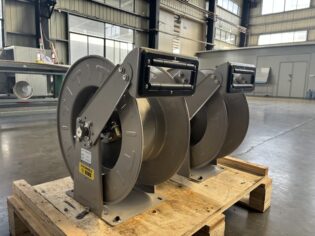
How to Select the Right Hydraulic Hose Reel
July 30, 2026 | Hydraulic hose reels
Introduce
Hydraulic hoses are widely used in construction machinery, mining machinery, agricultural vehicles, manufacturing systems, and many other industrial fields to transport pressurized hydraulic oil. Selecting the right hydraulic hose reel can neatly store the hose, preventing bending, wear, and leaks, improving workplace safety, and effectively extending the service life of the hydraulic hose. Conversely, an improperly selected reel can lead to frequent equipment failures, work process delays, and increased maintenance costs. This article will explain all the key selection points in detail to help you choose the appropriate hydraulic hose reel based on your actual working conditions.
Understand Your Hydraulic System Requirements
Before selecting a hydraulic hose reel, you should first assess the requirements of your hydraulic system.
Operating pressure is one of the most important considerations. Hydraulic systems typically operate at much higher pressures than water or air systems; therefore, the rated pressure of the hydraulic hose reel must exceed the maximum operating pressure of the hydraulic system , with a reasonable safety margin. In most industrial scenarios, a safety factor of 1.25 to 1.5 is required to withstand instantaneous pressure surges generated during equipment start-up, shutdown, and operation.
You should also consider the hydraulic fluid being supplied. Different hydraulic fluids may require specific hose materials and sealing components to ensure long-term compatibility and reliable performance.
Select the Appropriate Hose Reel Capacity
First, ensure that the hydraulic hose reel has reached its maximum hose length. Each reel has a specific rated hose length set according to the hose diameter. Exceeding this limit will result in the hose not retracting completely, increasing the load on the spring or motor, and acelerating hose wear.
In addition, the reel must be able to support the hose’s outer diameter and bending radius. Choosing a reel that is too small may cause the hose to bend excessively during winding, increasing wear and making unwinding more difficult. On the other hand, choosing a reel that is too large will occupy unnecessary installation space and increase equipment costs.
When evaluating reel capacity, both current hose specifications and future expansion needs should be considered. Choosing the appropriate capacity helps ensure smooth hose retraction while protecting the hose from unnecessary stress.
Choose the Appropriate Winding System
Hydraulic hose reels offer a variety of different winding systems, each suitable for specific operating conditions.
Spring-driven hydraulic hose reels : the most cost-effective and widely used type. Features automatic rewinding and adjustable tension, suitable for daily high-frequency operations of light-load hydraulic systems in workshops, repair stations, and other similar locations. The built-in precision spring ensures smooth and stable hose rewinding without sudden rebound, and the locking mechanism can fix the hose to any length, making operation flexible and convenient.
Electric hydraulic hose reel : Designed specifically for heavy-duty, long hose applications, suitable for large machinery, engineering vehicles, and high-intensity continuous operation scenarios. Electric drive eliminates the need for manual operation, stably reeling in and out ultra-long and ultra-heavy hydraulic hoses, completely avoiding fatigue failure issues caused by long-term, high-frequency use of springs.
Manual crank-type hose reel : Suitable for low-frequency, intermittent operation scenarios. It features a simple structure, low failure rate, and is often used for backup equipment and seasonal operations, effectively controlling procurement costs while meeting basic storage needs.
Evaluate Build Up Quality and Critical Components
When selecting a hydraulic hose reel, you need to thoroughly assess its construction quality to cope with the hose deadweight and repeated mechanical loads generated during daily operation.
A heavy duty solid steel frame delivers sufficient structural strength for tough duty industrial grade work scenarios. The reinforced drum maintains stable bearing capacity when winding lengthy and heavy hydraulic hoses. High precision wear resistant bearings enable the drum to rotate smoothly with low friction and no jamming during hose retraction and extension.
The swivel joint ranks among the most vital spare parts. It ought to sustain tight sealing while the drum spins freely and permit unobstructed continuous hydraulicoil circulation. Precisely machined fittings together with premium wear proof sealing materials cut down the risk of oil leakage and boost longterm operational stability.
Never overlook the hose guide assembly. This functional component guides even layer by layer winding on the drum. It effectively prevents hose twisting, overlapping, frictioncaused abrasion and extrusion damage. Proper guiding improves winding performance and greatly prolongs the service life of your expensive hydraulic hose.
Considering Maintenance Requirements
A suitable hydraulic hose reel should also support safe operation and ease of maintenance.
When choosing a cable reel, select one with a design that facilitates inspection of the swivel joints, bearings, and mounting hardware. Easily accessible components simplify routine maintenance and reduce uptime.
Surface protective coatings help reduce corrosion and minimize maintenance, especially in harsh industrial environments. Choosing hydraulic hose reels with robust construction and easily replaceable parts can significantly reduce long-term operating costs.
In Conclusion
Selecting the right hydraulic hose reel requires careful evaluation of your hydraulic system, hose specifications, operating environment, and maintenance requirements. Operating pressure, hose capacity, rewinding system, structural quality, and installation conditions all affect the reel’s long-term performance.
Choosing the right hydraulic hose reel not only keeps hoses organized but also improves workplace safety, reduces hose wear, minimizes downtime, and increases overall operational efficiency. Selecting equipment that matches your application, rather than focusing solely on initial cost, enables more reliable hydraulic hose management and extends the lifespan of the entire system.
Related Posts
Hose Reels for Paper Mills: Applications in Paper Production
September 17, 2026
Hydraulic Hose Reels for Service Trucks: A Complete Guide
October 13, 2026
How Forklift Attachments Alter Hydraulic Hose Requirements
September 15, 2026