Static Discharge Reels for Fuel Transfer: Safety Basics
October 14, 2026 | Cable Reels, Industrial Hose Reels
In fuel transfer operations, static electricity may be generated as liquids flow through pipes, hoses, filters, and other equipment. If static charge accumulates and discharges in an environment containing flammable vapors, the resulting spark may cause ignition. Static discharge reels help operators establish and maintain the required electrical connections in accordance with approved electrostatic control procedures. Their effectiveness depends on proper equipment selection, reliable connections, and correct operation.
For facilities that handle flammable liquids, understanding the difference between bonding and grounding, the role of static discharge reels in fuel transfer, and the equipment defects that require inspection is essential for safe operation. These factors are particularly important during tanker loading and unloading, tank filling, and fuel handling at industrial service facilities.
Why Is Static Electricity a Concern During Fuel Transfer?
Static electricity may be generated when liquids flow through transfer systems or when different materials come into contact and separate. The amount of charge generated depends on factors such as liquid properties, flow conditions, filtration processes, equipment structure, and the electrical characteristics of the materials involved.
When conductive equipment is electrically isolated, charges may accumulate without an adequate path for dissipation. If the resulting potential difference is sufficient, electrostatic discharge may occur. When a flammable mixture of vapor and air is present, this discharge can become an ignition source.
Metal storage tanks, tanker trucks, transfer equipment, and other conductive components therefore require appropriate electrostatic control measures. However, grounding one piece of equipment does not necessarily control potential differences between all conductive components in the system or eliminate every potential ignition source during fuel handling.
Electrostatic control should form part of the overall fuel transfer procedure, alongside appropriate equipment configuration, vapor control, operating procedures, and other safety measures required at the facility.
What Is the Difference Between Bonding and Grounding?
Bonding and grounding are closely related, but they serve different purposes. Understanding the distinction helps operators use static discharge reels correctly.
Bonding establishes an electrical connection between conductive objects to keep them at approximately the same electrical potential. During fuel transfer, approved procedures may require a tanker truck to be bonded to a receiving tank or other conductive components. This connection helps reduce the risk of sparks caused by potential differences between objects.
Grounding, also known as earthing, connects conductive equipment to a designated grounding system, providing a path for charge dissipation and helping control the electrical potential of the connected equipment.
Bonding and grounding cannot replace each other. Bonding helps equalize the potential between conductive objects, while grounding provides a connection to the designated grounding system. Completing one does not necessarily mean the entire fuel transfer system meets all electrostatic control requirements.
The required connections depend on the equipment configuration, fuel transfer process, and applicable safety requirements. Operators must follow approved site procedures to ensure that all necessary bonding and grounding connections are established correctly.
The Role of Static Discharge Reels in Fuel Transfer
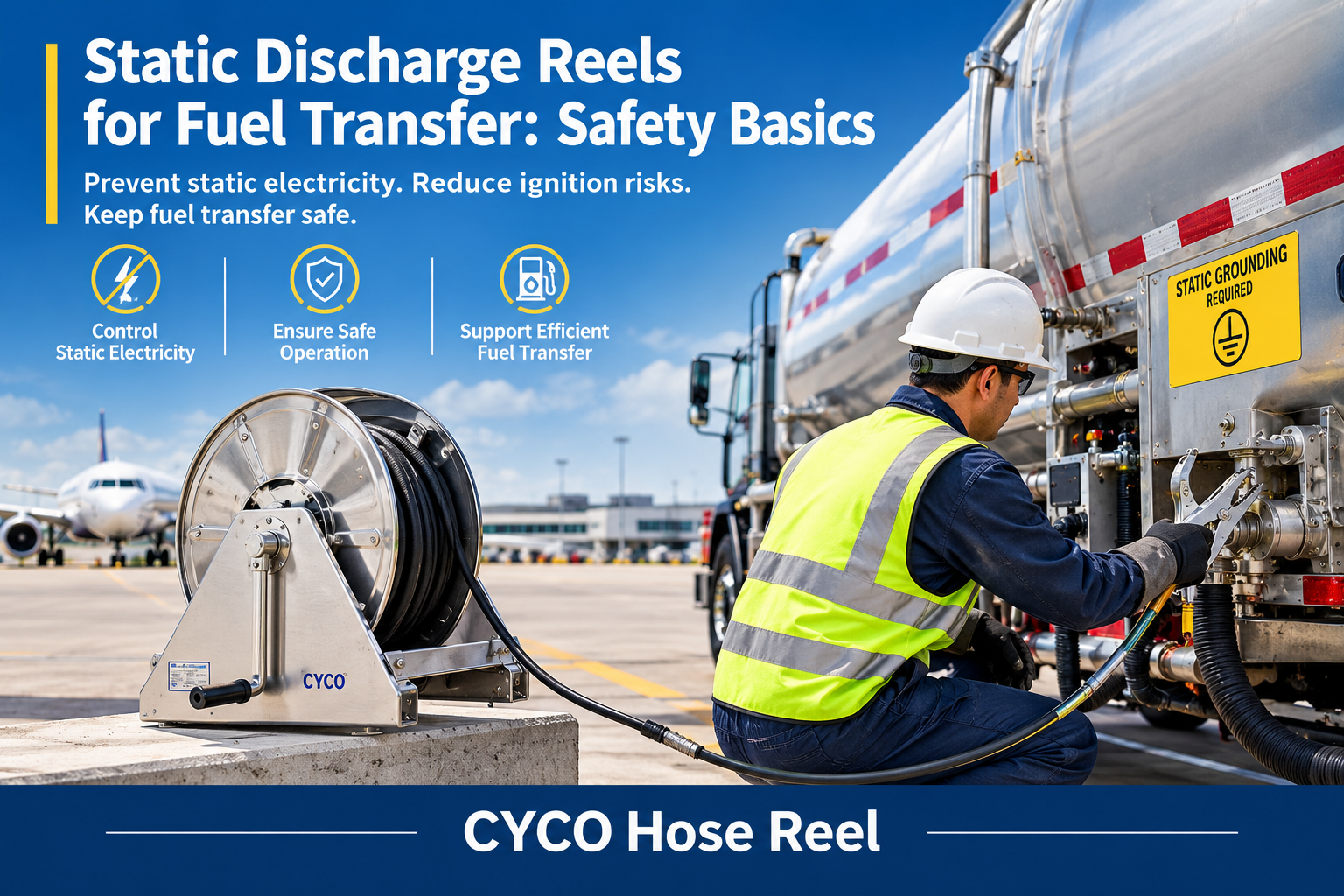
A static discharge reel typically consists of a reel housing, a retractable conductive cable, and a clamp or other approved connection device. Depending on its design, the reel may also include grounding terminals, conductive rotary connections, and components that maintain electrical continuity as the cable extends and retracts.
Its primary function is to keep the cable organized and accessible while providing the electrical connection required for its intended application. The reel itself does not automatically establish a complete grounding path. The effectiveness of that path depends on the assembly’s construction and its connections to the designated equipment or grounding point.
During fuel transfer, a static discharge reel may connect conductive equipment to a grounding point or establish a bonding connection between designated components. The correct configuration must follow the site’s electrostatic control procedures and the reel’s specified application.
A typical operating procedure includes the following steps:
- Confirm the equipment and connection points. Check that the reel, cable, clamp, and designated connection points are suitable for the application and show no visible damage.
- Establish the required connections before transfer begins. Attach the clamp to the designated conductive component and confirm that the required bonding or grounding connection is established before starting fuel transfer.
- Maintain the connection during operation. Follow approved procedures to keep the cable connected for the required period. Prevent accidental disconnection, pinching, or damage from moving equipment.
- Follow the required shutdown and disconnection sequence. After transfer stops, follow site procedures for the order and timing of disconnection. If the procedure requires the connection to remain in place after flow stops, do not disconnect it prematurely.
- Retract and inspect the cable. Return the cable to the reel smoothly. Avoid forcing the winding mechanism or allowing the clamp to strike nearby equipment.
The exact operating sequence and verification measures must follow applicable standards, equipment instructions, and site procedures. A single reel cannot confirm that every component in the fuel transfer system is adequately bonded or grounded.
Inspecting Grounding Cables, Clamps, and Connections
The reliability of a static discharge reel depends on the condition of the entire electrical path. Even when a reel appears to operate normally, cable damage, contamination, or loose connections may compromise electrical continuity.
Cable Condition and Electrical Continuity
Inspect the cable for broken strands, cuts, crushing, insulation damage, corrosion, and signs of overheating. Check the connection between the cable and reel, including internal conductive components that maintain electrical continuity during rotation.
Smooth cable retraction does not guarantee proper electrical performance. Where required, verify electrical continuity using the specified inspection methods and acceptance criteria.
Clamp Condition and Contact Quality
The clamp must suit the intended connection method and maintain secure contact during fuel transfer. Inspect the jaws, springs, hinges, cable terminations, and conductive contact surfaces for wear, corrosion, and looseness.
Paint, rust, oil, dust, and other contaminants may interfere with electrical contact. Use only designated connection points and establish the required conductive connection using approved methods.
Reel Mechanism and Connection Hardware
Inspect the static discharge reel for housing damage, loose terminals, worn cable guides, and abnormal winding. If the assembly uses rotary contacts or slip rings, pay particular attention to their condition because they may form part of the electrical path between the moving cable and the fixed connection terminal.
Inspection frequency should reflect the manufacturer’s recommendations, working environment, frequency of use, and applicable site requirements. Damaged equipment should be taken out of service until it has been properly assessed, repaired, or replaced.
Why Can’t Ordinary Cable Reels Replace Static Discharge Reels?
Ordinary cable reels and static discharge reels may look similar, but their intended applications and electrical requirements can differ significantly.
Ordinary cable reels are generally designed to transmit power or signals. Their conductor specifications, insulation materials, terminals, rotary connection structures, and other components are selected for those purposes and may not be suitable for electrostatic bonding or grounding.
Dedicated static discharge reels must meet the electrical continuity and connection requirements of their intended applications. Depending on the design, this may involve suitable conductive cables, approved clamps, a reel mechanism that maintains reliable electrical connections, and documented performance specifications.
Ordinary cable reels should not be used as direct replacements for static discharge reels without confirming their suitability. Key considerations include:
- Electrical continuity: The entire assembly may not maintain the required electrical continuity.
- Connection hardware: Standard connectors may not provide suitable contact for bonding or grounding.
- Operating environment: A reel intended for general workshop use may not be approved for fuel handling or hazardous areas.
- Safety requirements: The complete assembly must meet the applicable electrostatic control requirements.
This does not mean that ordinary cable reels are unsuitable for every electrical application. Their suitability for electrostatic control must be verified against their design, ratings, technical documentation, and applicable requirements. Similar appearance or electrical conductivity alone does not establish compliance.
Common Mistakes When Using Static Discharge Reels
Several operating errors can undermine the protection provided by otherwise suitable electrostatic control equipment.
Confusing bonding with grounding. Grounding one component does not mean that all conductive objects in the fuel transfer system are bonded. Identify the connections required by the approved operating procedure.
Attaching the clamp to an unsuitable surface. Paint, corrosion, and contamination can interfere with electrical contact. Use designated connection points and verify connection reliability according to the specified procedure.
Starting transfer before completing the required connections. Establish all required connections and complete the specified checks before fuel begins to flow. Follow the site’s approved operating sequence.
Ignoring cable and clamp deterioration. Worn conductors, damaged jaws, loose terminals, and faulty rotary contacts can affect electrical continuity. Regular inspections and appropriate testing are therefore essential.
Assuming grounding eliminates every ignition risk. Bonding and grounding address specific electrical hazards but cannot prevent every type of ignition or compensate for unsafe fuel transfer conditions. Appropriate equipment, vapor management, and ignition source control remain essential.
Ignoring equipment condition during retraction. Pulling the cable at an incorrect angle, allowing the clamp to strike the reel housing, or forcing a damaged mechanism may accelerate wear. Retract the cable carefully and report defects before the next use.
Reducing these errors requires clear operating procedures, suitable equipment, adequate operator training, and a maintenance plan appropriate to the working conditions.
What Should You Confirm Before Choosing a Static Discharge Reel?
Select a static discharge reel according to its required electrostatic control function, rather than relying solely on cable length or appearance.
Before purchasing, confirm the following:
| Selection Factor | What to Confirm |
|---|---|
| Intended function | Whether the reel is specified for bonding, grounding, or both |
| Cable specifications | Conductor construction, length, and applicable electrical requirements |
| Clamp design | Suitability for the designated connection points and working conditions |
| Electrical continuity | Compliance of the complete assembly, including rotary contacts and other components |
| Installation | Suitable mounting location, adequate cable length, and protection against mechanical damage |
| Operating environment | Suitability for the installation site, including applicable hazardous-area requirements |
| Standards and documentation | Relevant certifications, test records, installation instructions, and maintenance requirements |
If fuel vapors or a potentially explosive atmosphere may be present, confirm that the equipment is suitable for the specific location and intended use. Do not assume that a product is approved for hazardous areas based solely on its appearance or a general label such as “grounding reel.”
Manufacturer documentation should clearly identify the product’s intended use, ratings, inspection requirements, and limitations. When evaluating hose reel manufacturers, consider their product range, manufacturing experience, customization capabilities, and technical support. If a static discharge reel must be integrated into an existing fuel transfer system, confirm that its specifications are compatible with the complete installation and the site’s approved procedures.
Conclusion
Static discharge reels provide an organized and accessible way to establish the bonding or grounding connections required during fuel transfer. They play an important role in electrostatic control, but their effectiveness depends on more than simply having a cable and clamp.
Understanding the difference between bonding and grounding, inspecting the complete electrical path, using suitable connection points, and following the required fuel transfer sequence are all essential to effective electrostatic control. Ordinary cable reels should not be treated as equivalent replacements for dedicated static discharge reels unless their suitability for the specific application has been verified.
Ultimately, a static discharge reel is only one component of an overall safety system. Reliable protection requires compatible equipment, verified electrical connections, appropriate operating procedures, and additional controls for the other hazards associated with fuel transfer.
Related Posts
Classification of Industrial Hose Reels: 4 Classification Methods
September 29, 2026
CYCO Hose Reels Keep Farms Efficient
October 10, 2026