What Should You Consider When Selecting a Heavy Duty Hose Reel?
May 15, 2026 | Heavy Duty Hose Reels
Heavy duty hose reels are widely used in industrial manufacturing, automotive service, agricultural irrigation, marine engineering, and fluid transfer systems. They are commonly used for managing and transferring air, water, oil, grease, hydraulic fluid, and chemicals. Selecting the right hose reel not only improves operational efficiency, but also reduces hose wear, enhances workplace safety, and keeps work areas organized.
However, many users focus only on hose length or reel appearance during selection, while overlooking important factors such as drive type, working pressure, installation method, and environmental conditions. An unsuitable hose reel can lead to hose damage, reduced productivity, increased operator fatigue, and even workplace safety risks. Therefore, selecting the correct heavy duty hose reel requires a comprehensive evaluation of the actual operating conditions.
1. Understand Your Application Requirements
The first step in selecting a heavy duty hose reel is understanding the specific application and working environment. Different industries and transferred media require different reel structures, materials, and performance characteristics.
For applications involving compressed air or water, standard industrial hose reels are usually sufficient. However, applications involving chemicals, hydraulic fluid, or steam require higher levels of sealing performance and pressure resistance. For example, chemical processing environments often require stainless steel construction for improved corrosion resistance, while hydraulic systems require stronger structural stability and high-pressure compatibility.
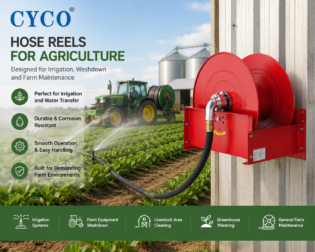
The operating environment also plays a major role in hose reel selection. Outdoor applications are often exposed to rain, UV radiation, dust, salt spray, or corrosive environments, requiring enhanced weather resistance and anti-corrosion protection. Industries such as marine engineering, mining, and agricultural irrigation typically demand more durable reel materials and protective coatings.
Hose usage frequency is another important consideration. Low-frequency applications may only require a simple manual hose reel, while high-frequency industrial environments benefit significantly from automatic or motor-driven hose reels that reduce manual handling and improve efficiency.
2. Hose Size and Length
Hose size, length, and overall weight directly affect hose reel performance and capacity requirements. The reel must match the hose inner diameter to ensure smooth operation and proper winding. Common industrial hose sizes include 1/4″, 3/8″, 1/2″, 3/4″, 1″, and 1 1/2″.
Hose length is equally important. Long-distance fluid transfer applications require larger reel capacity, while longer hoses become significantly heavier when filled with fluid. This increases the demand on reel structure strength, bearing capacity, and drive performance.
For long, heavy, or frequently used hoses, motor-driven hose reels are often the preferred solution because they simplify hose handling and reduce operator fatigue. It is also essential to verify that the hose reel meets the required working pressure, especially in hydraulic systems and high-pressure cleaning applications.
Learn more about why larger industrial hoses often require powered retraction systems in our article Why Large Industrial Hoses Often Require Motor-Driven Hose Reels.
3. Choose the Right Drive Type:Manual vs Spring-Driven vs Motor-Driven Hose Reels
The drive system directly affects operational efficiency, labor requirements, and automation capability. The most common drive types include manual, spring-driven, and motor-driven hose reels.
Manual hose reels are simple, reliable, and cost-effective. They are suitable for low-frequency applications or shorter hose lengths where automatic retraction is not necessary. Since they do not require electricity, they are easy to maintain and highly dependable. However, manual operation may become inefficient and physically demanding when handling long or heavy hoses.
Spring-driven hose reels provide automatic hose retraction without requiring an external power source. Compared to manual reels, they help keep work areas clean and organized while reducing hose clutter and trip hazards. Spring-driven reels are widely used in automotive workshops, pneumatic tool stations, and general industrial environments.
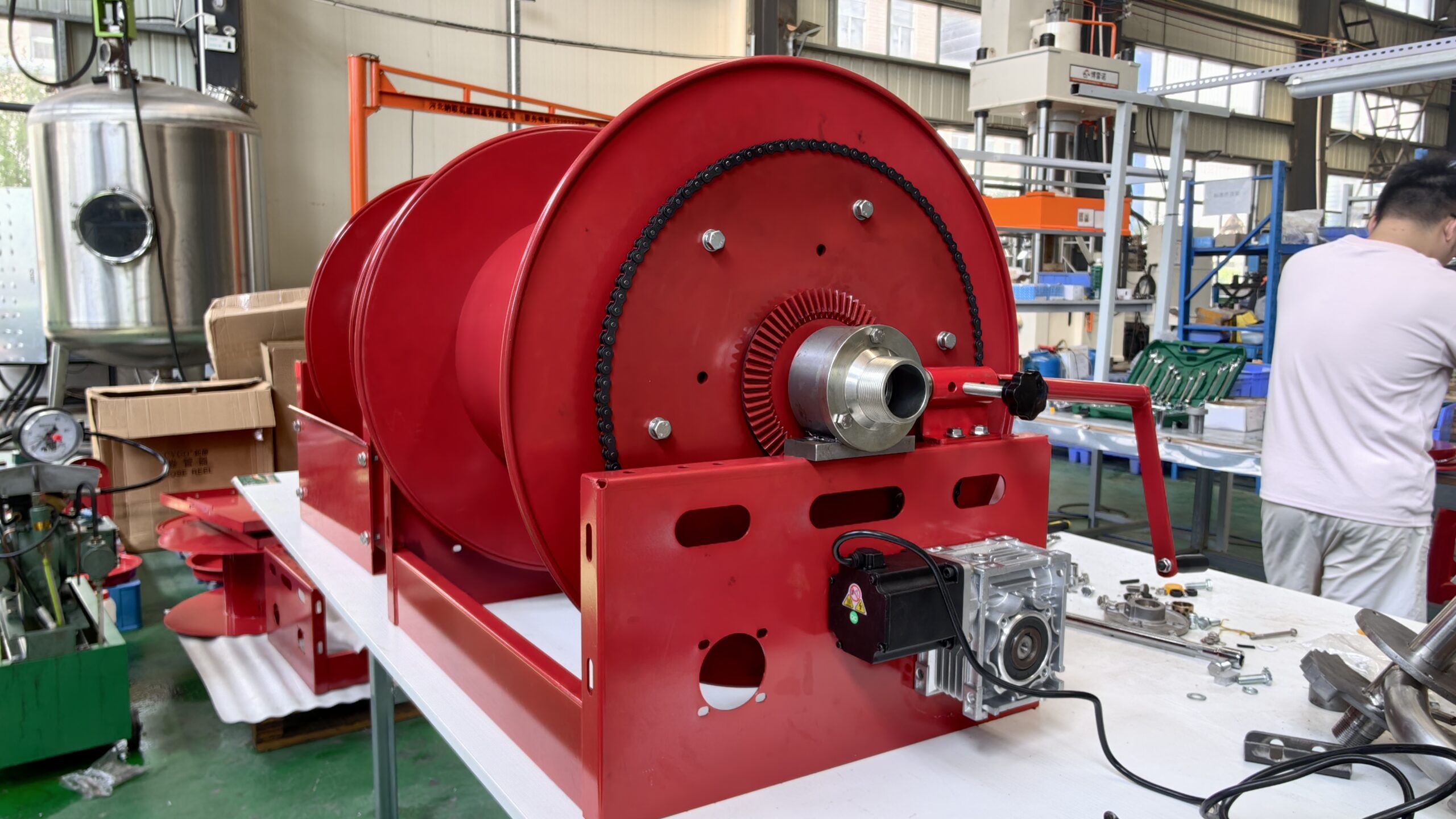
For high-frequency industrial operations or applications involving long and heavy hoses, motor-driven hose reels or electric hose reels offer significant advantages. These reels provide fully automatic hose extension and retraction while supporting advanced functions such as PLC integration, remote control operation, and limit switch control. In automated production lines, mining operations, and large equipment cooling systems, motor-driven hose reels greatly improve productivity while reducing operator fatigue.
4. Material Selection
The reel material directly affects durability, corrosion resistance, and long-term maintenance costs. Common hose reel materials include powder-coated steel, stainless steel, and aluminum.
Powder-coated steel hose reels provide strong structural strength and excellent cost performance. The protective coating offers reliable corrosion resistance for most general industrial applications, making this material widely used in manufacturing facilities and workshops.
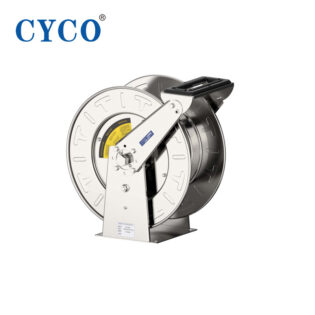
Stainless steel hose reels provide superior corrosion resistance and longer service life, making them ideal for food processing, pharmaceutical plants, marine environments, and chemical industries. Stainless steel surfaces are also easier to clean and maintain in hygienic environments.
Aluminum hose reels are lightweight, corrosion-resistant, and easier to install or move. They are commonly used in portable or mobile hose management applications.
5. Working Pressure and Temperature
Working pressure and temperature compatibility are critical factors when selecting a heavy duty hose reel. Different applications place different demands on reel pressure resistance and heat tolerance.
For hydraulic systems, high-pressure cleaning equipment, and industrial fluid transfer systems, it is important to verify the reel’s maximum operating pressure and its ability to withstand pressure fluctuations. Insufficient pressure ratings may lead to leakage, structural failure, or safety hazards.
Applications involving steam cleaning or hot water transfer also require attention to temperature resistance. Seals, swivels, and hose materials must all be capable of handling elevated temperatures. Inappropriate materials may age prematurely under high-temperature conditions, reducing overall equipment lifespan.
6. Mounting Method
Proper installation improves both workplace efficiency and space utilization. Common mounting methods include wall-mounted, ceiling-mounted, floor-mounted, and mobile reel cart configurations.
Wall-mounted hose reels are one of the most common industrial installation methods because they save space and provide convenient access during operation. Ceiling-mounted hose reels help keep hoses off the ground, reducing trip hazards and improving workplace organization, especially in assembly lines and service bays.
For long or heavy hoses, floor-mounted hose reels provide greater structural stability and easier maintenance access. Mobile reel carts offer additional flexibility and are widely used in large facilities, agricultural applications, and field maintenance operations.
7. Safety and Workplace Efficiency
A properly selected heavy duty hose reel not only improves hose management efficiency but also significantly enhances workplace safety and organization.
Poorly managed hoses can create trip hazards, increase hose wear, and reduce workflow efficiency. Automatic retraction systems and motor-driven reels help maintain clean and organized work areas while minimizing hose damage.
In high-frequency industrial environments, automated hose reels also reduce the time and labor required for hose handling, improving operational productivity and reducing operator fatigue. From a long-term perspective, a well-designed hose reel is not simply a storage device, but an important component for improving workplace efficiency and industrial safety.
Conclusion
Selecting the right heavy duty hose reel requires careful consideration of application requirements, hose size, drive type, material, working pressure, and installation method. The correct hose reel improves operational efficiency, enhances workplace safety, extends hose lifespan, and reduces long-term maintenance costs.
Whether you need a simple manual hose reel, a spring-driven reel for daily industrial use, or a fully automated motor-driven hose reel for high-frequency production environments, choosing the proper solution ensures reliable long-term performance and efficient hose management.
For professional hose reel selection support and customized industrial solutions, contact the CYCO engineering team.
Related Posts
Main Applications of Heavy-Duty Hose Reels
April 7, 2026
Air Hose Reels for Service Trucks: Complete Guide
August 6, 2026