How to Select the Right Motor for a Motor-Driven Hose Reel
June 1, 2026 | Motor-Driven Hose Reel
1. Introduction
Motor-driven hose reels play an important role in industrial hose management by improving efficiency, reducing manual labor, and providing reliable hose handling for demanding applications. Compared with manual hose reels, a motor-driven hose reel can automatically deploy and retract long or heavy hoses, making daily operation faster, safer, and more convenient.
Today, motor-driven hose reels are widely used in manufacturing plants, mining operations, construction equipment, marine facilities, and fluid transfer systems. Depending on the application, the reel may be powered by an electric motor, hydraulic motor, or pneumatic motor. Selecting the right motor is essential because it directly affects reel performance, operating efficiency, maintenance requirements, and overall service life.
However, choosing a motor is not simply a matter of selecting the most powerful option. Factors such as hose length, hose weight, operating frequency, installation environment, and available power sources all influence the ideal motor configuration. A properly matched motor helps ensure smooth hose retraction, stable operation, and long-term reliability, while an unsuitable motor may lead to excessive wear, reduced efficiency, and higher operating costs.
In this guide, we will explore the most common motor types used in industrial hose reels and explain how to select the right motor-driven hose reel for different applications and working environments.
2.Common Motor Types for Motor-Driven Hose Reels
2. 1 Electric Motors
Electric motors are the most common components for motor-driven hose reels. They are widely used in factories, maintenance facilities, and other fixed installations where a stable power supply is available.
Key Features:
- Most common choice for industrial hose reels
- Stable and reliable operation
- Easy to control and maintain
- Suitable for frequent daily use
- Available in AC and DC motor configurations
Typical Applications:
- Manufacturing plants
- Maintenance workshops
- Automotive service centers
- Industrial air and water supply systems
- Fixed hose management installations
2. 2 Hydraulic Motors
Hydraulic motors use hydraulic systems as their power source and are designed for heavy-duty industrial applications where high torque is required.
Key Features:
- Extremely high torque output
- Suitable for long and heavy hoses
- Does not rely on electrical power
- Performs well in harsh environments
- Ideal for heavy-duty reel systems
Typical Applications:
- Mining equipment
- Offshore platforms
- Oil and gas facilities
- Heavy construction machinery
2.3 Pneumatic Motors
Pneumatic motors are powered by compressed air and offer significant safety advantages in environments where flammable gases or explosive materials may be present.
Key Features:
- No electrical spark risk
- Excellent explosion-proof performance
- Simple and reliable structure
- Suitable for hazardous locations
- Low heat generation during operation
Typical Applications:
- Fuel storage facilities
- Chemical processing plants
- Paint and coating workshops
- Hazardous industrial environments
3. Key Factors to Consider When Choosing a Motor
Choosing the right motor for a motor-driven hose reel starts with understanding the actual working requirements. The most suitable motor depends on hose specifications, operating conditions, and the available power source.
Hose Size and Weight
Hose size and weight have a direct impact on motor performance. Longer and larger-diameter hoses require more force to retract, especially when filled with water, oil, or other fluids. For heavy-duty hose applications, a motor with sufficient torque is essential to ensure smooth and reliable operation.
Operating Frequency
How often the hose reel is used should also be considered. For occasional use, a standard motor configuration is usually adequate. In facilities where hoses are extended and retracted many times throughout the day, the motor should be able to handle frequent operation without excessive wear. Selecting a motor that matches the expected duty cycle helps improve service life and reliability.
Installation Environment
The working environment can influence motor selection. Indoor installations generally face fewer environmental challenges, while outdoor applications may be exposed to rain, dust, humidity, and temperature changes. In harsh industrial environments, additional protection against corrosion and contamination may be required to maintain long-term performance.
Available Power Source
The available power source often determines the most practical motor type. Electric motors are commonly used in factories and workshops where electrical power is readily available. Hydraulic motors are often selected for construction and mining equipment equipped with hydraulic systems, while pneumatic motors are suitable for facilities with compressed air systems and hazardous operating environments.
4. Choosing the Right Motor for Different Applications
Different industries have different hose management requirements, which means the ideal motor type can vary significantly from one application to another. Matching the motor to the working environment helps improve efficiency, reliability, and overall reel performance.
4.1 Manufacturing Facilities
Electric motor-driven hose reels are commonly used in manufacturing plants, workshops, and maintenance areas where a stable power supply is available. They provide smooth and reliable hose operation for compressed air, water, and other utility systems. Their simple operation and low maintenance requirements make them a practical choice for daily industrial use.
4.2 Mining and Construction Equipment
Mining and construction applications often involve long, heavy hoses and demanding working conditions. Hydraulic motor-driven hose reels are well suited for these environments because they provide high torque and can handle heavy-duty hose retraction and deployment. They are frequently installed on construction machinery, service vehicles, and mining equipment that already utilize hydraulic power systems.
4.3 Marine and Coastal Applications
Marine environments present challenges such as high humidity, salt exposure, and harsh weather conditions. In these applications, corrosion-resistant hose reel systems are essential for long-term reliability. The motor type is usually selected based on the available power source, while the reel structure and components should be designed to withstand continuous exposure to moisture and corrosive conditions.
4.4 Oil and Gas Facilities
Safety is a primary concern in oil and gas operations. Pneumatic motor-driven hose reels are often preferred because they operate using compressed air and do not generate electrical sparks. This makes them suitable for hazardous locations where flammable gases or combustible materials may be present. They are commonly used in refineries, fuel storage facilities, and chemical processing plants.
5. Recommended CYCO Motor-Driven Hose Reels
For applications requiring powered hose retrieval, CYCO offers a range of industrial motor-driven hose reel solutions designed for air, water, oil, grease, and fluid transfer systems.
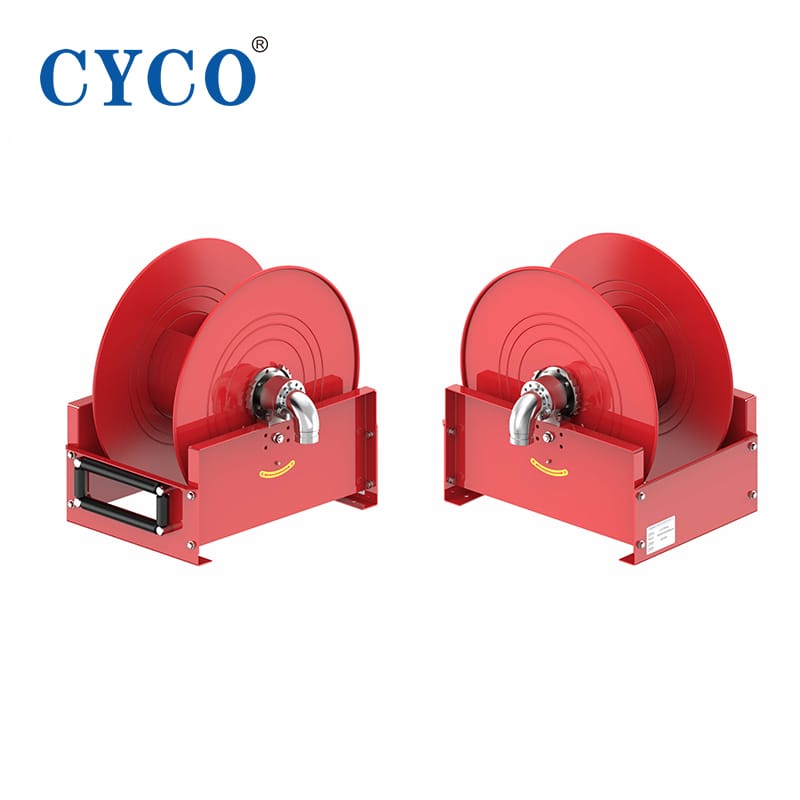
Heavy Duty Hose Reel CY-FF96 Series
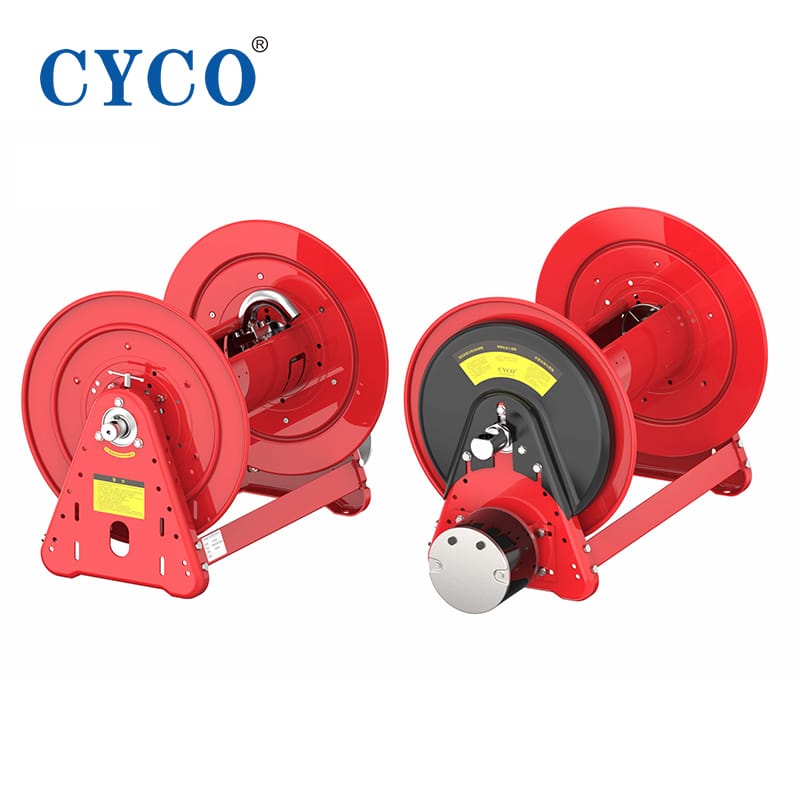
Manual/Motor Driven Hose Reel CY-E33 Series
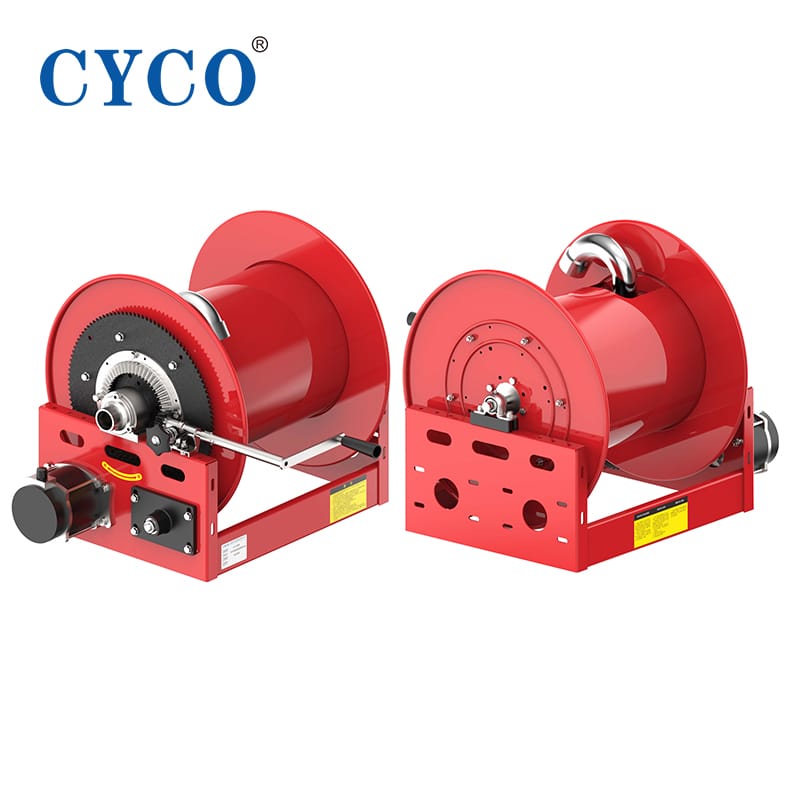
Manual/Motor Driven Hose Reel CY-E39 Series
Available with electric, hydraulic, or customized drive systems, these reels can be configured to meet different hose capacities, operating frequencies, and installation environments.
6. Conclusion
Selecting the right motor is one of the most important decisions when choosing a motor-driven hose reel. Different motor types offer different advantages, and the best option depends on the specific application, working environment, hose size, operating frequency, and available power source.
Electric motors are a practical choice for factories, workshops, and other fixed installations where reliable electrical power is available. Hydraulic motors provide the high torque required for heavy-duty applications such as mining and construction equipment, while pneumatic motors offer a safe solution for hazardous environments where explosion protection is a priority.
By carefully evaluating operating requirements before selecting a reel system, users can improve hose handling efficiency, reduce equipment wear, and minimize long-term maintenance costs. A properly matched motor-driven hose reel not only improves productivity but also helps ensure safe and reliable operation throughout the service life of the equipment.
Related Posts
Marine Hose Reel Selection Guide
July 10, 2026
Hose/wire Reel Drive Types and Characteristics
December 18, 2025